
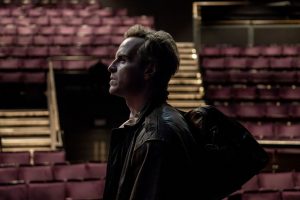
Reviews include Elsinore, Paper Tiger, and Minotaur.
TFCA Friday: Movie reviews for Nov. 27
November 27, 2026
Welcome to the TFCA weekly, a round-up of reviews and coverage by members of the Toronto Film Critics Association.
TFCA Critics’ Picks: Up next in our screening series at Imagine Cinemas Carlton is The King Tide, selected by member Joe Lipsett, on Monday, Dec. 7 at 7:00pm. Get tickets here.
In Release this Week
The Child (dir. Mariano Barroso)
“The film’s best feature is its two lead performances. Karra Elejalde’s performance as Nicasio, the grandfather who refuses to relinquish his emotional relationship with his dead grandson, and Belén Cuesta’s restrained performance of Mariaje, the bereaved mother,” says Gilbert Seah at Afro Toronto. “The re-creation of the disaster at the start of the film is also impressive, as is the examination of how the loss of the child affects different people.”
Focker In-Law (dir. John Hamburb)
“They haven’t worn out their welcome,” observes Peter Howell at the Toronto Star on the Fockers’ enduring appeal. “You can accuse the Fockers of a lot of things, among them being gross, stupid, predictable and unfunny. But you can’t call them demanding of our time. Four films in 26 years qualifies as restraint in Hollywood, successfully avoiding sequel fatigue.”
“Focker In-Law is number four in the popular comedy franchise about a clash of cultures between two families. It’s cute but not that funny,” says Daniel Garber at Cultural Mining. “The humour is of two kinds: Slapstick — a vicious pet, explosion in the kitchen; and cringe comedy — all the squirmy situations that Greg keeps falling into that always escalates into potentially serious issue involving authority figures. This one keeps the characters and situations from the previous three movies with just minor changes: Jack is a now a vegan, Pam’s rich brother Kevin (Owen Wilson) is raising weird, super-genius kids, a la Elon Musk. The one bright light is, surprisingly, Ariana Grande as Olivia, who has taken over De Niro’s role.”
The Further Mis-Adventures of Cliff Booth (dir. David Fincher)
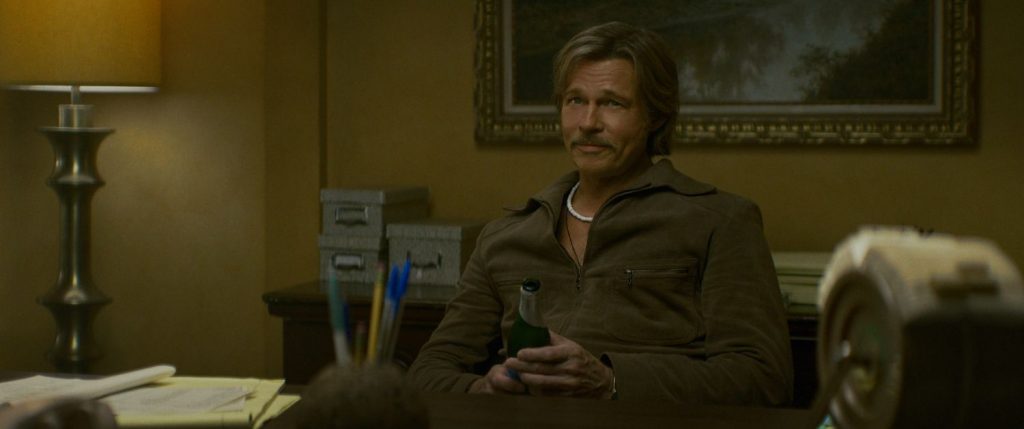
“Some kind of dark seam runs under the easygoing surface of The Further Mis-Adventures of Cliff Booth,” notes Liz Braun at Original Cin. “There’s a lot going on, including Tarantino-trademarked violent upheavals and brief, subtle moments of Fincher-finessed high anxiety — kind of The North Wind and The Sun of filmmaking. Anyway, as movies go, so goes the world. Maybe The Further Mis-Adventures of Cliff Booth is a political statement about the myth of American exceptionalism. Or maybe it’s just a lot of fun.”
“When The Further Mis-Adventures of Cliff Booth director David Fincher teams up with the film’s screenwriter Quentin Tarantino, it’s like assembling the filmmaking Avengers for the Letterboxd crowd,” writes Victor Stiff at Exclaim!. On paper, the duo make a tantalizing combination; in practice, they’re like an R&B supergroup with two lead singers sharing the stage but still duelling for the audience’s affection. Fincher’s precise, grounded and methodical style shares space with Tarantino’s audaciousness, verbose dialogue and exaggerated worldbuilding. Rather than blend into a seamless hybrid, their sensibilities swing between vibes like a tonal pendulum.”
“As The Further Mis-Adventures of Cliff Booth culminates in its best sequence, an expertly crafted, suffocatingly suspenseful finale that brings together mixology, personal mythology, faulty bullet-riddled speakers, and a burning establishment in a shocking, guttural, visceral crescendo, a dark cloud nevertheless hangs over the whole affair,” says Prabjhot Bains at But Why Tho?. “Not only is it a slog to get there, with storytelling that feels misshapen under Fincher’s all-too-precise lens, but the director’s use of generative AI to alter and correct lip movements plunges the film into an entirely different realm of artificiality, one that fundamentally defeats the purpose of making this spin-off in the first place.”
“Tarantino doesn’t know when to stop, but with Fincher at the helm, his excesses are kept in check. He loves recreating quotes from past films, both famous and obscure, and his version of behind the scenes in ’70s Hollywood is a joy to watch. Tarantino also unnecessarily intrudes in his own otherwise good movies,” adds Daniel Garber at Cultural Mining. “It features a fine soundtrack, bumping easily from ’70s R&B to yacht rock. Historically, it’s a bit off, things like showing TV cigarettes ads, years after they were banned (AI slop?) but he’s never been that concerned with accuracy. And it’s two-and-a-half hours long, but never boring.”
At the Toronto Star, Peter Howell considers what Cliff Booth means for Brad Pitt’s star status: “Cliff remains a magnetic onscreen presence, but his actions are tough to justify and sometimes difficult to sit through – he disrespects the body of a man he shot dead and describes to a ghoulish inquisitor exactly how, as a soldier during wartime, he killed many people with a knife. This makes Cliff’s feature return less comic than its predecessor, even with the welcome presence of Elizabeth Debicki as a wily love interest.”
At That Shelf, Pat Mullen speaks with Elizabeth Debicki about making Karen a bit of a freak and visibly enjoying Cliff’s taste for danger: “I think she is savvy and I think that she’s fun,” says Debicki on Karen’s wild ride. “The thing about Cliff that’s so glorious is he’s incredibly irreverent. He’s an outsider, so he’s able to be authentically himself. That energy unlocks something in Karen. The pig conversation is just not the conversation she expected to have that night. It takes her so by surprise that there is an enjoyment to it: Who is this person? It’s so much more interesting than the conversation she thought she was going to be having about stunt work or the production company. He lifts the lid off that for her.”
The Holy Boy (dir. Paolo Strippoli)
“The Holy Boy has all the elements of a good psychological thriller,” says Gilbert Seah at Afro Toronto. “It has an idyllic Alpine serene setting, a mystery that is handled with care and credibility, and a boy and a stranger in town that the audience actually cares for. The psychological and emotional impact also works well into the entertainment factor.”
The Hunchback, Soul of Paris (dir. Jean-François Richet)
“The film is undoubtedly an ambitious one, but the creation of the period Paris, generated using CGI, looks fake,” admits Gilbert Seah at Afro Toronto. “The story in the film is no Victor Hugo masterpiece, and the romance paralleling the story lacks the clout of the Hugo novel. Cassel is good in the lead role; he always has been good in any role he is given. Still, The Hunchback, Soul of Paris is entertaining enough, though an ambitious failure of sorts. The costumes and production design are to be commended, as are the performances for Cassel as well as the film’s historical premise.”
Josephine (dir. Beth de Araújo)
“There are many reasons to see the shattering new drama Josephine, none as compelling as 10-year-old Mason Reeves in the title role as a deeply traumatized and spiralling eight-year-old, the age Reeves was when filming began,” says Kim Hughes at Original Cin. “It’s impossible to overstate how remarkable and wide-ranging Reeves’ performance is in the film, in which she must convey emotions including, but not limited to, terror, bafflement, rage, frustration, innocence, and joy.”
“Josephine is a touching movie about a family’s problems. Much of the film is told from [Josephine’s] point of view, with a low-slung camera looking up,” notes Daniel Garber at Cultural Mining. “Newcomer Mason Reeves is excellent in the title role, but the parents are frustratingly annoying and clueless. The film handles important issues — especially sexual assault — very well, with not even a hint of titillation or exploitation. But the movie itself drags along from scene to scene, with a parade of teachers, lawyers, psychiatrists, psychologists, counsellors, police; it feels like an extended afterschool special.”
The Mosquito Bowl (dir. Peter Berg)
“The Mosquito Bowl, timed for the American Thanksgiving to coincide with the thanks Americans need today for the unsung heroes and sacrifice paid by the few so that many can benefit,” adds Gilbert Seah at Afro Toronto. “This is the kind of bad movie and propaganda that only idiots like President Trump would hail as a big old beautiful movie, because it serves his purpose and that it blinds the eye of how older egoistic people like him declare war with the young and innocent having to sacrifice their lives or livelihoods for his stupid war-mongering decisions.”
File Under Miscellaneous
At the Toronto Star, Peter Howell picks 10 films for the holiday season, including Dune Part 3: “Quebec filmmaker Denis Villeneuve told a global fan chat this past summer he was busy putting ‘some crazy, insane footage’ into his Dune trilogy capper, inspired by his love of classic NFB experimental shorts,” writes Howell. “That’s not the only gonzo thing about this movie, which unlike the first two instalments concerns the abuse of great power, not the acquisition of it. More thriller than actioner, the film is based on Dune author Frank Herbert’s first sequel Dune Messiah – with substantial changes – rather than the original tome.”
At Revisions Journey, Jason Gorber explores the role of humour in non-fiction: “The truth is that truthfulness can be quite hilarious, and in a myriad of ways artists and writers have been able to take the very modes of storytelling and rejig slightly to amplify the comedic elements to often great effect,” writes Gorber. “Humour can, of course, thrive off the fanciful, but there’s something particularly powerful about amplifying the nonsensical nature of the quotidian, finding even deeper ways of understanding humanity by taking time to laugh at its most absurd and ridiculous attributes. And as this year has demonstrated more than many, we all could use a big laugh, even if at the end it leaves us with tears in our eyes from the exertion.”
TV Talk/Series Stuff
At POV Magazine, Pat Mullen chats with Priyanka about her CBC documentary What’s My Name? and holding space for Mark beneath all the glam and makeup: “My main goal when I won Canada’s Drag Race was to share the platform,” says Priyanka. “So I put all the contestants from my season in my music videos. I started Drag Brunch Saved My Life and then booked local queens and focused on them in the show. So I think that drag, as an industry for me and how it’s entered the mainstream media, it’s always important to nurture. What can I give these queens and kings to show that they can also be movie stars, they can also be singers and they can also do the thing because it’s hard? We’re carving space that no one has carved before, especially in Canada, too.”
At That Shelf, Pat Mullen chats with The Diplomat stars Keri Russell and Allison Janney about the season’s stunning finale. “I loved it because it was a bit of wish fulfillment for what we all though we wanted to see happen with many of the Republicans when Trump started doing it,” says Janney, who picked up an Emmy for her performance in season three back in September. “We wanted people to be like, ‘Why aren’t people saying no? Why are people just letting this happen?’ I enjoyed them doing the right thing.”