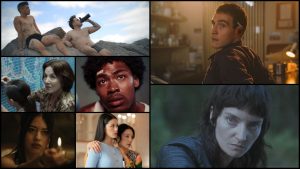
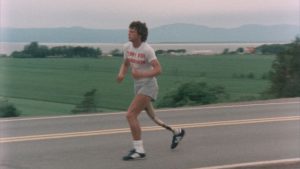
Reviews include Run Terry Run, The Social Reckoning, and Your Mother Your Mother Your Mother.
TFCA Friday: Movie Reviews for Oct. 16
October 16, 2026
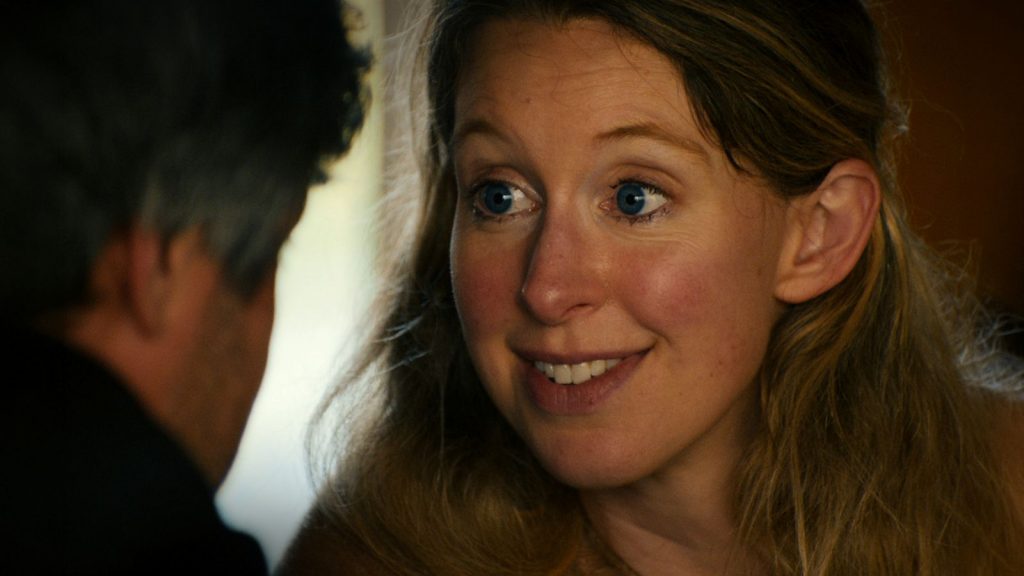
Welcome to the TFCA weekly, a round-up of reviews and coverage by members of the Toronto Film Critics Association.
In case you missed it: we are launching the TFCA Critics’ Picks screening series. Our first film is The Righteous, presented by member Dave Voigt at Imagine Cinemas Carlton on Monday, November 2.
In Release this Week
Dossier 137 (dir. Dominik Moll)
“With all the riot mayhem currently going on in Paris, Dossier 137 marks a relevant film with important issues. The time setting is December of 2018. The primary issue examined is the investigation of cops during the ‘yellow vests’ protests, in which an investigator played by Léa Drucker asks questions,” explains Gilbert Seah at Toronto Franco. “It is case 137 that is of interest. Director Dominic Moll is an excellent suspense drama director with two of my favourite films, Lemming and Harry, He’s Here to Help.”
Fjord (dir. Cristian Mungiu)
“Mungiu keeps things ambiguous, and as the film goes on, the situation becomes more claustrophobic and unsettling. He doesn’t really want to tell us what to think about any of the characters. So are we to judge them? The society in this small Fjord village? Or is he inviting us to look at our own reactions?” says Karen Gordon at Original Cin. “In an age where truth is harder to discern, and there’s a pressure to think certain ways, Mungiu leaves us with intriguing and urgent questions to contemplate.”
“Adding to the complexity of the hearing is that Elia has never stated that her parents hurt her. There’s the possibility that she hurt herself or was accidentally hit by her friend Noora. And it’s clear that the Gheorghius are hardly fanatics although they do believe in Evangelical Christianity. And yet, the approach in Norwegian law does make sense; it certainly protects children,” writes Marc Glassman at Classical FM. “Where is the answer? Fjord does offer a solution to its story, but it only fits for this particular narrative. Is the Norwegian law, right? Or does it hurt more families—and children—than it helps?”
“Mountains rise straight out of the water in Cristian Mungiu’s latest social inquiry, an apt image for how hemmed in the Gheorghiu family feels in their new life in Norway. Led by Romanian father Mihai (Sebastian Stan) and Norwegian mother Lisbet (Renate Reinsve), they struggle to fit in as locals eye their conservative Christian values and strict parenting with suspicion,” observes Peter Howell at the Toronto Star. “When adolescent daughter Elia arrives at gym class with troubling bruises, a teacher’s call to child services sets off a cascade of custody battles that fracture both family and community. Mungiu lets the tensions speak for themselves, but he wants the audience to judge. The mountains loom. An avalanche is coming.”
“The film’s weakness is that Mungiu sometimes makes the authorities too easy to dislike,” says Gilbert Seah at Afro Toronto. “But he blurs the reasoning about whether the parents are too strict religiously or whether they are right to impose their parental rights. The film ends with an ambiguously on whether the family or the authorities are right but it also concludes on a high hopeful note, at least.”
“Mungiu straddles the line between sympathy and disdain with his characters. With each accusation and justification, Mungiu’s characters are left both heroes and villains simultaneously,” says Steve Norton at ScreenFish. “At all times, they are doing what they truly believe is in the best interests for these children. Yet, at all times, everyone seems to be somehow misguided. As such, this is the sort of film that appears destined to challenge the viewer’s biases in real time. Whether or not you defend the Gheorghiu family (and, more specifically, when you do so) reveals as much about the viewer as it does the characters.”
Misty Green (dir. Chris Rock)
“Written and directed by Chris Rock, Misty Green is a hectic, all-over-the-place movie with many issues like bipolar disorder, racism, sexism, drugs, and addiction, and the Hollywood scene it covers is thrown in sporadically and erratically,” admits Gilbert Seah at Afro Toronto.
“Rosalind Eleazar mesmerizes as the title star of Chris Rock’s Hollywood skewering, his first film as writer-director in a dozen years. Slow Horses breakout Eleazar plays Misty as a showbiz survivor, who has won an Emmy (and earned a Cosmopolitan cover) for her role in a hit TV series. Pushing 40, she’s squandered her fame and money on booze, coke and sex, yet somehow still looks glamorous and still has the goods as an actor and singer. She also has a rep as a troublemaker,” says Peter Howell at the Toronto Star. “The whole thing plays more like the pilot to a really interesting TV series rather than a stand-alone film, but Eleazar proves she’s got what it takes to be a genuine Hollywood presence.”
Musk (dir. Alex Gibney)
“The film unfolds as a lacerating exposé,” says Brian D. Johnson at Zoomer. “It shows how Musk launched his career with a spectacular string of failures, technical and financial, that are illustrated with countless shots of SpaceX rockets bursting into flames before reaching altitude. Not unlike Trump, who made a virtue of bankruptcy, Musk is shown to have a Midas touch that spins fool’s gold from failure. Even his boast as the engineer who created Tesla seems suspect, given that Tesla co-founder Martin Eberhard, later ousted from the company, was the brains behind the electric vehicle – their rift recalls the one between the two Steves, Wozniak and Jobs, who founded Apple. Meanwhile Gibney rolls out graphic examples of how Tesla covered up the data showing how fatal crashes of self-driving cars were caused by overrides built into their programming.”
Calling the film “one of the most depressing and terrifying pieces of public media since An Inconvenient Truth,” Jackson Weaver at CBC chats with Alex Gibney about his documentary epic: “It’s not a funeral; it’s a warning. But things are pretty dark. We’re going to be lowered into the earth if we’re not careful,” Gibney tells Weaver. “You know, and the film ends with the planet Earth exploding and Musk escaping on his spaceship. So that’s about as pessimistic as it gets.”
“In some ways, Musk is about more than just one man,” notes Steve Norton at ScreenFish. “There’s a certain sense that this exposes our obsession with progress and the ways that humanity has a tendency to blow past the rules in favour of the future. And Musk himself just happens to be the best recent example of this. Sitting on a golden throne of wealth, Musk is shown here to be a man of vision and passion. But, at the same time, Musk reveals a man who believes that following his dreams is best for everyone, even if he leaves a trail of carnage in his wake.”
“Alex Gibney’s Musk is a must see for those interested in what the richest man in the world is doing—and how he got there,” adds Marc Glassman at Classical FM. “We all need to find out more about Musk. He’s not going away and he will affect our futures. Gibney’s film is hardly perfect but it’s fascinating and it does render him far more human—in an AI kind of way.”
“Musk is a comprehensive examination of the richest man in the world – Elon Musk. The doc Musk does not paint a flattering picture of the man,” observes Gilbert Seah at Afro Toronto. “But it is everything you always wanted to know about Musk, most of which one already mostly knows. Musk refused to participate in this documentary, and the reason is clear. Musk in not put in a good light at all and can be seen as a disturbed egomaniac and monster.”
As Gibney amasses and synthesizes an extraordinary amount of material while charting Musk’s ascent to power, and corresponding abuses of said power, the documentary builds an overwhelming mountain of doom in the wake of the zaniest supervillain that the world has ever seen,” says Pat Mullen at POV Magazine. Mullen also speaks with Gibney about having his say on a free speech warrior who weaponizes democratic platforms. “This is the guy who claims to have bought Twitter because he’s a free speech absolutist. But they were deeply afraid to talk,” says Gibney. “I think Elon cultivated that fear unless it accorded with his narrative, which he was carefully building up. But when he hitched his wagon to Trump and when he did what he did at DOGE, the existential damage of that, I think, encouraged people to talk because they felt they needed to. They felt they needed to say something about a character who was doing so much damage. They needed to speak out.”
Norm: The Tale of Norm Macdonald (dir. Judd Apatow)
“His SNL appearances on Weekend Update play a big part, of course. And his post-verdict insistence on outright calling O.J. Simpson a murderer in blithe did-he-really-just-say-that punchlines – yeah, the stuff that got him fired – stands up today. His insistence in subsequent interviews on relating his firing and naming the NBC VP Don Ohlmeyer as the friend-of-O.J. who fired him shows just how willing Norm was to jump into the fire,” says Jim Slotek at Original Cin. “But then, Norm: The Tale of Norm Macdonald is primarily a movie about the Norm Macdonald the public knew. As for people who ostensibly knew him better, even they’re not sure they did.”
“Though the doc runs rather long at over two hours, it should be seen as Norm tells his own story; director Apatow builds the documentary around Macdonald’s own recordings, writing, stand-up performances, and interviews,” notes Gilbert Seah at Afro Toronto. “It also explores a genuinely distinctive comic mind, and if one is like me, who enjoys deadpan comedy, Macdonald was famous for his deadpan delivery, bizarre digressions, and deliberate awkwardness.”
Sacrifice (dir. Romain Gavras)
“A satire in its most energetic and blackest form, with nuanced actors like John Malkovich and Vincent Cassel who add to the mayhem, makes this climate change satire, Sacrifice, an unforgettable experience, even if it is often too over-the-top and ridiculous,” says Gilbert Seah at Afro Toronto.
Sense and Sensibility (dir. Georgia Oakley)
“We’ve been seeing Daisy Edgar-Jones in a number of quality roles in the last few years, but it’s here as Elinor Dashwood where she gets to separate herself from the pack as one of the young actors who will be commanding our screens for the next quarter century,” says Dave Voigt at In the Seats. “She embodies the independence and practical nature of the character that has endeared her to audience and fans of the written word and on the big screen. In this film, there’s no doubt that Edgar-Jones is a star that we can’t look away from. George Mackay as Edward Ferrars matches her note for note and the awkward chemistry between the two draws us in with an uncommon ease that isn’t always apparent in films like this. Esme Creed-Miles as the outgoing Marianne Dashwood, Caitriona Balfe as the indomitable Mrs. Dashwood and the always entertaining Fiona Shaw as Mrs. Jennings all do great work in support of Edgar-Jones and Mackay in their love story.”
“The new version looks and feels good, as there are very few British period pieces made or released these days. Still, one can always re-visit other deputation such as Ang Lee’s superior version,” says Gilbert Seah at Afro Toronto.
Super Scam Me (dir. Jeff Plunkett)
“What the doc does best is revealing how intricate the scamming scheme is and how complicated and difficult it is to trace the origin of the scam,” adds Gilbert Seah at Afro Toronto. “The network is vast and international, and scary!”
Therapy Done Right (dir. Hernán Goldfrid)
“The film is slated as a comedy, but it has dark overtones,” advises Gilbert Seah at Afro Toronto. “It poses the question of whether a therapist helps someone by breaking the rules and also questions what happens when the healer has lost faith in his own profession. The film benefits from the two leading actors, whose personalities drive this character-driven film.”
Whalefall (dir. Brian Duffield)
“The most impressive part: the filmmakers did not simply create a digital image of a whale’s insides,” notes Gilbert Seah at Afro Toronto. “They built a physical environment that could move, flood with water, and press against the actor, then used CGI to enhance it. That combination of practical engineering and visual effects is what gives Whalefall its unusually claustrophobic, visceral quality.”
“Whalefall is as much about the challenges between fathers and sons. Taking a more emotional approach to its storytelling, the film wants to counterbalance the action with a beating heart of emotion,” writes Steve Norton at ScreenFish. “Admittedly, Whalefall’s premise doesn’t always work. Although Duffield manages to bring the chaos under the sea, one struggles to entirely suspend their disbelief. As Abrams moves about the bowels of his captor, Whalefall stumbles to entirely remove the absurdity of the situation.”
You Can See Everything (dir. Nathan Fielder, Lance Oppenheim)
“The motive for Holmes’s apparent candour is the main ‘why’ question of the film, one that will ultimately leave many viewers wondering, in a good way, if their popcorn has been doused with LSD rather than butter,” says Peter Howell at the Toronto Star. “The film’s second half gets weirder still, introducing a character who can’t be named without spoilers, and narrative twists that can’t be foreseen. The latter part turns the film into more of a thriller than the comedy it begins as, a feeling enhanced by Ari Balouzian’s noirish score.”
“The result is a genre-defying film that raises lots of questions about documentary filmmaking itself: Is it possible to get too close to one’s subject?” asks Glenn Sumi at Go Ahead Sumi. “Should interviewees ever get paid for their participation? Is there such a thing as objective truth, even when cameras are there to ‘see everything’? … However much you believe Holmes, whose glassy blue eyes and enigmatic grin remain unreadable, is the fact that she believes ‘her truth’ something she tells herself to get by or a long-game con?”
“You can tell people the general findings. You can say, cryptically and confusingly, that You Can See Everything attempts to show you absolutely everything about a person, all while showing how strange and unknowable even the simplest facts about anyone must be. You can say that its spellbindingly beautiful cinematography and unbelievably odd situations combine to deliver a documentary more tightly packaged than a typical drama,” says Jackson Weaver at CBC. “And you can say that then, seemingly by design, You Can See Everything‘s genuinely unparalleled originality ends up killing the idea of documentary working at all. Because instead of giving a clearer picture of who Holmes is, Fielder shows that the more you see — at least, when it comes to documenting frustratingly unknowable human beings — the less you know.”
“It’s in the back half that You Can See Everything shifts from an intriguing documentary about a potentially deluded woman to something far more interesting and complicated,” adds Joe Lipsett at Queer Horror Movies. “The pull quotes for the movie initially read as hyperbolic, but the suggestion that audiences are unprepared for where the narrative goes, and the accompanying emotional rollercoaster ride, are all apt. The audience I saw the film with were alternately seething, gasping, and outright clapping at different points; these reactions more akin to a crowd-pleasing comedy or a terrifying horror film.”
“Belief is a choice in this generational masterpiece by Fielder and Oppenheim. You Can See Everything is a film that will be debated, dissected, studied, copied, and imitated, but never repeated. It interrogates the foundations of human interaction, the contracts of documentary filmmaking, and the integrity and fallacy of objective reporting in one hugely entertaining shape-shifter of a movie,” writes Pat Mullen at POV Magazine. “You Can See Everything seeks truth through performance and, in doing so, further pushes viewers into new boundaries that challenge their relationship to the people they encounter through the screen and their complicity in the narratives that take shape around them.”
File Under Miscellaneous
At POV Magazine, Liam Lacey profiles Jessica Earnshaw, the rising talent behind films like Jacinta and Baby Doe: “In her mid-twenties, Earnshaw decided she needed to do something “personal and worthwhile” and decided on photojournalism. After being accepted by the International Centre of Photography (ICP) in New York, she was compelled to defer by a year to raise the $30,000 tuition fee, which led to a whirlwind six-month-long fundraising campaign including gallery shows, a variety night at a bar and a silent auction, though the final funding came from paternal grandmother, Mary Southam Earnshaw, of the Southam newspaper publishing dynasty.”
At ScreenFish, Steve Norton wades into VisionQuest, which may require some prep work for MCU intersections: “It’s worth pointing out that VisionQuest is billed as the third entry in a trilogy that began with WandaVision and Agatha All Along,” says Norton. “And, in that spirit, there are multiple threads that follow Vision’s journey into his electric soul. (Though, admittedly, the film follows WandaVision far more closely than it does Agatha.) However, Quest is very much its own… well… quest. Though it taps into the larger MCU’s past, this story is largely encapsulated in its own world, focusing entirely on the growth of its characters.”