
Photos from our pre-TIFF party at Le Germain Hotel Toronto Mercer, sponsored by Redbreast Irish Whiskey.
Member Survey: TIFF 2026 – Best of the Fest
September 21, 2026
The critics were busy at this year’s Toronto International Film Festival! From our annual pre-festival party, this year held at Hotel Le Germain Toronto Mercer and generously sponsored by Redbreast Whiskey, to scurrying from screening to screening, our members can attest that TIFF was in full swing. This year again held an abundance of riches, especially for critics who didn’t make the trips to Cannes or Telluride and waited to see these films on our home turf with local audiences.
As proof of the range of quality options, the TFCA’s annual “best of the fest” poll saw its widest spread yet: only one film received two picks for the top spot. That film, Wild Horse Nine, didn’t quite make the cut with the people, but it’s clearly a critics’ darling. It’s quite a change from last year where People’s Choice Award winner Hamnet received a clear majority among the critics polled for this survey. By comparison, this year’s winner La Bola Negra received one honourable mention.
The TFCA invited all members to submit their picks for the best films at this year’s Toronto International Film Festival. 12 films scored “best of the fest” picks based on what screened at Toronto.
The Best of TIFF 2026 According to TFCA Members
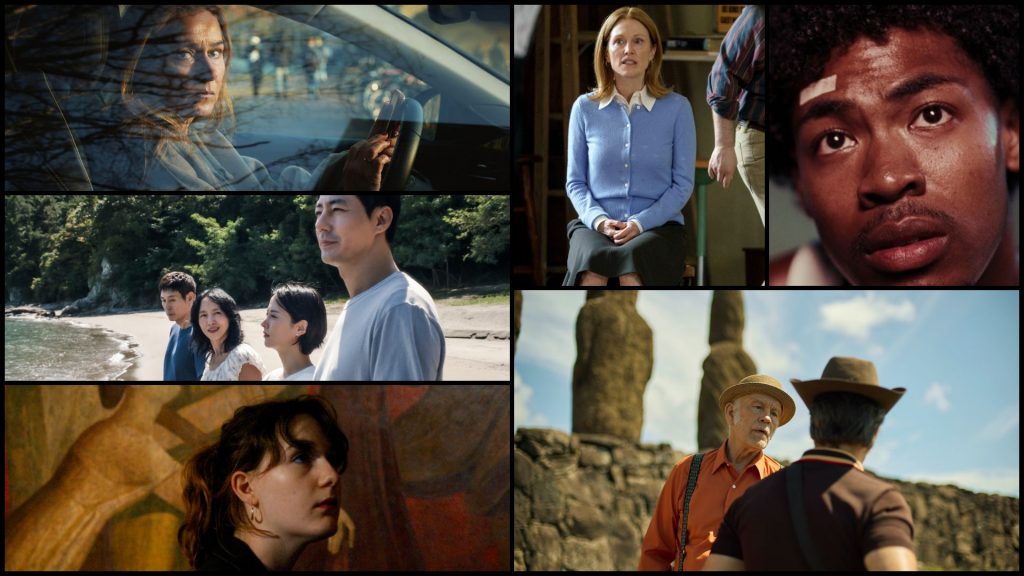
Prabhjot Bains: Possible Love – Patient but never inert, intellectually rich but never preachy, Lee Chang-dong’s gorgeous, layered novel of a film dissects modern class, privilege, and exploitation with piercing nuance and aching specificity. Rather than positioning its characters within distinguishable dichotomies, Lee subtly examines how social bonds twist, contort, and sway under the ever-present winds of capitalism. Every gesture is charged with doubt, longing, shame, desire, and tenderness: one part of the social order afforded the pleasure of observation with few strings attached, while the other is puppeted by those very strings. It’s all so meticulously observed that an image as simple as a mother noticing her child watering a tree alongside a housekeeper becomes a powerfully loaded metaphor for the generational conflict between labour and capital—a seemingly incidental moment carrying the weight of an entire social history.
The result is a quiet yet overwhelming masterwork that revels as much in moral ambiguity as it does moral gravity, finding in human connection a great unifier, however compromised and imbalanced it may be—a rare bastion that hasn’t yet been carved up and sold. Like the bright full moon above, it remains one of the few wonders that shines equally upon us all.
Honourable mentions: Club Kid, La Gradiva, Everytime, Tender Loving Care
Susan G. Cole: The Liberation — It’s official. Carrie Coon is one the best big- and small-screen actors alive. You might have sensed it when she appeared in His Three Daughters (2023), and later in the TV series The Gilded Age and The White Lotus. Now she cements her reputation in this electrifying turn as Rita, a lost soul lured into a female cult by its charismatic magic mushroom wielding leader Rikki (Lily James). When we meet her, Rita’s popping anti-anxiety pills as she heads to her dreary job at a bank, panicking about a planned interview with a journalist talking to Holocaust survivors. In a bravura sequence, Coon has a meltdown as she begins to recall her childhood trauma – quiet but powerful. And she makes every step of her fall into the thrall of Rikki wholly believable. The rest of the cast is also stellar: James as the manipulative cult leader, the criminally underappreciated Tracy Letts as Rita’s husband, and as Rita’s two daughters, Odessa Young and the always watchable Bella Ramsey.
Honourable mention: The Debut, because Julianne Moore…
Thom Ernst: HALF – Prestige films will have their day. My best of the fest picks tend to lean toward the weird and the wicked—the kind of films that draw hoots and yelps from an appreciative crowd of rabble-rousing filmgoers. For my festival buck, it’s the Indian vampire thriller HALF that stands above the rest. No, it’s not a film likely to push the boundaries of thought or ideas, or even open your mind to something new. What it did for me was make me laugh, smile and occasionally cringe—the good kind of cringing that action thrillers are designed to achieve. Twin siblings, half-human and half-vampire, are left for dead by a marauding gang of vicious highway robbers. When the twins rise from what are presumed to be fatal wounds, they set out to bring the cartel down. Messy, loud, unbelievable and endlessly enjoyable, HALF is a vampire-curry-western and balls-to-the-wall revenge thriller from the remote reaches of Rajasthan’s desert. Pure, unadulterated, unapologetic fun, there are few films likely to match it.
Honourable mention: James Marcus Haney’s outstanding documentary Black Sunflowers, chronicling the lives of young Ukrainians during wartime. There’s something about the energy of youth that war can damage but not destroy.
Peter Howell: Wild Horse Nine — Laugh while you gasp. A South American revolution, the JFK assassination and assorted CIA skulduggery hardly sound like the makings of riotous buddy comedy. But Martin McDonagh has built a glorious career wringing chortles from the darkest circumstances and most combative of male pairings, from In Bruges to The Banshees of Inisherin. It is 1973. A bloody Chilean military coup is brewing, and squabbling CIA agents Chris (John Malkovich) and Lee (Sam Rockwell), long-time pals and habitual agents of mayhem, head to Rapa Nui to see “the giant heads,” a bucket-list wish for Chris. The trip has urgency: Chris is terminally ill and showing signs of cognitive decline. Worse, he has become a gleeful blabbermouth about his part in some of history’s most notorious atrocities, including JFK’s assassination a decade earlier. His plans for a tell-all memoir have put the CIA’s South American chief, MJ (Steve Buscemi), on high alert. It’s top-of-game work from everyone involved, especially Malkovich as the irrepressible Chris, casually voicing the sort of things the rest of us only have nightmares about. And Rapa Nui, magnificently, proves more than a scenic backdrop.
Honourable mentions: The Debut, Possible Love, Your Mother Your Mother Your Mother, La Gradiva, and a whole bunch of great Cannes and Sundance titles.
Chris Knight: The Surgeon – Michelle Yeoh (also at TIFF playing a Rubik’s Cube champ in It’s My Time) combines the fighting prowess of Sherlock Holmes, the medical knowledge of a modern-day Dr. Watson, and the brains of both in The Surgeon. Her character, a just-retired doctor, is pulled back in for one last gig because the patient is a crime lord who won’t take no for an answer. Certain she’ll be killed the moment the operation is either successful or botched, she threads her way between those outcomes with inventive, brutal tactics. Scalpel. Gun. Phone. Bluff! And she uses a defibrillator as — I guess you’d call it a fibrillator? Stuffed with fantastic rock music and “woo!” moments.
Honourable mentions: Wild Horse Nine, The Only Living Pickpocket in New York, Bunker, Le Faux Soir
Joe Lipsett: La Gradiva – La Gradiva: It was an incredible year for queer films at the fest. Folks will undoubtedly laud Andrew Scott in Elsinore or Spanish triptych – and People Choice’s winner – La Bola Negra, but for my money, the film that merits more attention is Marine Atlan’s La Gradiva. Featuring a cast of non-professional actors delivering extremely naturalistic performances, this tale of French high school students on a trip to Naples unfolds like a slow-motion car crash. Filled with dialogue about art, politics, privilege, and sex, the film’s deliberate pace lulls the audience into a false sense of security before delivering an emotional wallop that lingers long after the post-script. It’s quietly devastating, but incredibly powerful.
Pat Mullen: The Debut — Who expected Julianne Moore to give the performance of her career in what’s basically a live-action remake of A Streetcar Named Marge? Moore gives a fearlessly, ferociously funny performance as Mona, a bored housewife trying her hand at musical theatre in Jesse Eisenberg’s darkly funny and sweetly endearing take on community dramas. Moore’s locked-in turn carries Mona’s discovery of her character Miss Danielle through its wildest moments as her exploration of the character gets very dark. Yet Eisenberg’s trust in Moore to follow Mona down the rabbit hole takes The Debut to comedic highs that make one see a Hollywood icon anew. It’s the kind of movie that only an actor could make, too, as it trusts actors of this calibre chew the parts up and spit them out without ever eating the scenery.
Honourable mentions: La Bola Negra (a close runner-up); Bleeding Hearts; Coward; Ladies and Gentlemen, Brian Mulroney; Black Sunflowers; Musk
Steve Norton: Josephine – In Josephine, director Beth de Araújo immerses the viewer within the mind of a child in the middle of very adult circumstances. Walking the blurred line between innocence and trauma, the film speaks to the damage left in the wake of sexual assault but tackles the subject from a broader perspective. Instead, Josephine focuses more on the effects of trauma itself, especially when told through the eyes of youth. (And, as the camera weaves in and out of Josephine’s perspective, that comment is meant to be taken literally.) Featuring strong performances and whip-smart storytelling, de Araújo ensures that her tale isn’t just understood by the audience. It’s experienced at a visceral level. With raw authenticity and candor, this is not only the best film of this year’s festival, it’s also one of the best films of the year.
Jennie Punter: Sunburn — Serville Poblete turns up the heat with Sunburn, a hangout film set on a single day in St. James Town, the Toronto high-rise community where he grew up. The story follows three pairs of friends on the cusp of changes they are feeling but can’t quite see, trying to stay cool and fight the boredom. They are “kids who look like me,” he wrote in his director’s statement, “with darker skin, curly hair, raised in immigrant and working-class Toronto.” They are hilarious, full of dreams and doubts. A sweeping orchestral score by Canadian composer Aaron Paris makes the summer day feel epic, the loose-limbed ensemble performance keeps it grounded. No surprise it was picked up after its first market screening. My favourite film of the year so far.
Gilbert Seah: Fjord — Inspired by real events, the setting of the Palme d’Or Winner Fjord is a small town in scenic Norway where the Gheorghiu family, with a Romanian father and a Norwegian mother, have moved. The Gheorghius are suspected of child abuse, and the Norwegian Child Protection Services arrive one day to take away all five of their children. What transpires is an elaborate legal fight, the fjord used as a metaphor for the society and the conflicts in the film. The elaborately and brilliantly staged courtroom drama unfolds in an all-modern court, furnished with the latest computers, with a window that ironically overlooks the stunning fjord. And watch out for the big twist in the story at the end.
Honourable mentions: Le Faux Soir, El Corset (Iron Boy), Purgatory
Jim Slotek: Wild Horse Nine — I loved the movie when I first saw it for the dialogue alone (particularly John Malkovich’s morphine-induced reveries on cancer-heaven and the lack of songs about suicidal birds). It occurred to me later how closely it follows the plot of my favourite Martin McDonagh movie, In Bruges. (Stop me if this is a spoiler for either movie. But it’s true. Two hit-men hide out in a beautiful scenic place with one waiting to die. Their boss, having okayed the bucket-list vacation, urges the other to do the deed, before deciding to do it himself). Add wry geopolitics and impending mass murder and this is a richly conceived movie. Dark, shameful laughs are the best laughs, in my opinion.
Dave Voigt: Once Upon a Time in Harlem – Once Upon a Time in Harlem is one of the more dynamic pieces of cinema to hit our screens this year. From the mind of legendary filmmaker William Greaves and directed with and finished by his son David, this film is a living archive of culture and creative electricity that you wouldn’t expect to have the privilege to witness. One afternoon, at Greaves’ request, luminaries from the Harlem Renaissance—including Aaron Douglas, Arna Bontemps, Richard Bruce Nugent and James Van Der Zee, among others—gathered at Duke Ellington’s house simply to banter and debate their individual legacies, and Greaves had 16mm cameras to record it all. It’s a film capturing the magic of memories and the vibrancy of conversation, allowing us to hear about a cultural movement directly from the people who made it happen—a dynamic that cannot be recreated. It’s honestly a gift as it’s rare to find non-fiction this dynamic. This film is a cultural archive and a pop cultural necessity as we get perspective on something that helped to birth so very much in the worlds of art, music, culture and beyond.
Honorable mentions: Sunburn; The Debut; Look Back; Ha-Chan, Shake Your Booty!
Rachel West: What Lies Between Us – This Danish family drama slipped quietly under the radar but anyone lucky enough to seek out this hidden gem was likely not disappointed. Sidse Babbett Knudsen is exemplary as a mother whose ethical and moral boundaries are tested when her teenage son is accused of a heinous act that affects the local school community. The dynamics at play between parent and child, friends, and adults and teens alike offer compelling complexity in a well-structured script, while a tight ensemble lifts the story beyond your standard TV legal drama fare. With warm and moody art direction, What Lies Between Us feels like a spiritual companion piece to Thomas Vinterberg’s The Hunt.
Honourable mentions: Toy Gun Bandit, Coward