Reviews include Onslaught, Mayday, and Hope.
TFCA Friday: Movie Reviews for July 31
July 31, 2026
Welcome to the TFCA weekly, a round-up of reviews and coverage by members of the Toronto Film Critics Association.
In Release this Week
Everyone Calls Me Mike (dir. Guillaume Bonnier)
“Besides being a taut thriller, the film examines several issues like the dream of freedom that Mike seeks and the freedom that the couple enjoys,” says Gilbert Seah at Afro Toronto. “Both Mike and the couple, ironically, are escaping from their own countries – Mike from Somalia and the couple from France, where they do not like the society. The tension is psychological suspense with a political slant. Mike’s role as the villain remains ambiguous or up to the audience to decide.”
I Want Your Sex (dir. Gregg Araki)
“To put it simply, without Olivia Wilde and Cooper Hoffman, I Want Your Sex simply wouldn’t have worked and is a fantastic example in the power of casting,” writes Dave Voigt at In the Seats. “Wilde is one of the few working actors today who can combine the overtly sexual dynamics of the character while still being dead pan funny at the same time. She “gets” this character and plays it to the absolute hilt while Cooper Hoffman is such a fantastic extension of his iconic father Philip Seymour Hoffman. He finds the confusion, the eagerness and the earnestness of someone who has gotten swept into the kind of relationship that is simply beyond him, not only from an emotional standpoint but an intellectual level as well.”
“The screenplay is adapted and directed by indie film provocateur Gregg Araki. And as you’d expect from him, it’s provocative, silly, visually colourful and a lot of fun. It also makes some pretty canny observations about modern life, with musings about whether some of us are just bullshitting our way through,” says Karen Gordon at Original Cin. “Araki has a lot of fun with all of this. The characters get off witty and observant lines as part of their regular conversation, as Araki winks at us and lays out a buffet of cultural clichés.”
“I Want Your Sex is one of Araki’s films with the strongest storyline, though the mystery plot gets lots of distractions, Araki- style,” adds Gilbert Seah at Toronto Franco.
“The film is an aggressively comic take on the contemporary Los Angeles art scene with the requisite mixture of S&M, posturing and over-the-top dialogue to make it feel playfully authentic,” says Marc Glassman at Classical FM. “I Want Your Sex is intended to be Gregg Araki’s comeback film. It is fast paced and titillating. Olivia Wilde delivers a funny take on an obsessed sexy artist. And Cooper Hoffman is reasonably good as Elliot; if he keeps on getting roles, he will likely have a fine career.”
Nightborn (dir. Hanna Bergholm)
“Remarks about the baby are not comforting to say in the least. ‘Why is it so weird?’ asks the niece to her mother. ‘Is there anything wrong with the baby?’ Saga asks her mother. The story could be considered a Rosemary’s Baby about the baby after the baby is born,” says Gilbert Seah at Toronto Franco. “Like Rosemary’s Baby, the baby’s face is withheld from the audience till the very end of the film.”
Sheep in the Box (dir. Hirokazu Kore-eda)
“What follows seems at first to be a Koreeda classic—the slow unfolding of the differing relationships between the parents and their substitute son. While Kensuke finds it hard to accept Kakeru, insisting that he be called ‘Mister,” not “Father,’ the more intellectual Otone delves delicately into a dialogue with the new boy. Via small steps, they try to understand this new creature, who isn’t exactly their son but certainly resembles him. Rather more dramatically, Otone’s mother Nobuyo (Kimiko Yo), shows up and is appalled: she wants her daughter to return the robot immediately. Meanwhile, it becomes evident that the new Kakeru is developing his own personality and has desires of his own,” writes Marc Glassman at Classical FM. “Unfortunately, Sheep in the Box veers away from this delicate exploration of family feelings into a couple of bizarre, though related, narratives.”
“The most beautiful thing in this film needs to be felt with the heart through Kore-eda’s augmented visuals, sound, and use of metaphors. It seems like love is the one element that could tie a family together in the director’s films,” says Alice Shih at Original Cin. “Family members don’t have to stem from the same genes, the same race, same species or even the same living beings. As long as there’s love and respect between the intellectual beings, humanity exists and we can consider them a family. Kore-eda’s messages are always thought-provoking, emotional, genuinely and authentic.”
“Occasionally it’s a little too subtle, but that ultimately harkens back to the Kore-eda style of allowing whatever genre he is working with come back around to the totality of the human experience, letting his actors do the work and give us something that’s more of a natural expression of grief, even while existing in the near future sci-fi trappings of the story,” notes Dave Voigt at In the Seats. “Ultimately, Hirokazu Kore-eda is one of those filmmakers who is never boring and with Sheep in the Box we get to explore the more practical realities of holding on to your grief while never getting lost in the potentially distracting emotional flourishes that the emotion can unleash on people.”
Spider-Man: Brand New Day (dir. Destin Daniel Cretton)
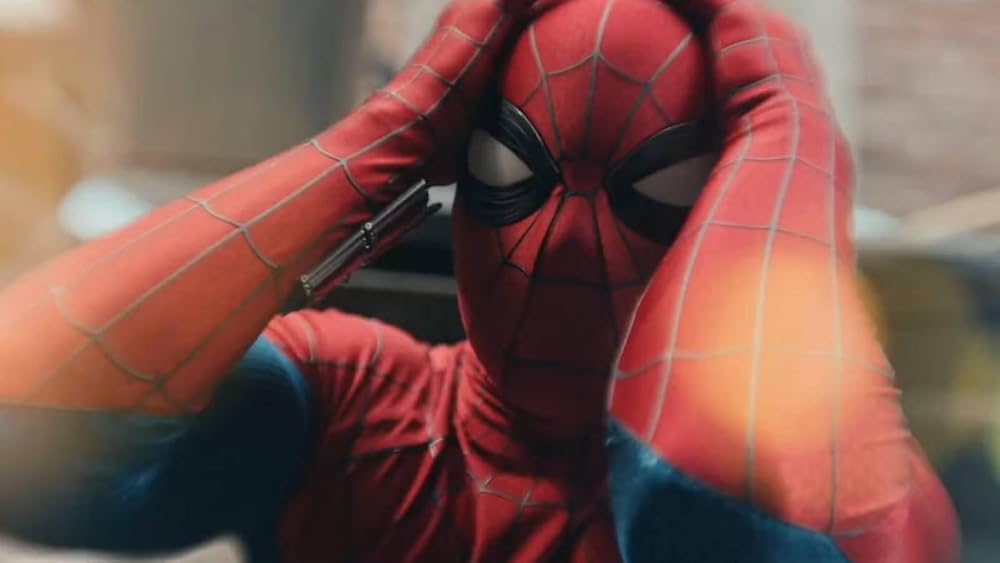
“Spider-Man is unquestionably still a top-tier hero. But Marvel’s days as a must-see moviemaker are fading faster than the Invisible Woman. As the studio gears up for December’s Avengers: Doomsday, one has to wonder if Holland’s Spidey spandex is beginning to chafe,” itches Eli Glasner at CBC. “This is a Spider-Man film too morose, too mopey to even imagine a lighthearted moment like ‘Do a flip!’ Is that a failure of the script, or a sign of Holland’s Parker trying to grow up? This is the classic comic book quandry: we adore our characters for their classic qualities, but threaten to leave them trapped in amber, never allowing them to evolve.”
“The film offers a satisfying blend of visually stunning superhero action and compelling emotional stakes. Cinematographer Brett Pawlak went above and beyond to create the most visually dynamic live-action Spider-Man yet,” declares Victor Stiff at That Shelf. “Extreme closeups make you feel the exhilaration of web-swinging. And the increased emphasis on practical stunt work allows the audience to marvel at the balletic fight choreography. Spider-Man’s acrobatics have never looked more impressive than in Brand New Day. One standout sequence sees Spidey face off with The Hand’s ninja assassins, and the movie transforms into a Wuxia flick for a couple of minutes.”
“The trick is to make the stakes high enough for you to care, but low enough that the fate of the universe (or the multiverse) doesn’t hang in the balance, a situation that causes viewers to wonder why none of the other superheroes bothered to show up for this one,” says Chris Knight at Original Cin. “There are a couple of cringey/confusing moments in the mix, mind you. A scene in which Spider-Man battles a group of red-clad ninjas seems to lose track of just how many of them there are. And a gorgeous wide shot of them all leaping at him is spoiled by the superhero remarking: ‘That is so cool!’ Take it easy, Spidey — you’re not Deadpool, you know.”
“The best thing about Spider-Man: Brand New Day is that it successfully reinvents Tom Holland’s Spider-Man by focusing on character rather than spectacle,” observes Gilbert Seah at Toronto Franco. “The spectacle, which accounts for most of the film’s budget, tends to be overdone and all over the place, as Spidey jumps too fast all over NYC.”
“Holland finally nails the sarcasm, angst and romantic hassles of Spidey/Peter Parker, presenting both side of the character as co-creators Stan Lee and Steve Ditko first envisioned him. There are sharper, more deeply felt rhythms here than in the franchise’s more overwrought recent outings, as the film sifts through the collective memory loss and emotional wreckage left by Spider-Man: No Way Home five years ago,” notes Toronto Star critic Peter Howell’s Night Vision. “A genuinely unnerving telepathic villain lurks in that aftermath, giving Peter’s new chapter teeth and Spidey more hard body slams than you can count.”
“And Holland? Brand New Day is the film that may cement him as one of the all-time great superhero performers, alongside other icons such as Hugh Jackman, Christian Bale and Christopher Reeves,” says Steve Norton at Screen Fish. Though he’s been in multiple films, it’s not simply about his body of work. Holland simply owns this character in a way that few others have been able to accomplish. Having grown up onscreen before our eyes, Holland finally steps into the spider-tights with the eyes of an adult. Maintaining his youthful humour and grace, Holland’s Peter is allowed to truly become the sort of character that has the potential to lead. Once the one that was looking to others for help, here he is the one who does the helping. Now, he’s grown up and putting responsibility on his shoulders.”
Time and Water (dir. Sara Dosa)
“Time and Water, like Fire of Love, harnesses the memories housed within archives as Dosa mines the family movies of Icelandic writer Andri Snær Magnason as he considers the parallels between the loss of the glaciers and the ways in which his own family history melts away with the passing of grandparents and great grandparents,” says Pat Mullen at POV Magazine. “Time and Water finds a fitting counterpoint to the bravura visuals and adrenaline-rush of Fire of Love as these images invite audiences to pause, consider the passage of time, and experience an elegiac sense of loss.”
File Under Miscellaneous
At Go Ahead Sumi, Glenn Sumi reflects upon what makes the new stage capture of Hadestown so cinematic: “The way Sullivan captures the experience matches the vibe of the show, which feels like a juke joint retelling of the Orpheus and Eurydice story, with the band onstage blaring out Mitchell’s jazz and folk score and Hermes (André De Shields reprising his Tony-winning performance) introducing the characters and the story,” writes Sumi. “Another sign of an electric performance? De Shields gets wild applause from a simple, stylish adjustment of his silver-grey suit before he opens the show and, as narrator, introduces the world of gods and humans.”
At Screen Fish, Steve Norton looks at the series Furious with Emmy Rossum: “Leading the charge is an incredible performance by Rossum as Alice. As Alice, Rossum feels entirely focused on balancing Alice’s gravitas with the weight of her personal struggles. She’s committed to the job and relentless in her pursuit. But there’s also history there that reminds us of her own personal damage. Even so, her past isn’t merely a story point. It’s also serves as the driving force behind her character. Without saying too much, Rossum ensures that we feel Alice’s brokenness even as she strives to move forward with her life. She’s haunted by hurt but she’s also fighting to heal, and that makes her stronger.”
A Festival of Festival Coverage
At Variety, Jennie Punter reports from Montreal’s genre fest. “‘Every company you talk to wishes they had more genre on their slate,’ Fantasia artistic director Mitch Davis tells Punter. ‘Every generalist festival, including the big A-list festivals, have their midnight and genre sections, and also have genre in just about every other section of their lineup.’ Davis notes that Fantasia audiences have also evolved over 30 years. ‘Today’s young audiences are ready for films that are going to shake them up, films that they’ll have to work with in a sense to engage with,’ he says. ‘Times of crisis and massive global anxiety are when genre cinema tends to percolate.’” She also reports from the market.