Reviews include Onslaught, Mayday, and Hope.
TFCA Friday: Movie Reviews for July 24
July 24, 2026
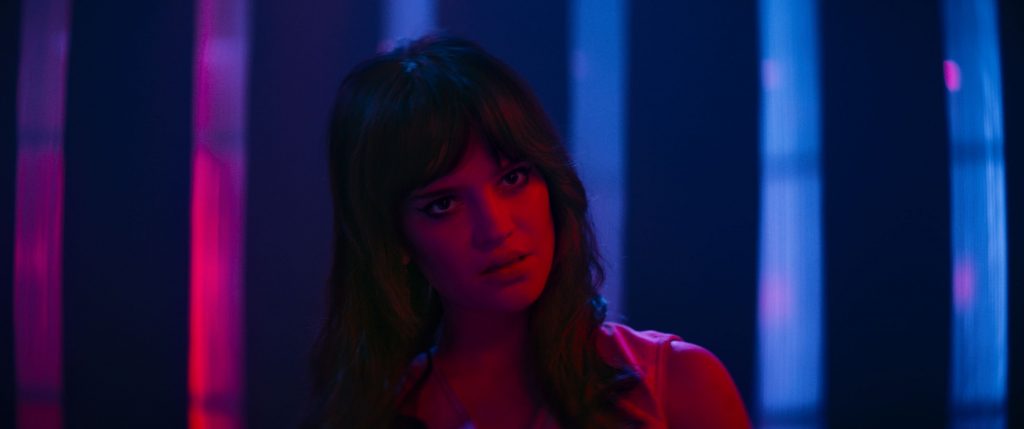
Welcome to the TFCA weekly, a round-up of reviews and coverage by members of the Toronto Film Critics Association.
In Release this Week
Brunello: The Gracious Visionary (dir. Guiseppe Tornatore)
“Cucinelli spends so much time detailing the minutiae of his youth that The Gracious Visionary feels more shoehorned than empowered by its star’s hand in the production,” writes Pat Mullen at POV Magazine. “The film inadvertently calls to mind a barb with which fashion editor Miranda Priestly (Meryl Streep) zings her foe, Dior peddler Emily (Emily Blunt) in The Devil Wears Prada 2. “You’re a not a visionary; you’re a vendor,” Miranda charges. Cucinelli actually appears as one of the flyby cameos in Streep’s hit comedy—filmed in his signature colour palette, no less. He might have taken the line to heart while bringing his own story to the screen. Rosy portraits of nice billionaires may be an acquired taste. But for anyone who can afford a sweater that runs $1,500 on a sale day, feel free to buy what he’s selling.”
Cielo (dir. Alberto Sciamma)
“Cielo is never boring as director Sciamma keeps his mystical tale intriguing and full of surprises, added with emotion,” says Gilbert Seah at Afro Toronto. “He blends together fantasy and reality, aided by his cinematographer Alex Metcalfe who often saturates the scenes with bright and blinding light.”
The Debt Collector (dir. Surapong Ploensang)
“The Debt Collector differentiates itself from the typical action Martial arts flick by ambitiously blending crime thriller, martial arts action, and redemption drama,” says Gilbert Seah at Afro Toronto. “Director Surapong Ploensang still keeps the action as the film’s main focus. The reality of Thailand’s loan-shark industry is on display in the film. One assumes a certain authenticity. The film is a bit too long, running 2 hours and 15 minutes. It could have been cut shorter and made more efficient.”
The Golden Spurtle (dir. Constantine Costi; July 26 only)
“The Golden Spurtle is not a doc about who wins and how winning the cooking comets is everything, but a charming story of tradition, preserving local heritage in a rapidly changing world, and finding purpose after retirement, while demonstrating friendship and community, with the pride in the craftsmanship of simply making porridge,” writes Gilbert Seah at Afro Toronto.
Hadestown: The Musical (dir. Brett Sullivan)
“It must be said that the performances of the leads are, in the main, remarkable. De Shields as Hermes, the narrator, holds the show together with his sharp tongue and commanding presence. Amber Gray plays with the vulnerability and edgy charm of a beauty who is losing the battle to hold her man, Hades,” says Marc Glassman at Classical FM. “As Eurydice, Eva Noblezada is gorgeous but weak, prey to the charms of others because she lacks belief in herself. Patrick Page is the aging, handsome, dictatorial Hades, whose basso profundo voice works well when speaking but may be a bit too much when singing. As Orpheus, Reeves Carney is the weakest element, the handsome, innocent lad who finds it hard to hold onto Eurydice’s affection and doesn’t feel like a fair opponent to Hades. Perhaps Carney is playing a character who is weak, but he seems the least impressive of the five leads.”
Her Private Hell (dir. Nicolas Winding Refn)
“Director Refn himself warned that his film Her Private Hell is hell to [watch], and he is right,” says Gilbert Seah at Afro Toronto. “Her Private Hell is a stylish, boring, ill-disciplined disaster. On the surface, it looks good, reminding one of spy thrillers like Mario Bava’s Danger: Diabolik or Joseph Losey’s Modesty Balise. But Refn’s film [makes no] sense (like the infrared-eyed monster that appears from nowhere at the end) and even Refn’s fans (which includes me – I loved his Pusher trilogy) will be unimpressed.”
“By leaning into his visual presentation, Refn’s narrative clarity disappears into the background. Lines between narratives are intentionally blurred to the point that the film becomes extremely difficult to follow. For some fans, the film may feel like a delightful dream that weaves its stories together into a rich tapestry of chaos. However, for the average viewer, Private Hell is almost unintelligible, immersing the viewer with metaphorical monsters and madness,” notes Steve Norton at Screen Fish. “And admittedly, that realization becomes really disappointing as Private Hell appears to have so much to say. Elle’s journey into darkness carries shades of an empowerment narrative in the wake of sexual assault.”
“I left the press screening of this movie surrounded by other critics with baffled and disgusted looks on their faces — almost universal loathing in reaction to this movie,” says Daniel Garber on CIUT Critics’ Circle and Cultural Mining. “And yes, it is kind of ridiculous at the beginning, and intentionally artificial, with everything shot on a stage set. But if you let yourself be taken in, allow yourself to be enveloped in the beauty and sensuousness and senseless violence it’s an incredible experience.”
The Outer Threat (dir. Will Woods)
“The Outer Threat ultimately asks the question: Which do you fear most—Aliens or AI? It’s a great query. William Woods has created a film that reminds this old sci-fi fan of the novels of Isaac Asimov and Robert Heinlein,” writes Marc Glassman at Classical FM. “It’s full of ideas and plot points and lacking in characterization. As a nerdy kid, I loved this kind of story.”
“The Outer Threat is a tight, taut, totally-watchable science-fiction thriller and cautionary tale. It presents contemporary America turned upside down when facing a possible alien invasion, and how ordinary people react,” adds Daniel Garber at CIUT Critics’ Corner and Cultural Mining. “It’s a lot like Stephen Spielberg’s recent Disclosure Day, only made on a micro budget, not with hundred of millions. This means no impressive special effects and CGI aliens with big heads. Instead it makes do with a few drones, and some glowing green radar screens and obsolete cold-war paraphernalia for good effect. It’s a Canadian movie meaning good acting, low budget.”
“Yet, beyond the family drama, Woods ensures that there’s a genuine Threat worth watching within his world – and it’s not necessarily what you think it might be,” notes Steve Norton at Screen Fish. “Without giving any spoilers, his global menace exposes the paranoia that can ensue when humanity’s deepest fears are exposed. Beyond any potential alien threat, the series is unafraid to explore the consequences of man’s willingness to sacrifice his principles for the sake of ambition. In this way, Threat wrestles with whether or not mankind is intrinsically good or whether or not our brokenness creates an incurable toxin.”
Saccharine (dir. Natalie Erika James)
“Despite the relatively simple premise, the film is disjointed, and the main story of how Hana can overcome e the spirit of the monster taunting her is blurry,” says Gilbert Seah at Afro Toronto. “The odd ending does not help the film either. For the not-too-demanding horror fan, the film delivers its shocks and scares expectedly.”
A Sad and Beautiful World (dir. Cyril Aris)
“A Sad and Beautiful World, the film is ironically a sad though beautiful (cinematography and atmosphere created-wise) effort,” observes Gilbert Seah at Afro Toronto.
Suzzanna: Witchcraft (dir. Andri Sofyansyah)
“The film is cheesy all the way from the way Suzzanna is trained in her magical powers – 40 days and 40 nights of meditation while confronted by awful-looking demons while also escaping henchmen on motorbikes in the jungle while she loses her slippers running away from them,” says Gilbert Seah at Afro Toronto. “But it is this cheesiness that makes the film all the more hilarious, intentionally or unintentionally one can never be sure.”
The Truthers (dir. Roger Gaul)
“The Truthers works well as a psychological suspense thriller in which the audience is taken for a solid ride,” says Gilbert Seah at Afro Toronto.
What Tomorrow Brings (dir. Matt Engelberft)
“The film is quite a boring watch, as one can tell of its manipulative nature,” notes Gilbert Seah at Afro Toronto. “There is nothing really wrong with each segment of the film, but there is little audience anticipation in the film, nothing that would entice the audience to want to watch more of the film.”
A Festival of Festival Coverage
On In the Seats with…, Dave Voigt looks at the Fantasia selection and speaks with director Nick Taylor: “While Rubberhead doesn’t skimp on the fan service which is well deserved and plentiful it’s also a really interesting story of a mad creative genius being undone by his demons like many before him have gone through,” notes Voigt. “That being said, with Johnson serving as narrator he gives this time period the unabashed rock star treatment that it so richly deserved. He created on a level like no other, and played in is excesses without regret.”
File Under Miscellaneous
At That Shelf, Pat Mullen looks at how The Invite serves one of the summer’s best surprises and gets some words from director/star Olivia Wilde and writers Rashida Jones and Will McCormack: “We used every square inch of this set — we understood it so well in prep that we knew exactly how to film it, depending on where the actors organically found themselves in rehearsal,” says Wilde. “We embraced frames within frames — mirrors, glass, barriers that represented emotional boundaries. It was so fun to design, and I don’t think we could have done it had we shot on location. We had to design it very specifically, without making it feel overly considered or overdone. Joe’s character grew up there but can’t really afford to decorate it the way it’s ‘meant’ to be, so it’s a mix of vintage pieces and cheaper, DIY materials.”