
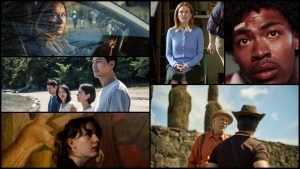
The critics were busy at this year’s Toronto International Film Festival! From our annual pre-festival party, this year held at Hotel Le Germain Toronto Mercer and generously sponsored by Redbreast Whiskey, to scurrying from screening to screening, our members can attest that TIFF was in full swing. This year again held an abundance of riches, […]
TFCA Friday: Movie Reviews for Oct. 3
October 3, 2025
Welcome to the TFCA weekly, a round-up of reviews and coverage by members of the Toronto Film Critics Association.
In Release this Week
Anemone (dir. Ronan Day-Lewis)
“Nepotism isn’t exactly a fresh phenomenon when it comes to showbiz − if you want to get technical about it, Charlie Chaplin was a nepo baby of sorts − but it has reached dreadful new heights-slash-depths with this weekend’s release of Anemone. A dirge of a drama, the film is essentially a make-work project for the Day-Lewis clan, marking both the feature directorial debut of young visual artist Ronan and the long-awaited return of his ostensibly retired papa, Daniel,” says Barry Hertz at The Globe and Mail. “Instead, audiences curious about whether talent is acquired via nature or nurture will surely walk out of Anemone wondering whether they should start cutting off their own children now, in a kind of pre-emptive strike against producing such portentousness.”
“Emotionally, it’s difficult; visually, it is breathtakingly beautiful. The brothers move quietly through the vast countryside, hunting for game or swimming in the ocean, but always rendered insignificant by the force and majesty of the landscape around them,” writes Liz Braun at Original Cin. “The sound of the wind in the trees and tall grasses is almost a separate character here. Anemone is a redemptive tale, but slow and dark and haunting, sometimes slipping into fantasy and playing out like a fairytale, and sometimes unfolding like a Greek tragedy. As films go, it’s a triumph.”
“Without a doubt, Ronan Day-Lewis has passed the test. Anemone may not be perfect—it definitely has flaws—but it is a forceful, passionate work filled with good ideas buttressed by a lyrical visual style. Unsurprisingly, the film has brilliant performances, and not just by the director’s father,” says Marc Glassman at Classical FM. “Sean Bean, who embodies strength and character in many of his parts, is wonderful here as Jem Stoker, the solid brother to a malcontent sibling, Ray, played with fervour and ribald humour by Daniel Day-Lewis. As Nessa, the woman whom they both have loved, the great Samantha Morton doesn’t have to do much but she’s entirely credible as a wife and mother.”
“Fortunately for audiences, nepotism exists, and DDL has returned to the screen with a performance far better than his son’s directorial debut deserves…While RDL does demonstrate an artistic directorial acumen that will surely and eventually translate into rewarding work, such skills don’t make themselves known enough in Anemone,” writes Rachel Ho at Exclaim!. “The film grapples with a multitude of themes, from the role of the father to the Troubles, the effects of childhood abuse, and everyone’s favourite, generational trauma. Although the sheer quantity leaves most of these themes without proper exploration or resolution, the primary issue with the film comes from Anemone‘s dull delivery, in spite of the great performances and many avenues to choose from.”
“The drama marks the feature directorial debut of Day-Lewis’s son, Ronan Day-Lewis, with a screenplay they wrote together. At its heart, Anemone could be a quietly moving tale about a son growing up in his father’s shadow,” says Pat Mullen at That Shelf. “But little comes through this ambitious intimate family drama. Ronan sure knows his way around actors, but there’s less evidence of the Miller gene at play. His mom, filmmaker Rebecca Miller—daughter of playwright Arthur Miller—might have rescued the film if they made it a family affair. The script for Anemone just can’t sustain itself with the elusive story that becomes overwhelmed by the visuals and insufferable pacing.”
Bone Lake (dir. Mercedes Bryce Morgan)
“Director Mercedes Bryce Morgan cobbles together some fast paced sequences but saving the shock value for the first few minutes as we see a naked man take a crossbow shot through the testicles at a horizontal angle,” observes Dave Voigt at In the Seats. “After that it really peters out as we have these couples who are supposedly all sexed up and horny for their weekend away do the most sexually vanilla things possible. The film feels like it’s trying to channel the vibrancy and politics of someone like an Emerald Fennel but never commits to do anything that feels remotely ‘saucy’ on screen, rather it just sped up teasing it all and tries to create sexy tension by being in the dark half the time.”
Good Boy (dir. Ben Leonberg)
“[A]t dog eye level from a dog’s point of view is a novel idea and the film benefits primarily from being a curiosity piece,” says Gilbert Seah at Afro Toronto. “Despite the short running time of under 90 minutes, the film lags in the middle and a lot of ends in the story are left unexplained.”
London Calling (dir. Josh Duhamel and Jeremy Ray Taylor; Oct. 7)
“Ungar gets great performances from his cast — Hoffman’s Benson is delightfully unhinged — and backs them with some magnificent needle drops, including the toe-tapping 2001 hit ‘East Side’ by Canadian rock band Smoother (the director is Canadian too). And of course, the title track is by The Clash,” says Chris Knight at Original Cin. “This may seem unfair, but I would have bumped my score for ‘London Calling’ up a notch if Ungar’s previous film, Bandit, hadn’t set such a high bar.”
Milisuthando (dir. Milisuthando Bongela)
“Bongela creates a radical form of decolonial cinema that shatters all the rules,” says Pat Mullen at POV Magazine. “Formally, Milisuthando is a kaleidoscopic essay film in the fashion of Sans Soleil and A Night of Knowing Nothing, and like those film’s it’s a hypnotic journey through media and memory. It’s a five-part, first person exploration of South African apartheid, Blackness, and the perceived invisibility of race. More than that, though, it combs through the archives and weaves between past and present to consider loss amid the fissures of history. It’s a tough and frank feat of self-assessment that asks if we’ll ever really dissolve racial divides. But as the film ends with a return to Grandma Bongela’s home and an ode to the spirits of goats that linger long after the animals give their meat for stew, Milisuthando finds great power in its unabashed assertion of identity.”
Monsters Within (dir. Devin Montgomery)
“Writer/actor/director Montgomery has no shame in writing long monologues where he speaks his mind, forcing the audience to listen often to some bad writing. The word shit punctuates the dialogue ever so often, and if Luke runs out of things to say, he will scream at the top of his voice to depict aggression and frustration,” shares Gilbert Seah at Afro Toronto. “Montgomery, as director, fares not much better in his role. Luke meets a girl at the local bar and chats her up. The scene is intercut with another scene of the two having hot sex. The film then moves to the end of the night when the bar closes and Luke brings her home for sex, which the audience has already witnessed. There is no point in the intercut segments. The music mixing also leaves far to be desired with long bout of soundtrack dragged along in order for a scene to properly end.”
Orwell: 2+2=5 (dir. Raoul Peck)
At POV Magazine, Susan G. Cole speaks with director Raoul Peck about revisiting George Orwell’s work: “What I knew of him is what I learned in school: 1984,” Peck says asked whether his attitude towards Orwell changed while he was making the film. “There was a polemic around his name: he was used as an anti-Stalinist instrument when his analysis was more fundamental than the boxes people around the world have tried to put him in. When I reread most of Orwell, I rapidly discovered a fundamental relationship with him. I discovered him as a brother. His analysis was much more universal.”
“The doc, totally from director Peck’s point of view, which is both a little bit much and personal, evokes a very depressing look at today’s world, at what it has become,” observes Gilbert Seah at Afro Toronto.
“It is a barrage of image and ideas that goes by so fast that the filmmaker is able to slip in some subjective notions that can go by unnoticed. In a rapid-fire segment of modern-day ‘Newspeak,’ terms like ‘collateral damage,’ Peck includes, ‘anti-semitism’ as a euphemism for ‘Protesting the actions of the Israeli state.’ This is reductive, and reflects the fact that the truth is often complex (requiring more than one thought on a subject), while untruths tend to be simple and easy to absorb,” says Jim Slotek at Original Cin. “Orwell: 2+2=5 is food for thought for sure, practically an all-you-can-eat buffet of thoughts. As a statement, it is all over the map.”
“Peck’s ambition is admirable, and the film is certainly visually handsome,” says Jason Gorber at POV Magazine. “The clips are edited with a musical flow, and the quotes are carefully selected to match both historic and contemporary moments with great flourish. However, when all is said and done, the film feels like a half-translated version of Orwell and his ideas, especially since only some of the clips feel free from bias. Listing off the regular run of billionaire media barons while neglecting others is a choice, as are the decisions of what conflicts to highlight, which lies to admonish, and which regimes to reflect upon.”
“While Peck isn’t afraid to hit the nail on the head to make his point, there’s an admirable fearlessness to the call-it-like-it-is philosophy that fuels Orwell. He’s not afraid to equate leaders like Putin, Trump, and Netanyahu with Hitler, Mussolini, and Stalin. Current events like the war in Ukraine, the Rohingya genocide, and Israel’s war crimes in Palestine offer inevitable extensions of the information war that brings a human toll,” says Pat Mullen at POV Magazine. “In making these associations through images of drowned refugees, suffering Syrians, displaced Gazans, and others, Orwell flips the question back on viewers. It asks everyone in the room if they’re willing to call the four fingers like they really are or let the math add up to five.”
Predators (dir. David Osit)
“Ultimately, if you’re the kind of person who wants answers from their documentaries, Predators might not be for you, because this film is all about asking genuine questions as we head forward into the ever evolving forms of media and entertainment,” says Dave Voigt at In the Seats. “David Osit acknowledges that we’re all elbows deep into shades of grey world as puts the mirror back on us wondering if we should actually keep going or if we should hit the pause button, find a way to be kinder to one another and not embraces the horrors that are in our very midst for the sake of moral superiority in the guise of entertainment.”
“Predators ultimately demonstrates the distinct line and moral imperative that distinguishes documentary from reality television,” says Pat Mullen at POV Magazine. “Osit’s film bides its time with a topic to understand both text and context. It considers all the factors entailed in a story. It’s a thorough immersion that seeks to entertain and enlighten audiences, rather than offer ephemeral 45-minute thrills. Predators grasps that visual storytelling has consequences whereas such reality shows don’t. If there’s ever a moment in Predators where one’s attention sags, try to understand why true crime hasn’t trained attention spans to consider the long game.”
The Road Between Us: The Ultimate Rescue (dir. Barry Avrich 🇨🇦)
“For the more open minded, Avrich’s focus provides a precise, compelling look at one specific day in the life of this family,” says Jason Gorber at POV Magazine, who chats with director Barry Avrich and star Noam Tibon about their documentary. “That greater discussion of the conflict is not what I wanted to do, and I’m not the right person to do it. And I think that filmmakers are free to make those films on whatever part of the conflict you want to talk about,” says Avrich. “I did the film about the Nuremberg trial lawyer Ben Ferencz film, 2018’s Prosecuting Evil, which is a much simpler film. That was about this four-foot, eight-inch man who somehow managed to convince the powers that be to have one last Nuremberg trial. In that film, I did not go into World War II and the history of the Nazis. It was specifically about one man’s courage to prosecute the most heinous Nazis ever, the Einsatzgruppen. Again, I’m drawn to specific characters.”
“Some of the subjects do cast blame on the Israeli Defence Forces, though this film is hardly the first to point out that, on Oct. 7, hours passed without any sign of military reaction. To the people sheltering in place with little information from outside, it must have seemed as though the terrorists had already won. But Avrich will leave the geopolitical unpacking for another day,” says Chris Knight at Original Cin. “Instead, we get dashcam and army footage, and bodycam video that was live-streamed by the militants. Avrich thankfully cuts away from some of the bloodier images, showing just enough to educate and, if you have a heart, to enrage.”
“It’s fair to make a film about a family, and The Road Between Us is absolutely moving as an account that asks everyone what they would do if their loved ones faced immediate danger. However, the narrowness of scope limits the conversation. There’s no real mention of Palestine besides frequent reference to terrorists, or no recognition of the circumstances that taught the film’s hero how to react in an emergency,” says Pat Mullen at POV Magazine. “The film, however, does ask some very tough questions of the IDF and its failure to respond to the Hamas attacks in a timely manner. Gali’s final considerations reflect upon the fiasco of Israel’s military complex if it fails to protect Jews in the promised land. But the film doesn’t go there in any substantial way.”
Rockstar: Duki from the End of the World (dir. Alejandro Hartmann)
“The main difference between this doc and other biopic docs, of Elton John, Elvis Presley, and many others, is that this one has the artist at the age of 27,” says Gilbert Seah at Afro Toronto. “Duki himself says, ‘At 27, I have it all.’ The audience sees all his ups and downs, concert performances, and quiet moments all condensed into 27 years. Though the name might not be familiar, he is an internationally famous artist; his story is familiar. An Ok doc, on a reflection on life and his concert performances.”
The Smashing Machine (dir. Benny Safdie)
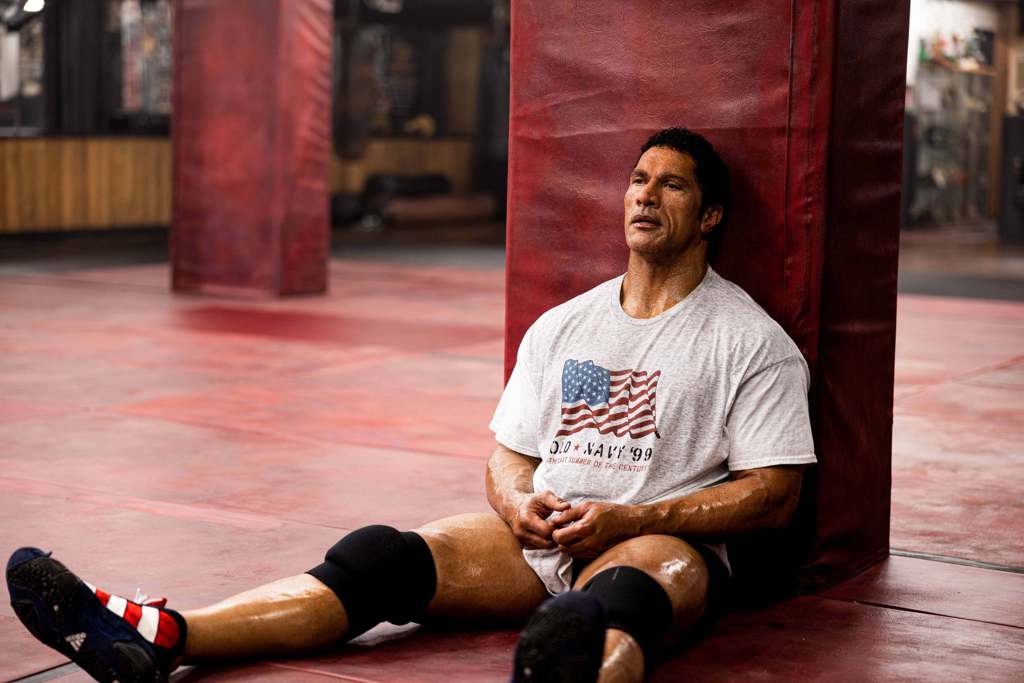
“There is little attempt to dig a little deeper into any of the characters. We don’t know much about them, and the only serious relationship Kerr has seems not to be with Dawn, but with his buddy, sparring partner and fighter in his own right, Mark Coleman (Ryan Bader). It’s the only relationship that rings authentic in the entire film,” says Jim Slotek at Original Cin. “The fight scenes are initially impressive and artfully filmed, but eventually repetitive. As a selling device for UFC, The Smashing Machine falls a little short. Still, even if it seems like we’ve seen this movie before, Johnson does sell his character, no gimmicks, raised eyebrows or phony theatrics. He is believable, even if we never really discover who he is.”
“The Smashing Machine, a fictionalized story of Mark Kerr, is shot quasi-documentary style, with his romance with Dawn Staples dramatized,” notes Gilbert Seah at Afro Toronto. “The film is aided by superb performances by both Johnson and Blunt, who might just win Academy Award nominations for their roles. Entertaining, dramatic and engrossing watch, The Smashing Machine is yet another of director Benny Safdie’s successes.”
“For all the affecting performances from the ensemble (including a tremendous Ryan Bader as Mark Coleman), Safdie is the undisputed champ of The Smashing Machine. From his direction and writing to the music selection, the filmmaker presents a fully realized cinematic event without fanfare,” says Rachel Ho at Exclaim!. “Every choice Safdie makes, like using Elvis Presley’s performance of ‘My Way’ during his Aloha concert in 1973 rather than a Frank Sinatra recording, feel deliberate. The song itself provides a strong message in keeping with Mark’s journey to that point, but to hear Elvis’s vocals recalls the singer’s similar struggle with painkillers, and serves to underscore how lucky the fighter was to have people in his corner.”
“Kerr, in Johnson’s meaty hands, is not a cocksure, eyebrow-wiggling facsimile of The Rock, but a ticking time bomb of vulnerabilities. As a character, Kerr is not a hero per se but a survivor − a warrior who has figured out exactly how much pain he can take, and how much he needs to dole out, in order to get by in this life. Johnson makes the man a victim who’s convinced himself and everyone else in his orbit that he’s an unstoppable champ,” notes Barry Hertz at The Globe and Mail. “It is a performance that understands, well, the superficiality of presentation − the cultivated image that you need to project to a crowd of strangers in order to win their affections while your life is on the line.”
“But like any authorized biography, the main purpose of Smashing Machine isn’t to expose uncomfortable truths: it’s to lightly trot out humanizing missteps, before lionizing its star as he overcomes them,” says Jackson Weaver at CBC. “The way Safdie does so is perhaps The Smashing Machine‘s biggest fault. Instead of offering a cohesive story, it stumbles through a series of life events one after another: a difficult fight, a difficult addiction, a difficult recovery, a difficult relationship. Except these don’t build one into another, or build into a statement about Kerr or even the sport at its centre.”
“The film features extraordinary performances by Dwayne Johnson and Emily Blunt. Johnson is completely persuasive as a man who is desperately trying to control his emotions and become the best person he can be,” says Marc Glassman at Classical FM. “That he doesn’t succeed makes his story that much more compelling. Blunt makes us understand a character who is portrayed as unlikeable because she can’t support Kerr enough to satisfy his male friends. With little dialogue to help her, Blunt manages to convey the heartbreak of a woman in love with a man who can never understand her.”
Steve (dir. Tim Mielants)
“Reminiscent of the French classroom drama and Cesar Award Winning Best Picture, Entres les murs (The Class), done cinema-verité/doc style, or a more maverick styled To Sir, with Love, the film follows a head teacher STEVE (Cillian Murphy) working in troubled school of boys, somewhat before they become residents in a borstal, as in the film SCUM,” says Gilbert Seah at Afro Toronto. “Director Mielants’ films the incidents that sequentially as they appear on screen so that the actors know exactly how the film should unfold.”
TV Talk/Series Stuff
At Afro Toronto, Gilbert Seah reviews Wayward: “Wayward is an impressive, well-paced, mysterious Canadian thriller filmed largely in Ontario with new twist and turns appearing in each of the eight excellent episodes.”