Reviews include Onslaught, Mayday, and Hope.
TFCA Friday: Week of August 29 (aka TIFFmas Eve)
August 29, 2025
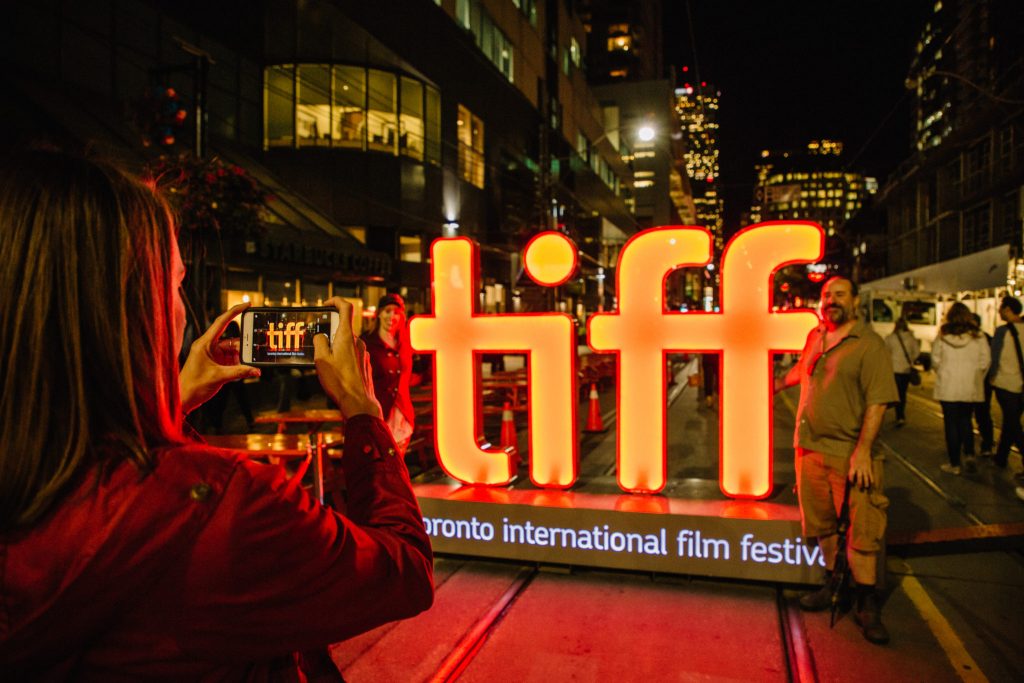
Welcome to the TFCA weekly, a round-up of reviews and coverage by members of the Toronto Film Critics Association.
In Release this Week!
The Antique (dir. Rusudan Glurjidze)
“The Antique is a quietly powerful portrait of displacement, endurance, and the unexpected bonds that emerge when history barges into your home,” says Gilbert Seah at Afro Toronto. “The mood and atmosphere of the troubled times are effectively captured on film despite the otherwise meandering narrative that jumps from one character to another.”
“The film’s style is extraordinary– quiet, mostly wide shots, a rare closeup, with loving, extended views of the city from across the river,” says Anne Brodie at What She Said. “The ancient architecture that still functions today, contrasts the wealth and art of the past and today’s deep poverty. The film moves at its own pace, which may be slow for some, but its depiction of Russian life in 2006 is reason to watch.”
Caught Stealing (dir. Darren Aronofsky)
“Aronofsky nails the tone of a film where anything can happen without warning or foreshadowing,” says Andrew Parker at The Gate. “The violence is shocking, and brutal. Caught Stealing is akin to watching someone getting repeatedly traumatized in real time, but Huston’s script is so witty, snappy, and emotionally layered that it plays like an Elmore Leonard novel that just did a kilo of cocaine.”
“Caught Stealing is Aronofsky’s best film to date, balancing drama, action in a thriller genre with its raw energy, unpredictability and occasional black absurdist humour, including some Jewish jokes like not driving during the Shabbos. At best, it reminds one of Hitchcock’s North by Northwest in which an innocent man is caught in an intrigue of crime, as well as After Hours (Griffin Dunne is also in both films).”
Christopher: A Beautiful Real Life (dir. Nynn Duva Hall)
“There is nothing wrong with this Danish doc except for the question of whether this really intimate look at a foreign star would really interest the average moviegoer,” notes Gilbert Seah at Afro Toronto. “The segments are realistic, if no touching enough, but there are too many segments telling the same message. This is not to mention that it is difficult to feel sympathetic for a white, wealthy, good-looking and famous couple that has everything already laid out for them. Put me in their shoes and give me their problems anytime!”
Fantasy Football Ruined Our Lives (dir. Alessio Maria Federici)
“The film attempts to show, it is presumed, how fantasy football can spiral from harmless fun into an all-consuming battle of pride, betrayal, and revenge,” says Gilbert Seah at Afro Toronto. “The film misses the goal and ends up a silly mess of mostly missed humour.”
Griffin in Summer (dir. Nicholas Colia)
“An exceedingly funny, but surprisingly deep film that features an exceptional lead performance from newcomer Everett Blunck,” says Joe Lipsett at The Queer Gaze.
Loathe Thy Neighbour (dir. Sergio Navarretta)
“Ok so we have all had bad neighbours,” admits Anne Brodie at What She Said. “That uncomfortable truth drives Lauren Holly’s darkly funny Loathe Thy Neighbour, a sarcastic, absurd comedy shot in rural Hamilton, ON. Strangely two farms are tightly side by each, unusual, but there you have it. In one, the prickly, horrifically foul-mouthed Wanda (Holly) runs the place with her daughter; she has an apiary and sells honey, some of it laced with weed –very popular.”
“I wanted to find more to enjoy in Loathe They Neighbor — which until recently appeared on the IMDb website under the title Yuppie — but there isn’t much to love. Sergio Navarretta’s direction is solid, as are the performances, but nothing elevates the story,” admits Chris Knight at Original Cin. “And a few last-minute revelations about characters’ motivations arrive as unearned as they are unexpected. Loath to say it, but there isn’t even enough here to loathe.”
Lurker (dir. Alex Russell)
“What follows is entertaining and disturbing in equal measure,” says Chris Knight at Original Cin. “Matthew finagles his way into Oliver’s entourage, first by making himself useful — there’s a montage of him cleaning dishes and doing laundry — then by proving to be indispensable. He convinces Oliver that a rising star needs a documentarian to curate and catalogue his life, and appoints himself to the position.”
“It takes a while to be charmed by Lurker,” observes Gilbert Seah at Afro Toronto. “Russell’s film is initially all over the place and one wonders initially where the story is leading. But one soon realizes that this is director Russell’s style and the spontaneity and roughness of the film add to the film’s uniqueness. The film is aided by one terrific performance by Théodore Pellerin in a breakout performance.”
“Pellerin continues a string of impressive performances on the heels of Solo and Being Karl Lagerfeld with Lurker,” writes Pat Mullen at That Shelf. “He plays Matthew with a cool mix of wide-eyed obsessiveness and off-kilter sincerity. But he never dials the mania too high up, gamely resisting the urge to accelerate Matthew into boiled bunny mode. The connection between Matthew and Oliver is less a fatal attraction, but rather one that’s simply unhealthy.”
The Roses (dir. Jay Roach)
“The Roses is not a perfect movie, but it’s a delight to watch and to hear — who better than Colman and Cumberbatch to deliver razor-sharp barbs and delicious insults?” asks Liz Braun at Original Cin. “And their characters are depicted as equals, their ongoing mutual attraction based on intellect and humour. That’s thrilling, actually.”
“The Roses is a deeply funny movie — far more light than the squeamishly dour film it’s remaking. But beneath the jokes and crab-based puns lies the answer as to why one might risk marriage in an era of skyrocketing divorce rates,” notes Jackson Weaver at CBC. “That hell might be other people, but we still don’t like being cold. So instead of being alone, we just grin through those flashes of blinding hatred — ones both Theo and Ivy admit they feel for one another. They simply pretend they don’t.”
“The Roses is akin to watching talented people trying to act with both arms tied behind their backs and working from a script where every third line has been mysteriously redacted or replaced by something infantile and stupid,” sighs Andrew Parker at The Gate. “It’s plain to see where so much went wrong here, and the studio tinkerers only have themselves to blame for this unsatisfying mess.”
“In tougher, meaner hands, the bet might have paid off. There is a sick, cathartic pleasure to be found in watching other people tear each other to bits,” writes Barry Hertz at The Globe and Mail. “But as directed by Roach (Meet the Parents) and written by longtime Yorgos Lanthimos collaborator Tony McNamara (Poor Things, The Favourite), The Roses is not nearly acrimonious, or funny, enough to justify its peculiar existence. If DeVito’s original was the cinematic equivalent of going through the divorce from hell, this new break-up feels more like a trial separation.”
“Here’s where Roach, a fine director of actors, shines. He gives Colman and Cumberbatch the time and space to truly battle each other. It’s the belief that Roach and McNamara have in the chemistry between the two stars that makes The Roses—not a perfect film—into one that should be seen and admired,” says Marc Glassman at Classical FM. “In a word, Olivia Colman and Benedict Cumberbatch are extraordinary. They are as great as Hepburn and Tracy–or Douglas and Turner. You can’t make a film about couples if the two don’t click.”
Splitsville (dir. Michael Angelo Covino)
“Splitsville’s creators continue to mine new terrain as the film moves along to the inevitable potential solution: exploring each other’s old partners. Throughout, Covino and Marvin find ways to make old material fresh again, including a wonderfully silly birthday party that—naturally—goes awry,” notes Marc Glassman at Classical FM. “The acting throughout the film is fine. Dakota Johnson is particularly memorable as Julie, the most practical of the amorous quartet.”
“Not content to simply let scenes live or die on the strength of dialogue, Covino (who directs) and Marvin (who writes) together ensure that every sequence has some kind of visual or narrative trick up its sleeve,” writes Barry Hertz at The Globe and Mail. “At one point, the camera constantly swerves around Carey’s small but jam-packed-with-people loft. At another, it ducks in and out of Paul’s expansive beach house. There is a relentless energy to the pair’s gags – including a riotous fight between Carey and Paul that rivals the stunt work of a John Wick movie – that anchors the film somewhere between relatable and absurd.”
“Cinematographer Adam Newport-Berra uses the same freewheeling camera style he brought to The Last Black Man in San Francisco. The screenplay, more a series of funny bits than plotted narrative, has chapter headings called ‘articles’ that look like pages of divorce documents,” says Peter Howell at the Toronto Star. “The ensemble acting seals the deal, though, with Johnson being first among equals with her Cheshire Cat grin and sly style.”
“Splitsville finely balances romance and bromance as Paul and Ashley try to win back their respective partners while Carey and Paul endeavour to repair their long-time friendship,” says Pat Mullen at That Shelf. “Marvin and Covino, who also co-wrote the script together, really have a knack for unearthing the humour of male friendships.”
The Thursday Murder Club (dir. Chris Columbus)
“On paper, The Thursday Murder Club has all the right ingredients – the first book in a beloved best-selling series, a stellar cast, and a seasoned director – but the result is more lukewarm than crackling whodunit,” writes Rachel West at That Shelf. “The plot of The Thursday Murder Club sticks closely to Osman’s original story, too; a book that didn’t depend on big twists or thrills, but delivered a neatly packaged murder mystery. The film’s screenplay, by Katy Brand and Suzanne Heathcote, hits all the same plot points, but unlike the book, goes down like a weak cup of tea.”
The Toxic Avenger (dir. Macon Blair)
“But as much sick fun as it is to see Dinklage (or, more frequently, his stunt double Luisa Guerreiro) use a radioactive mop to eviscerate random henchmen, the storytelling is frequently, and perhaps appropriately, constipated,” notes Barry Hertz at The Globe and Mail. “It takes a good half-hour for Winston to finally transform, while the action keeps getting interrupted by ho-hum monologues from Bacon and his various cronies (including Elijah Wood underneath some ghastly makeup).”
“Although there’s some flashes of boundary pushing gore and bad taste gags, there’s nothing in The Toxic Avenger that’s on the level of the original, which makes me wonder if saying that the film’s failure to ‘improve’ upon a Troma production is a good thing or a bad thing,” writes Andrew Parker at The Gate.
“This is not a movie for everyone, but if the film’s title didn’t warn you of that, the poster should have,” advises Thom Ernst at Original Cin. “And then there is the issue that the film almost slipped through distribution cracks — thanks to ‘extreme violence’ warnings and the bizarre classification of ‘creature nudity’ (yes, we see Toxie’s anatomy).”
Unknown Number: The High School Catfish (dir. Skye Borgman)
“The film is an ok watch, but comes lower on the score in the scale of Netflix’s true crime dramas,” writes Gilbert Seah at Afro Toronto. “It is difficult to feel sympathetic for young teens who have nothing better to do than spend the whole time looking at their phones, though what has occurred is a crime. The teens cannot speak properly without the overuse of the word ‘like’, which makes listening to them quite annoying.”
Vice Is Broke (dir. Eddie Huang)
“Huang’s own film reflects the Vice-ification of media, but in a cheeky and thoughtful way,” writes Pat Mullen at POV Magazine. “Punches of humour run throughout, like one interview in which Huang arrives dressed as boorish food host Guy Fieri, while many interviews unfold in cocktail bars or over drinks. The approach reflects the docu-tainment type of lifestyle television that Vice tried to emulate with a splash of hard news, but Huang shows that one can crib from these styles without cheapening the take.”
Festival of Festival Coverage: Here Comes #TIFF50!
At Zoomer, Brian D. Johnson remembers highlights from 50 years of the Festival of Festivals, including some legendary star encounters: “Those old enough to remember the festival’s early days often complain about how it has ‘gone Hollywood,’” writes Johnson. “But courting Tinseltown was always part of the Bill Marshall plan. And it comes to fruition with a series of gala tributes to Robert Duvall, Martin Scorsese and Warren Beatty from 1982-84, hosted by celebrity critics Gene Siskel and Roger Ebert. The Beatty tribute takes the cake and ushers in the era of parties segregated by velvet ropes and VIP rooms. At the giant bash – which was held at the Copa in Yorkville – a reporter trying to get close to Jack Nicholson’s table holds up a notepad that reads, ‘Want to dance?’ Jack mouths, ‘No, thank you,’ then turns to his companion and says, ‘Pity she used the wrong verb.’”
At the Toronto Star, Peter Howell looks back at TIFF’s 50 years with a whopping four-part oral history. Choice soundbites include TIFF CEO’s Cameron Bailey on a peculiar Q&A after 2014’s The Imitation Game: “We had the screening, and I brought everybody in the cast out for the Q&;A,” says Bailey. “We had microphones on stands in the aisles. People were lining up to ask questions. I asked the first person in line to ask a question. She said to Benedict Cumberbatch, ‘Mr. Cumberbatch, I really loved the movie. Can I taste your deliciousness?’ I didn’t know what to say. Thankfully, he was very charming and didn’t make the questioner feel like a total creepy person. He was able to play it off somehow. That’s one of those risks that come with the audience Q&;As!” Read the series in Part 1, Part 2, Part 3, and Part 4. He also gets some words from David Cronenberg on why showing a film in Toronto matters: “Showing it in your hometown is special. And, of course, Dead Ringers is very much a Toronto movie and ‘The Shrouds’ even more so. This is the real test: is the Toronto audience going to really appreciate that it’s Toronto or not? The TIFF screening of The Shrouds was, for me, a better screening (than at Cannes) in terms of actual audience response because they not only got all the obvious jokes, but they got the Toronto jokes as well. That was really satisfying.”
At The Globe and Mail, Barry Hertz looks back at milestones in TIFF’s first 50 years, including the shift to September in its second year: “After luring 7,000 people a day for their first edition, organizers upped the celebrity quotient (the first year had Fred ‘The Hammer’ Williamson, the second had Henry Winkler at the height of his Fonzie fame), while shifting the timing to early September,” writes Hertz. “Back then, there was no ‘awards season.’ But soon, Toronto’s post-Labour Day slot would give it a crucial calendar advantage, the festival becoming the unofficial starting line of the Oscar race.”
At The Globe and Mail, Johanna Schneller, Barry Hertz, and Kate Taylor share their top picks for the festival. For Schneller, it’s Laura Poitras and Marc Obenhaus’s doc Cover-up about journalist Seymour Hersh: “Hersh is infamously mistrustful and cranky.” For Hertz, it’s Midnight Madness opener Nirvanna the Band the Show the Movie: “destined to be the most memorable screening the city has hosted in years.” And Taylor picks Philippe Falardeau’s comedy Lovely Day: “promises a compelling view of multicultural undercurrents in Quebec society.” Hertz also looks head to this year’s festival with features on Clement Virgo’s Steal Away, Grace Glowicki and Ben Petri’s collaborations, and new strategies for shorts.
At POV Magazine, Pat Mullen, Barbara Goslawski, Courtney Small, Jason Gorber, and Rachel Ho pick 50 documentaries that defined the first 50 years of TIFF. Mullen cites Harlan County USA. “Harlan County endures for many critics and doc fans, myself included, as the best documentary ever made.” Goslawski taps Pina: “as Wenders blends dancers in both theatrical spaces and in urban landscapes, he reawakens Bausch’s artistic soul.” Small feels for Hurt: “Hurt is a touching reminder that life’s path is never straightforward.” Gorber says The Act of Killing: “Leave it to a man named Oppenheimer to make a film this explosive.” And Ho lists Project Grizzly: “exemplifies the trial and errors of innovation that placed us at the top of the food chain.”
At The Gate, Andrew Parker picks his ten most anticipated films of the festival, including Sophy Romvari’s Blue Heron: “Having admired her short films for the past several years, I’m excited to see the first feature from Hungarian-Canadian filmmaker Sophy Romvari, Blue Heron. A look at a family during a time of transition and crisis in the 1990s as told through the eyes of its youngest member, Blue Heron sounds like a perfect extension of the types of movies Romvari has been making in short form for years now. Hopefully the feature length will make the unaware take notice, too, and provide Romvari with equally large canvases to come.”
At That Shelf, Rachel West, Courtney Small, and Pat Mullen join local writers in sharing their top picks for the festival. For West, it’s (obviously) Colin Farrell in Ballad of a Small Player: “Farrell stars as a high-stakes gambler whose luck may have run out in Macau as a private investigator (Tilda Swinton) and his past catches up with him.” For Small, it’s the return of Benoit Blanc in Wake Up Dead Man: “I simply love the Knives Out franchise.” For Mullen, it’s Hamnet: “checks all the boxes that I look for in a movie aside from ‘starring Meryl Streep.’”
TV Talk/Series Stuff
At What She Said, Anne Brodie gets back in the habit with The Sister Boniface Mysteries: “Identical sisters, Camilla, an entitled, vain actor and stand-in and her identical twin sister – is meek and feeling abused – have a weirdly tight, but negative bond. A stunt goes wrong resulting in death. Cue twists, identify theft and Sister in her lab solving the riddle.”