Reviews include Coyote vs. ACME, The Dog Stars, and The Salt Path.
TFCA Friday: Movie Reviews for April 10
April 10, 2026
Welcome to the TFCA weekly, a round-up of reviews and coverage by members of the Toronto Film Critics Association.
In Release this Week
18th Rose (dir. Dolly Dudu)
“18TH Rose is an overlong teen romance that uses the once-again, all-too-familiar fake relationship-turned-into-real-love premise,” sighs Gilbert Seah at Afro Toronto. “There is hardly anything funny, original, or memorable, except the Filipino setting.”
The Art of Adventure (dir. Alison Reid)
“The story of the ‘Rover Boys,’ as they were known at the time, would be thrilling enough. Their travels included a visit to a pre-touristy Taj Mahal, and a friendly meeting with a group, at the time known to Westerners as pygmies (Forest People, please),” notes Chris Knight at Original Cin. “But we also get a brief tour of their later lives, including Foster’s work in conservation in British Columbia, and Bateman’s falling out with the art world over his sale of signed prints, which annoyed purists but raised millions for good causes.”
Exit 8 (dir. Genki Kawamura)
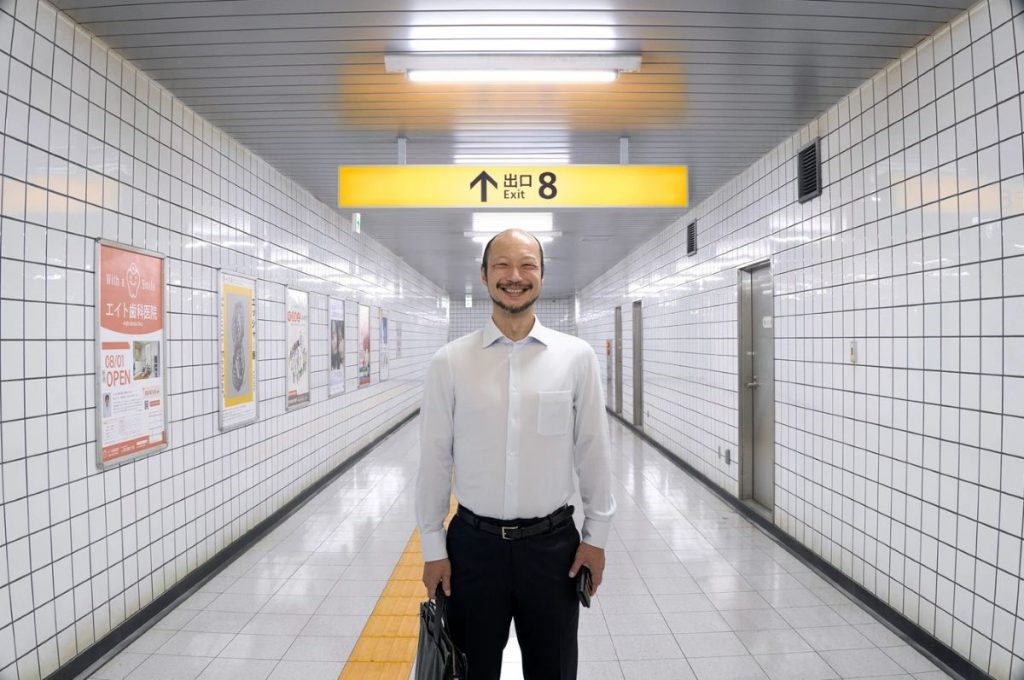
“The most impressive aspect of Exit 8 is the electronic score by Shohei Amimori and Yasutaka Nakata, which incorporates a distorted subway chime to impart the constant feeling of being summoned to places unknown and potentially dangerous, much like existence itself,” writes Peter Howell at the Toronto Star. “Exit 8 feels attuned to the malaise of our moment. The film turns a simple subway loop into a mirror of modernity, reflecting a world madly spinning off its axis.”
“Our man here played by Kazunari Ninomiya does a pretty solid job here as our exhausted subway drone who has to find a way out of his emotional rut to get his way out of this hellish maze,” says Dave Voigt at In the Seats. “It’s not easy to play it exhausted but increasingly resolute and he does it well. While there are a couple of other interesting characters, it’s generally all about him and that fine.”
“Writer-director Genki Kawamura keeps his camera angles tight, the better to maintain tension at a boil, and makes the most of his minimal and repetitive set. Fans of the Canadian horror classic Cube should enjoy,” advises Chris Knight at Original Cin. “The soundtrack, meanwhile, includes some well-worn classical numbers and a repeating two-tone motif that sounds like a cross between a squeaky subway brake and the kind of public address klaxon that heralds an announcement. Oh, and Sakura Seya won an award from the Japanese Academy for his masterful editing work.”
“There is nothing really much more in the story, but Nino makes turn after turn in one corridor after corridor for the full length of the movie,” notes Gilbert Seah at Afro Toronto. “Definitely a movie that is NOT to be seen twice, credit should be given at least to the filmmaker to capture the attention of audiences for a full 90 plus minutes without incident and with much repetition. No one walked out during the screening – a rare achievement.”
Hamlet (dir. Aneil Karia)
“This isn’t the first time that writer Michael Lessie has adapted the Bard for the big screen (see Macbeth back in 2015) and that ultimately serves it all well allowing for a layer of insidiousness and grime to exist in the words even when they all get a little flowery at times,” says Dave Voigt at In the Seats. “It’s a solid adaptation for the big screen because it successfully keeps the words the same but the dialogue subtly different. It’s not a beat for beat adaptation as it does takes some slight liberties but not enough that you’d actually care if you’re a devotee to the works of Shakespeare.”
“This South Asian contemporary Hamlet has no close friends; there is no Horatio,” notes Marc Glassman at Classical FM. “When he goes to Ophelia, the only sympathetic figure, she has no advice for him. No one does. He’s left to sort out if the vision behind the club was real or not. Riz Ahmed plays Hamlet with a curiously distanced intensity. In many scenes, his eyes flash and his body language commands attention but his psychological state is kept unclear. Is he mad or is he playing a character pretending to be mad?”
Thrash (dir. Tommy Wirkola)
“Writer/director Tommy Wirkola knows what the film should succeed as, and the film works in a trashy kind of way, being entertainingly corny at the same time,” admits Gilbert Seah at Afro Toronto. “The film gets a bit ridiculous and over the top with segments like Lisa trying to bear a child amidst the flood waters and a family trying to keep the house door shut to stop the sharks. All this is done in good fun and R-rated style.”
“The shark movie isn’t the genre where less is more, more is actually more,” observes Dave Voigt at In the Seats. “The violence is there, we get the occasional flash and plenty of blood in the water but the gore is actually pretty minimal and the tension is fairly subpar. We’re never really invested all that much in anyone’s struggles because while the danger is there, it never actually feels palpable. They likely should have cut one of the stories to get us to care while ramping up the actual blood.”
You, Me, and Tuscany (dir. Kat Corio)
“A formulaic familiarity that seeps through both this cute, often comedic and completely contrived feature — and the perpetual “return of the rom-com!” discourse that seems to pop back up every year like a bad blackhead,” admits Jackson Weaver at CBC. “And like a blackhead, You, Me & Tuscany is hardly the worst thing that could happen to you. Still, while barely noticeable, exceedingly common and hardly worth a passing thought, it would still probably be better if it — and this specific flavour of surface-level, escapist rom-com in general — didn’t exist.”
“You, Me & Tuscany quickly settles into a triumvirate of cooking porn, dining porn, and wine porn. Not much of the other sort — the closest director Kat Coiro comes is some tastefully framed décolletage on the Little Mermaid star, and a few shirtless moments from the Duke of Hastings, which causes a flustered Anna to tell a friend back home that he has a six — no, an EIGHT-pack,” writes Chris Knight at Original Cin. “The film also deals out most of the clichés of the genre. Matteo’s family includes a randy plus-sized gal and an endlessly suspicious grandma. All the cars are either $300,000 Maseratis or €39-a-month Fiats.”
“So, does You, Me and Tuscany work?” asks Marc Glassman at Classical FM. “Well, it isn’t The Philadelphia Story or When Harry Met Sally. Truly wonderful rom-coms have great scripts and wonderful chemistry between the leads. Quite frankly, it’s easier to make a horror film than a rom-com. We all scare easily but it’s far more difficult to charm us. Here, the script is okay but hardly funny or insightful. As for the leads, Halle Bailey and Regé-Jean Page are physically attractive but, quite frankly, they’re too bland to be the leads in a rom-com. You like them—but you don’t love them.”
“To paraphrase a friend, it feels like someone input a list of rom-com prompts into ChatGPT and the film we see is the story that was spit out. It often feels assembled from a checklist of rom-com tropes rather than a cohesive story,” writes Rachel West at That Shelf. “Perplexingly, the film’s screenwriter is Ryan Engle. He’s the writer behind such decidedly non-rom-coms as the action-packed Non-Stop, Beast, Rampage, and The Commuter. The dialogue plays like misplaced action-movie banter, where pauses hang awkwardly or like a sitcom, as if waiting for a punchline or a laugh track that never comes. Misplaced references to Under the Tuscan Sun and Sideways only highlight how far this film falls short. Would a 27-year-old woman in 2026 really compare herself to Paul Giamatti in the 2004 film Sideways? Something tells me she would not, but a male screenwriter in his late 40s just might.”
A Festival of Festival Coverage
At the Toronto Star, Peter Howell reports on the line-up for this year’s Cannes Film Festival, which sees an absence of commercial Hollywood cinema and even fewer Canadian films: “No Canadian movies were announced for the Official Selection, which Frémaux said is 95 per cent complete, but two major Cannes sidebars, the Directors’ Fortnight and Critics’ Week, announce their slates in the days ahead and hopes are high,” writes Howell. “Rumoured possible Canuck contenders tell bleak tales: Quebecer Denis Côté’s Violence du corps de l’autre (Violence of the Other’s Body), is a dark road trip involving an itinerant woman (Larissa Corriveau), death pacts and desperate strangers; and Ontario horror specialist Chris Nash is ready to unleash In a Violent Nature 2, his sequel to the 2024 POV rampage, featuring the return of the fireman-masked undead woodlands killer.”
TV Talk/Series Stuff: Big Mistakes
At Original Cin, Karen Gordon says Big Mistakes is correct comedy: “It’s a masterclass in how ridiculous and frustrating characters and a coherent storyline that doesn’t waste a beat, can make for a series that is very binge worthy. “
At Afro Toronto, Gilbert Seah binges Big Mistakes: “The introduction of the family members to the audience is done in a remarkable first act in which the family is all gathered, arguing in a hospital ward. No nonsense, right into the story, with the action moving fast and furious. Big Mistakes arrive with more consequences, all ripe for suspense comedy, a genre that this series excels in.” He also reports on the Netflix doc Untold: Chess Mates: “The doc aims to entertain, and this it does, moving at a pace fast enough to put any chess player to shame. As a sports drama, it incorporates courtroom-styled drama, and the result is an artistically dramatized entertainment to be totally enjoyed.”
“David Rose wouldn’t be caught dead in these outfits, but Big Mistakes also rejects the idealised environment that some critics felt too twee in Schitt’s Creek,” notes Pat Mullen at That Shelf. “Personally, I loved that aspect of Schitt’s—this place where someone could be as flamboyant as David without inspiring a snicker, but Big Mistakes knows it exists in a hardened, more cynical error. The age of innocence is over and this series’ darker edge reflects that. While Big Mistakes (so far) won’t go down in the history in on the same level as Schitt’s Creek, it ensures that Levy don’t remain a one-hit wonder. It’s a high-paced, high-energy caper with just the right hint of sass.”