How recent horror films Obsession, Leviticus, and Backrooms explore internal terrors of desire, longing, and wishful thinking.
TFCA Friday: Movie Reviews for February 20
February 20, 2026
Welcome to the TFCA weekly, a round-up of reviews and coverage by members of the Toronto Film Critics Association.
In Release this Week
Blades of the Guardians (dir. Yuen Woo-Ping)
“The film is one up on Hollywood productions, as unlike many CGI-heavy films, the production prioritizes real horseback chases, practical and exciting combat with lots of actor training, and is choreographed by Yuen. The cast includes major action names like Wu Jing, Nicholas Tse and Jet Li,” says Gilbert Seah at Afro Toronto. “A worthwhile action-packed film to watch, like in the good old days of cinema.”
Diabolic (dir. Daniel J. Phillips)
“Some dicey acting and questionable storytelling doesn’t diminish the good first half or the great FX of the last act,” says Joe Lipsett at Queer Horror Movies.
EPiC: Elvis Presley in Concert (dir. Baz Luhrmann)
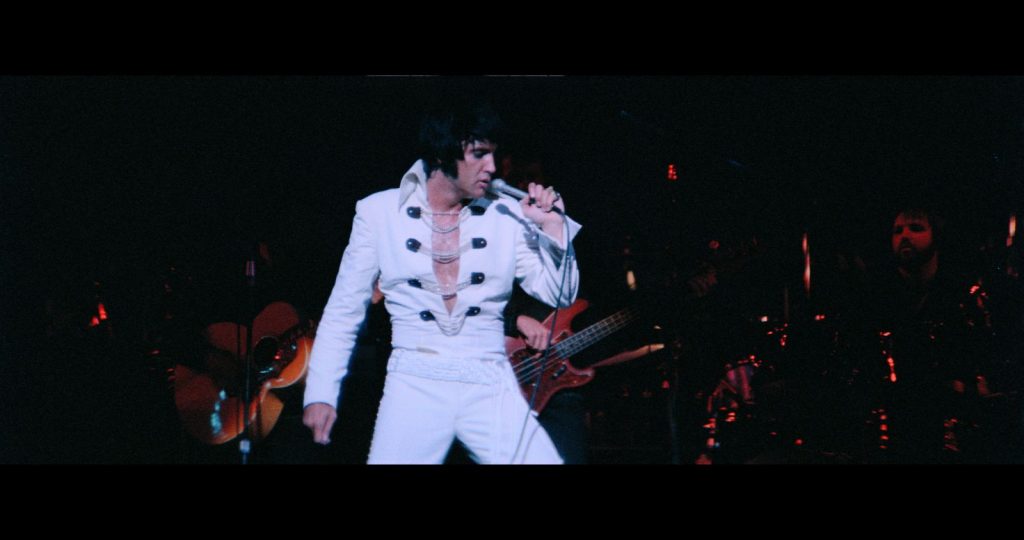
“Wrapped in the capes, ornate belts and jewelry that occasioned much mocking at the time but now comes across as endearing, Elvis looks and sounds shockingly present tense: colours pop, the camera actually seems to find his eyes, and the sound mix keeps that unmistakable voice front and centre as it glides across a range of musical genres, including rock, pop, country, blues and gospel,” says Peter Howell at the Toronto Star. The flare of the spotlights, the shimmer of sequins and the roar of the crowd make these restored shows feel less like archival footage than a concert you’ve been magically transported to via time machine.”
“What Luhrmann doesn’t do is confront the enigma that is Elvis Presley,” says Marc Glassman at Classical FM. “Why didn’t a young man with extraordinary talent rid himself of his controlling manipulative manager ‘Colonel’ Tom Parker and become the great performer he could have been? Vegas offered the greatest example of someone from a previous generation who moved from being a teen idol and stereotyped Hollywood leading man in lightweight musicals to a brilliant vocalist and dramatic star. But Elvis never became the new Frank Sinatra. Instead, he allowed himself to sink into an early death.”
“There’s genuine pleasure in the rehearsal moments, in the way Elvis works the band, shapes arrangements, rides a groove until it locks in. This is not a man sleepwalking through a greatest-hits revue. This is a performer who still seems surprised—and a little delighted—that the machinery of music-making can lift a room when everyone is tuned to the same frequency,” says Thom Ernst at Original Cin. “There’s one moment that captures this better than any talking-head testimonial could. Elvis zeroes in on a single voice in the chorus—a young woman who likely thought her musical high point was being invited to blend into the background—and pulls her into focus. He compliments her voice, teases out her presence, and for a brief, electric moment, she’s not just another singer in the lineup; the King himself is seeing her.”
At POV Magazine, Jason Gorber speaks with film editor Johnathan Redmond about collaborating with Baz Luhrmann to bring out Elvis’s best: “Baz will argue that we don’t need to slow down to say something or to make a big deal of a particular moment because the audience will get that already,” says Redmond. “At times, we don’t have to say much. But sometimes, it’s the other way around. It’s a real dance, I think, and his maximalist style has very much worn off on me. In terms of his style, there’s always a musicality to everything. With music, there’s a tempo that you can add a piece of music and you go, “Oh, let’s cut to the beat.” Everything has a natural tempo that exists in Baz’s head.”
“The music proves consistently joyous too,” says Pat Mullen at POV Magazine. “Thanks to the restoration, Presley’s sweat has never glistened so sharply. The 35mm images truly pop. Luhrmann assembles a killer tracklist with this footage and does an admirable job of curating a set list from so many hits. The songs generally play in full, too, which allows everyone in the theatre to develop an emotional connection to each number and let the energy of the performances overtake them.”
How to Make a Killing (dir. John Patton Ford)
“Better still is how Ford rewrites the ending — a rite of passage for every adaptation of Israel Rank. Earlier versions have tried to balance our desire to see the protagonist succeed with the punishment he deserves for clearly horrifying acts; the American release of Kind Hearts even added an extended ending to satisfy censors worried about glorifying crime,” says Jackson Weaver at CBC. “Interestingly, How To Make a Killing subvert both expectations. In a smart riff on the ruthlessness at the heart of hustle culture — and the hollowness of its rewards — Ford’s bleak takeaway lands as both refreshing and entertaining.”
“Less a whodunnit than a whydunnit – as in, why should we care about any of these characters and their horrid actions? – the film follows the travails of Becket Redfellow (Powell), a blue-collar New Yorker whose mother was disowned by her fabulously wealthy family upon his birth,” says Barry Hertz at The Globe and Mail. “Harbouring a grudge and with seemingly no moral compunctions about knocking off his relatives, Becket goes about systematically murdering the many elder aunts, uncles and cousins who stand in the way of his multibillion-dollar inheritance.”
“It does not help that there are two romantic females involved with Beckett, the protagonist,” notes Gilbert Seah at Afro Toronto. “For a black comedy, there is one action scene, quite a ridiculous one involving Ed Harris with a rifle and Beckett with a crossbow shooting at each other in s family mansion. The action set-piece comes from nowhere, and is as silly as it is laughable.”
Midwinter Break (dir. Polly Findlay)
“Midwinter Break gradually builds in intensity as the story of this all-too-real couple unfolds,” says Marc Glassman at Classical FM. “Though Stella and Gerry have led lives of middle-brow respectability—he, working in architecture, she in teaching—they have never found the fulfillment they desired. Driven from their natural home in Ireland, they been exiled most of their lives. Even they are not sure that the sacrifices they’ve made have amounted to anything. What they have is each other—and, tragically, they’re not even sure of that.”
“The film, thanks to the source material is an accurate, compassionate observation of a couple’s relationship,” adds Gilbert Seah at Afro Toronto. “Yet it is also a profound examination of human love and how a couple can live together, with a lot of gives and fewer takes. The film takes its time to unfold, but the wait is well worth it. Both Hinds and Manville are superb, and besides the writing, performances and direction, Midwinter Break is indeed a masterful film.”
Oscar Shorts! (dir. various)
At Afro Toronto, Gilbert Seah looks at the nominated animated shorts: “For all the categories, the animated is the most entertaining. Two Canadian shorts make the cut, both excellent entries. My fav is the one from Cyprus, The Three Sisters, for its unique animation, simplicity and message of hope.” The short docs: “All involve current world issues, with some very powerful messages.” And the live action nominees: “The Live Action category is the strongest this year has two strong entries, The Singers and A Friend of Dorothy. The Singers has the most dramatic segment I’ve seen so far this year, with the rendition of the song “I Need Your Love.” Jane Austen’s Period Drama is the funniest, while Two People Exchanging Saliva is one of the best!
At Original Cin, Chris Knight gives the rundown of the Oscar nominated short films. On the live action front, Jane Austen’s Period Drama wraps the screening with “joyous comedy.” For the docs, he likes the donkeys of Alison McAlpine’s perfectly a strangeness: “McAlpine has truly outdone herself with this equine followup.” And he’s split on the animated nominees: “Best of the bunch are the first [Three Sisters] and the last [Retirement Plan].”
At POV Magazine and That Shelf, Pat Mullen looks at the Oscar nominated shorts and tends to agree with Chris. On the live action front, he agrees about Jane Austen’s Period Drama: “Every member of the cast commits to the joke perfectly.” For the docs, he also votes perfectly a strangeness: “a deceptive work: simple on the surface, but rich, complex, and fun to explore.” But for the animated shorts, he goes for The Girl Who Cried Pearls: “This is elevated animation of the highest order.”
Pavane (dir. Lee Jong-pil)
“One would expect the film about an unattractive girl pursued by a beau who sees beyond her outside appearance to be charming and engaging,” says Gilbert Seah at Afro Toronto. “Instead, this all over the place teen romance is both dull and boring, especially running at close to two hours. A few silly CGI segments serve to show how disorganized everything is.”
File Under Miscellaneous
At What She Said, Anne Brodie chats with filmmaker Folklaur Chevier about her true crime series The Christine Jessop Story: “Breakthroughs came from patience, trust, and listening. Some of the most critical insights were not in documents or court records but in conversations with people who had carried silence and grief for decades. We approached every interview with empathy, understanding that we were entering sacred, painful spaces. That combination of journalistic rigor and emotional care allowed us to uncover perspectives that had not been fully seen or understood before.”
At The Globe and Mail, Barry Hertz remembers late actor Robert Duvall and his work in films like Apocalypse Now and The Apostle: “But The Apostle was far from the capstone to Duvall’s career. For the next three decades, the actor – who long professed to keep working as long as he could, forever on the hunt for the next ‘perfect role’ – would continue to experiment and innovate with the vanishing act that was his lifelong pursuit, pushing both himself and those around him to elevate their craft.”
At Afro Toronto, Gilbert Seah reviews seven films from the Berlinale from afar.
At POV Magazine, Pat Mullen remembers late documentary filmmaker Frederick Wiseman: “Throughout several decades as a director with a singular eye and unparalleled humanist vision, Wiseman achieved a feat that few filmmakers enjoy. His name became synonymous with a distinct style of filmmaking. Over the years, new generations of audiences expressed their appreciation for ‘Wiseman-esque’ films that drew them into the worlds of characters and the institutions they inhabited, often drawing upon tricks to cinéma vérité to give a sense of an objective viewpoint, but actually using the powerful choices of observational cinema to train the camera towards subjects often overlooked by the everyday eye.”