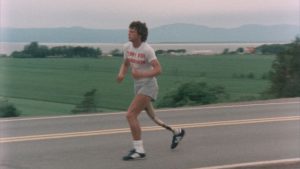

Movie reviews include La Bola Negra, Once Upon a Time in Harlem, and Wildwood.
TFCA Friday: Movie Reviews for July 3
July 3, 2026
Welcome to the TFCA weekly, a round-up of reviews and coverage by members of the Toronto Film Critics Association.
In Release this Week
40 Dates and 40 Nights (dir. Andy Delaney)
“40 Dates is a reminder that love isn’t a perfectly straight line. It’s bumpy and exposes our own imperfections. It points to the fact that no one ‘checks every box’ but that finding someone that doesn’t, somehow doesn’t mean settling. What matters is support, care and, most importantly, genuine emotional connection between two people,” writes Steve Norton at ScreenFish. “And, frankly, that feels… real.”
Antidiva: The Carole Pope Confessions (dir. Michelle Mama; July 6)
“[F]or all the bittersweet moments, there is joy in Antidiva. It is made abundantly clear that Pope’s blueprint for being unapologetically queer in the arts inspired others who might not have had the courage or conviction to create while living openly,” writes Kim Hughes at Original Cin. “Those who experienced Pope and Rough Trade IRL will enjoy the nostalgic look back at a unique moment in time when the door to queer acceptance in the arts in Canada was kicked wider. Queer Canuck up-and-comers will know who to thank for the receptive milieu now greeting them.”
“Buckle up your bondage gear and settle in as Carole Pope tells of her life and career before, during and after her pioneering Toronto band’s riotous decades, in Michelle Mama’s entertaining and illuminating chronicle,” says Peter Howell at the Toronto Star. “Peaches, Jann Arden and k.d. lang are among the many luminaries extolling Pope’s sexually liberating performances, a reputation she owns fully: ‘I’m like the godmother of all you bitches!’ It’s not all tongues and games: music biz hassles, complicated lovers (among them a closeted Dusty Springfield), a thwarted tour with David Bowie, the AIDS epidemic and personal tragedy are also part of the story.”
“Pope expresses fair words of love and pain, as well as pride and regret, throughout the film, but she doesn’t look for pity,” notes Pat Mullen at POV Magazine. “In fact, the film’s the better for it as the rocker’s story simply doesn’t fit the hagiographic mould into which so many music docs fall. If she’s tight-lipped in parts, Pope says more about her experience in the biz by refusing to waste time looking back. She keeps hustling with the cameras seemingly determined to keep pace. Antidiva works because of, and in spite of, Carole Pope.”
Bouchra (dir. Orian Barki and Meriem Bennani)
“The many questions raised in the film are left hanging, as expected in art films where the solution is not the goal but the journey towards it,” notes Gilbert Seah at Afro Toronto. “Does Bouchra reconcile with her mother, who, with her father, kicked her out when she came out as gay? Does Bouchra succeed in making her film? How does her settling in New York as a queer immigrant end up, and how does Boxcar reconcile the two cultures? This results in an artsy, confusing, and annoying film despite its different approach.”
Enola Holmes 3 (dir. Philip Barantini)
“Enola Holmes, unlike the other Sherlock Holmes films (except for one, Billy Wilder’s excellent The Private Life of Sherlock Holmes), is played mostly for laughs. From the beginning, with comical narration such as how good stories always begin with a wedding, there is much humour, good solid English humour in this one. For example, the carnival in Malta is exceptionally subtly funny if one looks loosely at what is on parade and the reactions of the people there.”
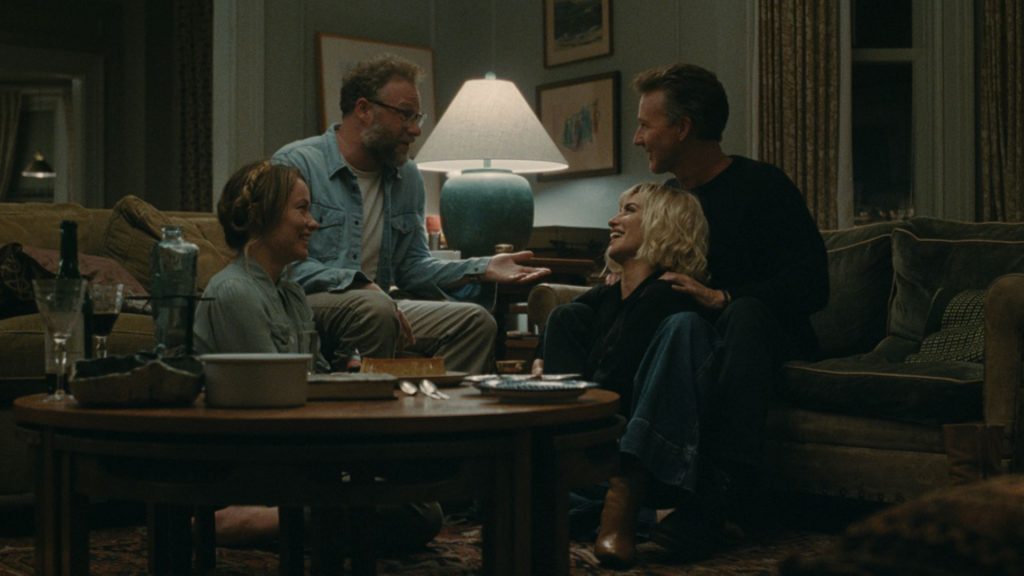
The Invite. (dir. Olivia Wilde)
“As great as everyone involved in this hilarious chamber piece is, this film shines thanks to its writing,” observes Dave Voigt at In the Seats. “The duo of Will McCormack and Rashida Jones who gave the world the criminally underrated Celeste & Jesse Forever deliver a cracker jack of a script here that never lets up as the evening unfolds. As they layer dialogue, story elements and character nuance in every page, this is the kind of movie that has you on the edge of your seat, even though we never leave the apartment. We believe the banter from minute one, and when things get crazier we as an audience can’t help but lean even harder. This is one of those experiences that awards audiences for paying attention and it thrives thanks to some excellent direction.”
“Olivia Wilde’s bold and worldly The Invite is the kind of cosmopolitan film that gives actors a chance to strut their stuff,” notes Marc Glassman at Classical FM. “That includes director Wilde, who cast herself as Angela, a desperately unfulfilled former art student, who spends her days decorating and redecorating her apartment and haphazardly mothering her daughter. Angela is married to Seth Rogen’s constantly miserable Joe, a music teacher who used to front an indie band that had one hit. To say the two aren’t happy with each other would be a massive understatement. But despite their problems, the two are still quite attractive and awkwardly funny about their marital difficulties.”
“Wilde and Rogen volley acerbic blow/counter-blow barbs funnily and furiously. Wilde takes manic mood swings as Angela desperately tries to spice up her ho-hum marriage, while Rogen plays into his looser stoner persona,” says Pat Mullen at That Shelf. “They clash spectacularly as the hubbies bicker incessantly, sparing each other the slightest white flags for the sake of their guests. Comedic fireworks fly as Angela basically edges Joe throughout the evening, bringing their fights to the point of eruption, but never conceding him a win. Neither actor has been better in a film, while Wilde rebounds as a director following the misfire of Don’t Worry Darling. The Invite delivers a ferociously funny, artfully messy, and authentic study of hormone-fuelled humour in the fashion of her debut Booksmart.”
“I don’t know where to begin. The Invite, directed by and starring Olivia Wilde, features an incredible quartet of performers at the top of their game, a wicked score that crashes in like a fifth Beatle, whip-smart writing, whip-fast editing and the funniest line about tea-serving since the days of the Ealing comedies,” says Chris Knight at the National Post. “The screenplay — written by Will McCormack and Rashida Jones, but based on the 2020 Spanish film The People Upstairs — refuses to move forward in a straight line, and instead jogs and bobs along with its confused and horny protagonists.”
“Through its dense layers of comedic wit and marital strife, The Invite remains a visual feast. Armed with purposeful staging, striking lighting, and dynamic camerawork—in the form of patient pans and razor-sharp reflections—Wilde and company render confined apartment spaces into open fields of introspection, tension, and confrontation,” writes Prabhjot Bains at Range. “It all culminates in a deeply observant and cathartic conclusion that poses as many questions as it answers. In a cinematic landscape overflowing with visual effects and towering tentpoles, The Invite urges us to RSVP to a hilarious, heartbreaking conversation piece—one that not only exposes its characters’ insecurities, but our own.”
“Adapted by Rashida Jones and Will McCormack from the Spanish film The People Upstairs,” Wilde‘s third movie as a director leaves no illusions unshattered. It’s an adult comedy that treats viewers like adults,” says Peter Howell at the Toronto Star. “Wilde‘s first two films as director, the awkward teen comedy Booksmart and retro psychological thriller Don’t Worry Darling, suggested a filmmaker still finding her voice. She’s truly found it with The Invite, which will have people talking long after they’ve left the theatre.”
Minions & Monsters (dir. Pierre Coffin)
“Throwing them ankle-deep into the world of Hollywood, Monsters lampoons the movie-making machine with goofy glory,” says Steve Norton at ScreenFish. “Poking fun at classic films like Citizen Kane, Casablanca, The Blob, From the Earth to the Moon and many, many more, Monsters laughs at the silliness of fandom and the Hollywood machine. The result is a film that feels like a bizarre mash-up of Chuck Jones animation and David Zucker-style parody. (In fact, there’s even a ‘blink-and-you-miss-it’ nod to Airplane!, arguably the Zuckers’ most famous comedy franchise.)”
“Inherently the movies in the entire Despicable Me/Minions franchise are a little silly and leaning towards the younger demographics, but for the first time here in Minions & Monsters we get a real sense of joy as this movie is meant to be more then colourful action with funny sounding characters,” notes Dave Voigt at In the Seats. “It’s meant to be a celebration of the movie going experience and having the ability to lose yourself in something that’s ridiculous and ultimately just fun. That’s Minions & Monsters; just kick up your feet, add popcorn and enjoy.”
Peter Asher: Everywhere Man (dir. Dan Gellner & Dayna Goldfine)
“Peter Asher: Everywhere Man is a beautifully put-together documentary that celebrates the music and songs of the 60s’,” says Gilbert Seah at Afro Toronto. “It is so entertaining as it shows how Peter Asher wove his way around to become a successful record producer while working with celebrities like James Taylor, Carole King, and Linda Ronstadt, among others. Of court the Beatles are also on display. Though the doc drags on a little in the middle, watching the entire film is indeed a wonderful experience.”
“[A] charming documentary: part memoir, part tribute and part look at a key period of popular culture and music history. The film shines a light on a quiet and key figure in one of the most vibrant eras in pop music both in the UK and the U.S., and whose look and style in the groovy era appears to have influenced the appearance of a certain fictional cultural character,” writes Karen Gordon at Original Cin. “The documentary is based on a cabaret show that Asher put together, where he told stories and performed a few songs, sometimes singing along with videos his old partner, the late Gordon Waller, who appeared on a screen behind him.”
Romeria (dir. Carla Simón)
“If there’s anything that doesn’t quite land in Romeria, it is occasionally the pace of discovery. The audience can put two and two together quite early from snippets of conversation and awkward admissions, seemingly before Marina does,” says Jim Slotek at Original Cin. “But this is trivial compared to the spark and charisma Garcia brings to her performance as Marina. She is believably charming and inquisitive in every turn of her quest, and the gradual hardening of her questioning is seamless.”
“Given an understanding of the differing cultural and sociological ramifications of AIDS in Spain as opposed to the U.S., the denouement of Romeria, with Marina’s grandparents finally willing to accept the death of their son makes emotional sense,” writes Marc Glassman at Classical FM. “In Galician, ‘romeria’ means a pilgrimage to a shrine or a popular festival. Simon has crafted an intensely personal film that does journey to her family’s past—and posits a hopeful future. Carla Simon has made a film, replete with gorgeous images, which will have limited appeal in Canada but those who are willing to bridge the cultural gap will find themselves rewarded with a sincere and lovely work.”
“The film basically is about a girl who travels to visit her extended family to find out the truth about her parents, her parents who were drug addicts and who died of AIDs, a disease shameful at the time, and also still shameful now,” writes Gilbert Seah at Afro Toronto. “The family tried to hide the fact from the folks of Vigo, a city in which rumours spread. There is really nothing wrong with the film, but it moves at a slow pace, often too slow for anyone’s patience. One has to be patient to see how the story unravels and how emotions are felt.”
TV Talk/Series Stuff
At ScreenFish, Steve Norton looks at season two of X-Men ’97: “My greatest issue with X-Men ’97 has always been the speed at which the episodes tell their stories. Scenes that could be strengthened by slowing down are often moved past quickly to get to the next major event. And, certainly, S2 still falls into those traps at times,” says Norton. “But, thankfully, S2 is a vast improvement on the previous season in this area, giving the characters the necessary time that they need for moments to hit emotionally.”