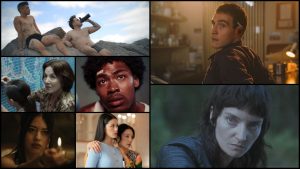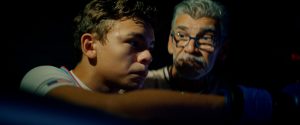

The Toronto Film Critics Association launches the Critics’ Picks screening series at Imagine Carlton, beginning with Mark O’Brien’s The Righteous on Nov. 2.
TFCA Friday: Movie Reviews for Oct. 9
October 9, 2026
Welcome to the TFCA weekly, a round-up of reviews and coverage by members of the Toronto Film Critics Association.
In case you missed it: we are launching the TFCA Critics’ Picks screening series. Our first film is The Righteous, presented by member Dave Voigt at Imagine Cinemas Carlton on Monday, November 2. GET TICKETS HERE.
In Release this Week
Animals (dir. Ben Affleck)
“The trouble with Ben Affleck’s kidnapping action drama is that audiences will compare the film to Akira Kurosawa’s gangster classic High and Low,” says Gilbert Seah at Afro Toronto. “Affleck’s film contains enough action and drama, though forced at times and qualifies as a time waster but no where comes close to the heights of High and Low.”
Black Zombie (dir. Maya Annik Bedward)
“Why are people so hungry for zombies? It’s a question posed and thoughtfully answered in Toronto filmmaker Maya Annik Bedward’s investigation into our fascination with the walking dead,” notes Peter Howell at the Toronto Star. “But she’s not out to glorify Hollywood’s version of zombies, although there are plenty of clips from famous movies and TV shows. Bedward unpacks how real-life Haitian Vodou religion and its tenets about life and death have been exploited and perverted, going at least as far back as the film White Zombie in 1932. Demonizing Vodou makes for scary spectacle but it’s done a disservice to Haitians and to Black people everywhere. There’s a reason why the Black hero of George Romero’s Night of the Living Dead is shot by a white sheriff’s posse.”
“In Black Zombie’s narrative, the modern zombie film is driven by our collective fear of ‘the other,’ that zombie-mob films like World War Z visually suggest crowds of Third World illegals-at-the-gates, all hell-bent on killing (or infecting) us good folk given half a chance,” writes Jim Slotek at Original Cin. “The connection seems tenuous to me. But it is as valid an analysis for our current zombie-mania as any other. All zombie movies seem to have something to say – even if it’s just, ‘Braaiinnns!’”
“One might dismiss all of this as useless mumbo jumbo that no one should care about,” says Gilbert Seah at Afro Toronto. “But undoubtedly, the material is still intriguing, the proof of which is the countless number of zombie movies that have sprouted from this. The closing idea of the doc is that the zombie should not simply be understood as a monster. Its original horror was the destruction of human autonomy—being transformed into a person who exists only to serve someone else’s purposes.”
A Breed Apart (dir. Adam Belanger, David Lafontaine)
“A Breed Apart is writer/directors Adam Belanger and David Lafontaine’s thoughtful, and rigorously slow-moving tale of a widowed father and his son’s uphill battle to start a cattle farm in 1850s Ontario. It is a lot of things: contemplative about life, fathers and sons, religion, mule-headed stubbornness in the face of failure, repressed feelings in colonial pioneer society,” says Jim Slotek at Original Cin. “Give it a chance and your mind may let go of its need for constant stimulation and start to appreciate the grim, glacier-like pace of rural life pre-electricity, let alone pre-Internet. A Breed Apart is not a feel good movie, but it is a feel-like-you’re-there one.”
California Schemin’ (dir. James McAvoy)
“The story is a safe bet for the first-time director. California Schemin’ is a compelling underdog tale that is easy for audiences to embrace. His energetic direction and clear storytelling vision, honed through his own experience as a young actor, elicit strong performances from his young cast, making this unbelievable yet true story a hit,” writes Rachel West at That Shelf. “Seamus McLean Ross and Samuel Bottomley, who play Gavin (aka Brains) and Billy (aka Silibil) respectively, deliver dynamic performances as the film’s young leads. Initially, the confident and high-spirited Billy drives their plan, contrasting with the shy Gavin, who struggles with performance anxiety. As the film progresses, their roles reverse, allowing both actors to create multifaceted characters.”
“One of the joys of the film’s pacing is the way it balances humour and pathos, unafraid to zoom in on the performers for a closer look at their fears and foibles. Their initial plan is to get a quick taste of fame and then ‘come out’ as Scots and embarrass the racist (or at least ‘Scottishist’) English music industry,” notes Chris Knight at Original Cin. “But the Faustian pull is strong. Billy wants to get back to his patient girlfriend Mary (Lucy Halliday), but Gavin becomes so enamoured with this new life that he goes ‘full Yank.’ The two have decided that it’s easier to keep their fake accents on all the time (I think Borat had a similar ethos), but that makes it even more difficult to remember who they truly are.”
At That Shelf, Pat Mullen chats with director James McAvoy about making his directorial debit with a film that emphasizes a Scottish accent. “Everybody needs to see themselves or a version of somebody who looks like them, sounds like them, prays like them, has sex like them—whatever it is needs to be up there,” says McAvoy. “And it’s only certain parts of the world, so that’s why, in some ways, it’s quite a universal story even though it’s very specifically Scottish.”
Don’t Move (dir. Adam Schindler and Brian Netto; Oct. 13)
“Don’t Move, the horror creature film works because of the interaction among its characters, each character carefully developed in he story, so that the horror only occurs during the second half of the film,” says Gilbert Seah at Afro Toronto. “The scares also work well, making Don’t Move one of the better horror flicks to appear on Shudder.”
Following Harry (dir. Susanne Rostock)
“The doc soars to heights when it rallies up the audience to fight for the rights of people, not necessarily for the rights of only the Blacks but for all,” notes Gilbert Seah at Afro Toronto. “The song ‘Stir it Up’ really stirs it up! The doc lags a little as it meanders in the middle, with the director not knowing how to place and pace all the footage material collected on Belafonte.”
Less of a Stranger (dir. Kristoffer Rus)
Despite the filmmakers’ good intentions of examining the complicated and troubled life of the band’s founder Jan Borysewicz, highlighting his and the band’s rebellion against authority, the film turns out incredibly boring despite the many events in Borysewicz’s life. The film is a classic example of filmmaking by numbers as if each point on a checklist is ticked off, one by one.
Once Upon a Time in the Middle East (dir. Muye Shen)
“Teng Shen, an actor great in both drama and comedy, excels as Xu. His vulnerability facing threats and his courage battling danger is palpable; his is a three-dimensional character we root for,” says Alice Shih at Original Cin. “The film, without prejudice, shows us the lose-lose situation of war on both sides, with civilian children the most susceptible to manipulations and abuse. It’s very different from conventional war films with one side exhibiting good and the other evil, a propaganda tool used to evoke patriotism and heroism.”
“Once Upon a Time in the Middle East is a Chinese production distributed by Well Go USA that specializes in Chinese action flicks,” writes Gilbert Seah at Afro Toronto. “So this film is about Chinese people in the Middle East in a fictional city. The kung-fu martial arts is replaced by Chinese cooking. The film is an ambitious piece with good intentions as an anti-war film. But it falls into the trap of stereotyping the Middle East, and what the audience sees on screen is nothing new, but what has been read in the news and the internet. The notion that a Chinese chef can save a dozen or so children from being recruited as terrorist Muslims is pushing credibility to the military. The film is best taken lightly, and should satisfy audiences with a low threshold of art or reality. ”
“Although Once Upon a Time in the Middle East delivers a lovely ending, the film does raise issues around the use of children as soldiers or simply cannon fodder in wars,” writes Marc Glassman at Classical FM. “Wen Muye has made a vastly entertaining film that does offer a serious message. As the famous Seventies slogan goes, “War is not healthy for children and other living things.’’ One hopes that the world will act on that statement this time around.”
Run Terry Run (dir. Sean Menard)
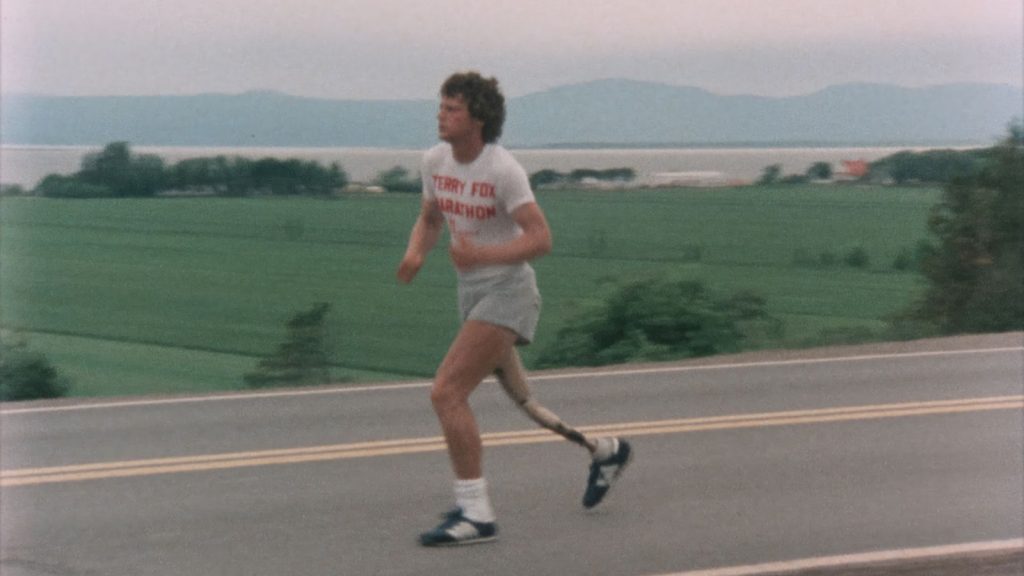
“Fox, treated as a symbol, has been both elevated and reduced,” observes Liam Lacey at POV Magazine. “More than 30 years after his historic run, the subject of Fox has become an increasingly popular subject of academic inquiry. Scholars viewing his story through the lenses of disability studies, masculinity, and nationalism analyze how media and political institutions came to define Fox as a national hero, embodying idealized Canadian values of humility, endurance, and compassion, while helping to ‘unite the country’ during the year when Quebec threatened to separate.”
“It’s kind of stunning to be reminded of the pre-digital world and what it looked like; it’s amazing to see an unvarnished account of events as they happened, an account that uses none of the tricks of the contemporary post-truth trade,” says Liz Braun at Original Cin. “Terry Fox was a courageous, determined, modest guy. He embodied all the best qualities Canadians believe about themselves; given the current ‘elbows-up’ situation, the doc is particularly affecting. In telling one unassuming young hero’s story, Run Terry Run captures the best of a place and its people.”
“Menard has constructed the Fox story with a true narrative sense. It took a while for the country and its media to respond to young runner’s quest,” adds Marc Glassman at Classical FM. “There was initial skepticism about Fox’s run and Canada’s Atlantic Provinces were hardly equipped with hype-making TV and radio stations back in the Eighties. Then, when he reached Quebec, interest truly dropped. Fox and his tiny team couldn’t speak French and no one in Anglo-Quebec was all that interested in his tale. It was only when Fox crossed the border to Ontario that the media—and the public—began to respond to the young man’s heroic trip.”
“The doc is told in the voices of Terry himself, his best friend Doug, brother Darren, and the Toronto Star reporter assigned to the story,” says Gilbert Seah at Afro Toronto. “The doc draws upon never-before-seen footage to reveal the arduous process and profound commitment behind Terry Fox’s Marathon of Hope to raise awareness and money for cancer research.”
“The film wears its heart on its sleeve, but appropriately so. Even though one knows the outcome of Fox’s run, there’s a point in Run Terry Run where one almost forgets and assumes he makes it. His termination of the run outside of Thunder Bay still hits as a surprise. Meanwhile, his efforts to offer words of encouragement to Canadians while in proximity to immanent death provides a well-earned emotional arc,” writes Pat Mullen at POV Magazine. “A triumphant score by Thomas Caffey ensures that bittersweet tears will be flowing by the end, although Menard concludes the film with some perceptive words by young students. They articulate that people shouldn’t feel sad for Terry Fox. Menard seemingly agrees, as the final images show Terry running again as the marathon continues. There couldn’t be a more fitting portrait of this hero who inspires Canadians to keep running decades later.”
The Social Reckoning (dir. Aaron Sorkin)
“The Social Reckoning is a straight-up political thriller but with fact-based gravitas and, weirdly, gratuitous cleavage. In one scene, Haugen arrives at a hotel to meet Horwitz wearing a slinky number, the ostensible uniform of a (presumably very hot) date lest she encounter any fellow FB employees and needs an alibi. Um, sure,” says Kim Hughes at Original Cin. “This being a Sorkin screenplay, there’s abundant snappy dialogue carried with commitment and verve by an excellent cast including North of North’s Anna Lambe as Haugen’s wary data engineer colleague who eventually abets the expose, comedian-writer Bill Burr as the one non-sycophant on Zuckerberg’s legal team, and Betty Gilpin as Horwitz’s exceedingly droll publisher.”
“The Social Reckoning scrolls across the screen like a Facebook feed, with all the venom, toxicity and occasional flash of truth that implies,” notes the Toronto Star’s Peter Howell at Night Vizion. “Sorkin’s screenplay lacks the snap of his Oscar-winning work on The Social Network, and the claustrophobic settings in offices and at a congressional hearing similarly do this film no favours. It was a mistake for Sorkin to also take on directing duties; he needs the discipline and cinematic flair David Fincher brought to The Social Network.”
“The whistleblower is an interesting character because Madison makes her so. Her performance is nuanced, creating a likeable person from a hostile personality that can’t resist regularly telling Jeff how stupid he is. Otherwise, Francis is just a boring data geek disenchanted with her employer,” notes Sarah Gopaul at Imagery at the Movies. “Conversely, Strong delivers an intentionally robotic performance. His facial features are practically frozen in place, an unmoving reflection of his constant annoyance. Even choosing a tie is a nuisance. Most of Zuckerberg’s scenes occur as a team prepares him for his congressional hearing just before the story is going to break. During this time, he cements his callousness by repeatedly rejecting his former advisor’s (Bill Burr) pleas to fact check political ads because it’s too arduous.”
“Compared to Jesse Eisenberg’s layered, barbed and infinitely fascinating interpretation, which earned him his first and only acting Oscar nomination, this Zuckerberg comes off as more uninspired and poorly thought out than the Metaverse he created,” says Jackson Weaver at CBC. “If it weren’t for the carnival-esque way Strong brings out the infamously alien characteristics of a man once forced to publicly claim he was not actually a lizard, he’d be almost entirely incidental to the plot.”
“It’s a blithely entertaining period drama that magnifies a historic scandal while basking in the cloak-and-dagger intrigue of its revelation. This is an honestly old-fashioned picture – a slow-burn newspaper thriller in the sleuthing tradition of All the President’s Men (1976), Zodiac (2007) and Spotlight (2015),” observes Brian D. Johnson at Zoomer. “In romancing the kind of granular investigative reporting that is the pride of “legacy” print media, it requires a screenwriter who can lift facts off the page with dialogue that plays like action. And Sorkin is the prime maestro of that craft.”
Who Is Martin Mull? (dir. Bob Saget)
“As they say, a doc is often only as interesting as its subject,” notes Gilbert Seah at Afro Toronto. “The adage holds true for this film on Martin Mull. Mull is only interesting – barely. The segment of Steve Martin boosts some interest in Mull, but just marginally. There is some praise for Mull by his daughter, saying that his search for black folk in his work is exemplary, him coming from a wholly white background. But her voice does not carry much clout.”
Winter of the Crow (dir. Kasia Adamik)
“Manville’s frayed-nerve performance holds the film together though not everything works,” admits Liam Lacey at Original Cin. “The pacing moves in spasms and lulls; there’s a tiresome back-and-forth about Polaroid photographs, and something faintly campy about Joan’s encounters with the beautiful-but-scary mystery woman, Beata (German singer-actress Sascha Ley) who seems to have stepped out of a forties’ film noir.”
“Director Kasia Adamik elicits superb performances from her actors. She also captures, effectively, a troubled Poland, falling into despair and confusion. The period atmosphere is also eminently felt from the cobblestoned streets and ancient architecture,” says Gilbert Seah at Afro Toronto.
Your Mother Your Mother Your Mother (dir. Bassam Tariq)
“But while there are moments of hilarity amid the violent set pieces, writer-director Bassam Tariq’s overall tone is — well, all over the tone. Earnest one moment, oddball the next, with a pan-religious cast that includes a pair of next-door Mormons and John Cho as Hwan Moon (or ‘kimchi Jesus’ as one character insists on calling him), a charismatic Christian Evangelist,” says Chris Knight at Original Cin. “I enjoyed his character, but he does seem to have wandered in from another movie, given his over-the-top performance. Maybe that’s Tariq’s fault, but maybe it’s not all his fault either. After all, he was originally signed on to direct Ali in a reboot of the Blade franchise, and Your Mother came together out of the ashes of that project, with Ali already well versed in swordplay and itching for action.”
“Movies about contract hit men who live solitary lives and kill without conscience are legion. What makes Bassam Tariq’s film special, beyond Mahershala Ali’s superb lead performance, is the centrality of family and faith,” says Peter Howell at the Toronto Star. “The two-time Oscar winner is a stoic bundle of contradictions as Latif, a lethal Texas bladesman and recently widowed, observant Muslim father of three – including a newborn who urgently needs breast milk. His efforts to feed his baby while keeping his children safe leads Latif into increasingly strange and dangerous territory, including confrontations with an Iraq War veteran (John Cho) who now commands a trigger-happy band of radical Christians. We can never quite predict where the story is headed, but watching it unfold is consistently thrilling.”
“Though the film is touted as an action thriller, it succeeds less as one than as the family drama it represents as well s the loyalties Latif faces. Latif has his own code of ethics which comes across clearly in the film and which the audience appreciates,” says Gilbert Seah at Afro Toronto.
TV Talk/Series Stuff
At That Shelf, Pat Mullen chats with Sir Gary Oldman about season six of Slow Horses and finding parallels between Jackson Lamb and Tinker, Tailor’s George Smiley: “They’re kind of both the smartest man in the room, aren’t they: George and Jackson? They’re a step ahead,” observes Oldman. “They can see stuff at 30,000 feet. They can have an overview of what’s going on…Jackson carries around all the baggage from Berlin and is full of guilt and self-hatred. Survivor’s guilt, I think he probably suffers from. And of course Smiley’s Achilles’ heel that his blind spot was the affair that Karla set in motion. Because his one blind spot was [his wife] Ann. I think that they’re both good at their job, and they share the same brain in that sense, as sort of chess masters.”