The critics were busy at this year’s Toronto International Film Festival! From our annual pre-festival party, this year held at Hotel Le Germain Toronto Mercer and generously sponsored by Redbreast Whiskey, to scurrying from screening to screening, our members can attest that TIFF was in full swing. This year again held an abundance of riches, […]
A Triptych on Triptychs: On Silent Friend and a Consideration of Form
May 22, 2026
After watching Silent Friend, the newest idiosyncratic film from acclaimed Hungarian filmmaker Ildikó Enyedi, I began to think of the prevalence of the triptych structure in cinema. Silent Friend is made up of three stories centred on the lives of intellectuals connected by a ginkgo biloba tree in 1908, 1972, and 2020, and its trio of connected threads finds a curious pattern of threes in cinema of the kind. For concision’s sake, I’ve disregarded omnibus films—Kinds of Kindness, Wheel of Fortune and Fantasy, Certain Women—and films devoid of visual distinction in their various perspectives: The Terrorizers, Monster, The Handmaiden. Gone, too, were some trilogies by Satyajit Ray, Richard Linklater, and Alejandro González Iñárritu, since what I wanted were films engaging with the passage of time in the container of a single film: formally and materially. The borders are blurry and there are certainly films that cross-pollinate, but the ones that suited my study happened to fall into a triptych of categories: time unhinged, the narrative frame, and the uniting event—all three of which, I’ll argue, Silent Friend utilizes.
1. TIME, UNHINGED | Three Times, Caught By The Tides, Moonlight
The most effective function of the triptych is to depict the passage of time. Barry Jenkins’ Moonlight (2016) does this best: casting three actors (Alex R. Hibbert, Ashton Saunders, and Trevante Rhodes) to play Chiron at different stages of his life—childhood, adolescence, early adulthood—forever contending with his homosexuality, the shame-ridden repression of which threatens to break his heart. “The relation’s in the cuts,” Jenkins told Film Comment. “There is as much between the stories, as there is in the three stories.” Jenkins cites Hou Hsiao Hsien’s Three Times as inspiration, a film that uses the same actors to play a different pair of lovers whose relationship is informed by the context of their distinct time periods: 1911, 1966 and 2005. In its 1911 segment, the film notably mimics the period’s style and utilizes intertitles in favour of dialogue in the fashion of silent films of the era. As opposed to Moonlight’s telling cuts, Hou prompts audiences to forge connections in the time jumps. The form begins to correspond.
Jia Zhangke’s Caught by the Tides takes this concept a step further. In addition to filming scenes informed by its creation, centred on a woman played by Zhao Tao, the film makes use of unused footage shot over the course of ten years and consequently a variety of mediums, including 16mm, 35mm and digital video. Moreover, whereas Hou remains with a 1:66:1 aspect ratio, Jia’s mix of forms enact an evolution of ratios: from 1.33:1 for the turn of the millennium scenes up to 2.39.1 for its pandemic realm. “Life has been so fragmented now,” Jia said in an interview with Slate. “It’s almost like a reaction to how fragmentedly we experience our lives now. I’m trying to find a new system or way to really present the new way of living now…we can observe how we live with this type of historical perspective by using the triptych structure.”
For its three periods, Silent Friend opts into the medium shift too: despite remaining at a fixed 1.85:1 ratio, Enyedi uses 35mm black-and-white celluloid film for the 1908 plot, 16mm color film for the 1972 storyline and digital color for the 2020 one. There are visual connections that exist within the segments, such as the nameplate on the ginkgo biloba tree that is a central presence in each section, and the water fountain with a bas-relief of a lion. Initially introduced in portraits where the characters seem to step into the fore from a void, signalled by Gábor Keresztes and Kristóf Kelemen’s atmospheric score, editor Károly Szalai will oftentimes swiftly cut between the periods, whose distinct palettes evade conflation. But there are instances when a stark visual resonance, such as the view out of the library window or a lamp-lit bridge, becomes a site for a transposition suggesting the timelines exist on the same plane. The past as well as the future operate in the present as the historical perspective shifts. In Enyedi’s attentive, abstract vision, the three characters are hinged by their respective living, permuting, resilient worlds.
2. THE NARRATIVE FRAME | The Beast, The Grand Budapest Hotel, In Another Country
Unlike the films in the above category, Silent Friend’s three parts are interwoven into a primary plot that takes place in the early days of the pandemic. Centring on Dr. Tony Wong (played by Tony Leung Chiu-wai), a neuroscientist from Hong Kong suddenly quarantined at Marburg University, we learn his research is concerned with lamplight consciousness. “In this softly moving haze,” he says in a lecture as students pass a lit orb around the hall, “the borders between seen and unseen, observed and unobserved, are fluid. It is not about limitation, it is not about separation, it is about being part of some continuous entity.” Early on, then, Enyedi provides us with a thesis through which one can read the film: research, Dr. Wong says, is nothing but “a series of attempts to find metaphors for the phenomena of the world.” As with Jia, then, the film mirrors the reactive nature of its lamplight consciousness, its operating metaphor.
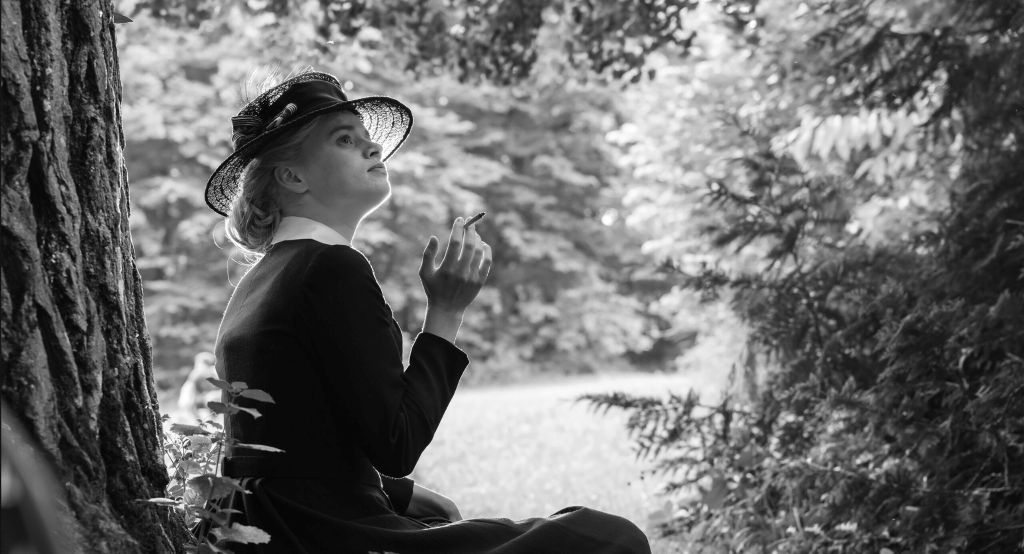
The other outsiders are Grete (Luna Wedler), a burgeoning scientist and amateur photographer who confronts societal misogyny, and Hannes (Enzo Brumm), a student whose aversion to the natural and his social world shifts when he meets a woman conducting a study on a geranium. But their stories—Grete in 1908 and Hannes in 1972—interrupt the progression of the 2020 plot with faint connections, as when Dr. Wong encounters the photograph of Grete on a computer screen or the reference copy of Goethe’s Metamorphosis of Plants that Hannes reads. One would be right to note there is little dramatic tension in the 2020 plot, which later focuses on Dr. Wong’s friendship with Anton (Sylvester Groth), the university’s curmudgeonly caretaker, whose orientalising misunderstanding of him develops into a friendly connection, beyond a common language. In keeping with the Greek origins of its name, then, the outer panels of Enyedi’s triptych, allowing the structure to stand on its own, can be folded towards the central one, responding to the stimuli and forging a wavelength of its own. The film’s resonances emerge from putting the dependent plots—similar enough yet different enough—in harmonious concert.
That sense of framing—or staging—of interdependent parts is common for triptych films. On a simple level, Hong Sang-soo’s In Another Country, starring Isabelle Huppert, is framed as a screenwriter drafting three variations of a plot concerning a French tourist encountering locals in the beaches of Buan. In Wes Anderson’s The Grand Budapest Hotel, the figure of the writer allows for the nesting of narratives, each with their own aspect ratios and vivid stylizations. But Bertrand Bonello’s The Beast, starring Léa Seydoux as Gabrielle and George Mckay as Louis, has the most similar impulse to Silent Friend: its 2044 storyline interrupted by the character undergoing a process of purifying the DNA of her past lives. “The changes in time periods also impact those themes,” Bonello told Sight and Sound. “We can say that in the 1910 section Gabrielle has a fear of love, but in 2014 it’s Louis who has that fear, which he expresses in a different way, by repressing something and not saying it. And in 2044 Gabrielle understands that fear, but it’s too late.” Editor Anita Roth shuffles the elements, introducing images that will only later make sense—a knife on a table, a bird that attacks, and a neutral-faced doll—memories repeatedly returned to and made more complex, depicting the way the passage of time operates in the mind. These kinds of films are grounded in the complex weave of their editing.
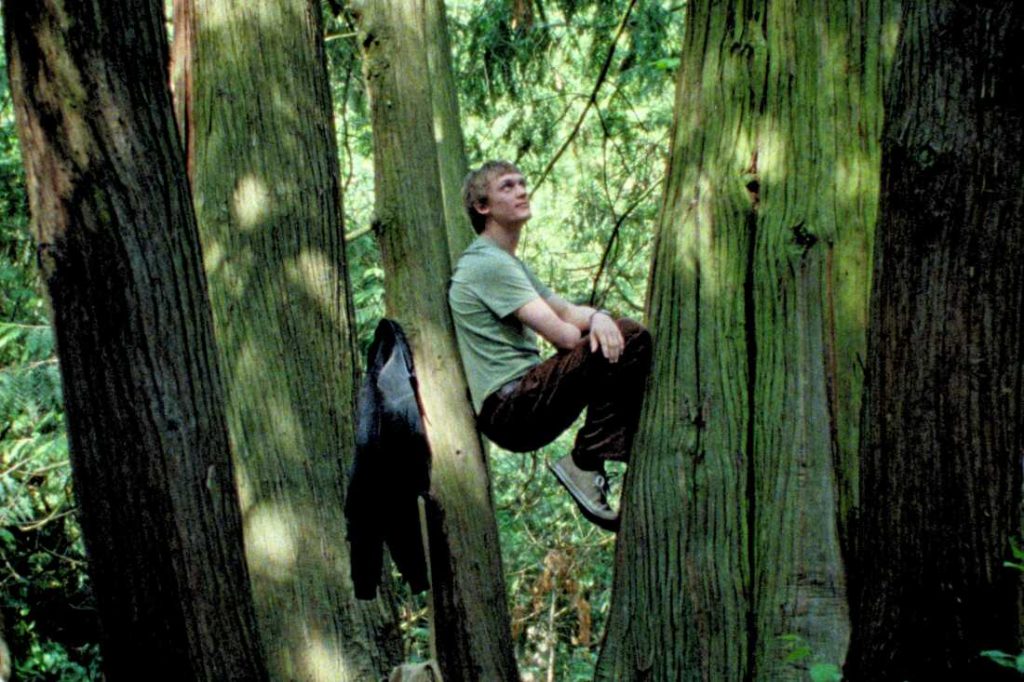
3. THE UNIFYING EVENT | Atonement, The Hours, Three Colours Trilogy
Without a unifying event, the triptych film devolves into an ambiguous endeavour. Krzysztof Kieślowski’s Three Colours trilogy, for instance, other than the colour-coded co-production schema, are connected by a ferry accident in the English Channel, which, in a stroke of luck, all the protagonists happen to survive; their tenuous connection through this event sufficient enough cause to concurrently place the surreptitious happenings of their intersecting intimate lives. In Joe Wright’s Atonement, a sex scene, potentially intentionally misread by Briony (Saoirse Ronan) as a scene of assault, becomes a site for the older iterations (Romola Garai in early adulthood and Vanessa Redgrave in old age) to attempt making amends through a revisionist history, as the typewriter keys that adorn Dario Marianelli’s swooning score signal. Adapted from Michael Cunningham’s riff on Virginia Woolf’s 1925 novel Mrs. Dalloway, Stephen Daldry’s The Hours, which unravels over the course of a tumultuous day, is unified by the spectre of parties that may or may not come to fruition. In 2001, Clarissa Vaughn (Meryl Streep) prepares for a fete honoring the crippling writer Richard Brown (Ed Harris); in 1951, Richard’s mother, Laura (Julianne Moore) contends with suicidal ideation as she prepares to celebrate her husband’s birthday; and in 1923, Virginia Woolf (Nicole Kidman) receives her sister Vanessa (Miranda Richardson) as the novel’s structure clarifies itself and she finally decides what she will do as for her next act. The parties are the hinges that hold it together, as does Woolf’s death, which finds echoes in the other chapters.
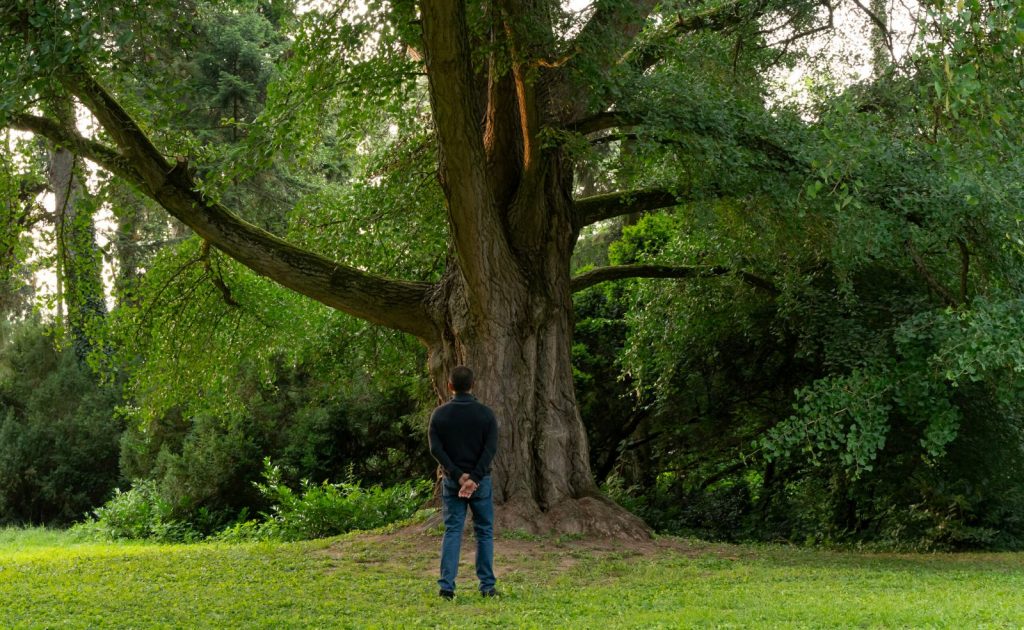
For Silent Friend, that event is a tree. The opening image, in which the seedling of a ginkgo biloba slimily, starchily sprouting and—almost erotically—rising upwards, is returned to later on, when Dr. Wong undergoes a drug-induced, surrealist trance state where all the timelines can collapse, can transcend. Throughout the film, rather than the characters themselves, cinematographer Gergely Pálos will place the tree, or its branches, in focus, as though it is the witness—a silent friend—of the characters, whose position is just as important to it. The relationships in the film—from Dr. Wong with Anton or his assistant Jule (Yun Huang); Grete with the kind professor’s assistant Thomas (Johannes Hegemann) or the photographer Herr Fuchs (Martin Wutke); Hannes and Gundula (Marelen Burrow) or his ill-suited classmates—are decentralized here, opportunities for dialogues to take place, since we’re always aware of the director’s presence, for whom structure is more compelling than the aftertaste of her content.
One need only to turn their attention to the final shot of the film: a slow-moving zoom-out on the tree, which is lush with yellowy orange leaves that shimmer in the breeze. Its manifold beauty allows the light to bring out the undercurrents of its remarkable inner vitality. “It’s a widespread misconception, isn’t it, that photography depicts reality?” Herr Fuchs says to Grete as he teaches her how to edit the photo negatives: “Actually, it’s an instrument for exploring its fragile nature.” The same can be said of the triptych too, which across its various parts, through various formal, material and editorial inventions, explores the fragile relationship between human life and the natural world. In Silent Friend, it is in those colorful, undulating silences, the hazy light it casts as it leaps between its carefully drawn panels that there is the most cerebral activity, when the film extends the continuum of the cinematic form it so adroitly embodies.