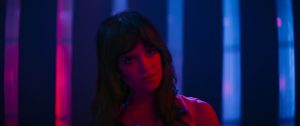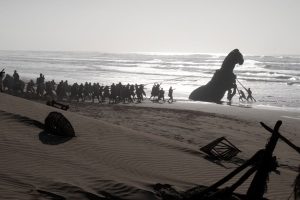

Reviews include Spider-Man: Brand New Day, I Want Your Sex, and Sheep in the Box.
TFCA Friday: Movie Reviews for Dec. 19
December 19, 2025

Welcome to the TFCA weekly, a round-up of reviews and coverage by members of the Toronto Film Critics Association.
In Release this Week
10 Dance (dir. Keishi Otomo)
“10Dance plays too much with the love connection between the two males – a case of too much teasing and too little to show for it,” admits Gilbert Seah at Afro Toronto. “The film, though displaying a lot of cool dance moves, does not really succeed as a dance movie either.”
Avatar: Fire and Ash (dir. James Cameron)
“Ultimately, here’s the thing. There’s no doubt that Avatar: Fire & Ash will satisfy audiences across the world and make a crap load of money because it’s a quality action movie with immersive visuals that you can’t help but get sucked into but as co-writer/director James Cameron is quite possibly hitting a little bit of a malaise because when you’ve revolutionized a genre and bring new technology to the forefront in spectacle tent pole filmmaking, it’s hard to find a way to keep innovating in ways that has been your signature style for well over 40 years now,” says Dave Voigt at In the Seats.
“The jolt of evil energy Varang provides turns out to be both the film’s strongest asset and its biggest liability. Fire and Ash is at its best whenever Varang is on screen — and sags when she’s off it,” argues Peter Howell at the Toronto Star. “Varang herself is part shaman, part warlord, ruling through pain, psychic domination and even insults — she calls her minions “idiots.” Chaplin gives her a ferocity that feels genuinely new to the franchise; whenever she appears, the movie snaps into focus, alive with unpredictable menace. It’s one of the rare moments over the three films that Pandora seems truly dangerous.”
“The farther we stray from the first film, the closer Cameron comes to an original story — though the more overburdened it becomes with interweaving, conflicting and subordinate plots,” writes Jackson Weaver at CBC. “Being a Cameron film, the effects are superb; already locked in with the liquid physics of The Way of Water, the Canadian director and his team only continue their achievements here — just try to ignore the jarring and inexplicable shifts between standard, and high frame-rate that Cameron continues to play with.”
“Cameron has created a message in the Avatar series: he’s pro-Indigenous and the ecology movement. But are people buying it? I think not. Whether he wants to be or not, Cameron is an old-style storyteller, whose roots go back to the European imperialist era of the 18th and 19th centuries,” writes Marc Glassman at Classical FM. “He may hope to tell something different and new, but his style is inherently sexist and racist and ultimately completely manipulative. His success is reliant on the technology he purports to despise. Cameron’s Avatar will never be a revolutionary hit; it can’t be.”
“As is the way with the franchise, the updating of the backstory and a whole lot of New Agey gobbledegook involving the ‘Great Mother’ and ‘the spirits of our ancestors’ is mere prelude to a very long apocalyptic battle that will seem like a win for the good guys (after several close calls with losing). But bear in mind, there’s two more Avatar movies to come. We’ve had forest Na’vi, water Na’vi and fire Na’vi. I’m guessing ice Na’vi next,” says Jim Slotek at Original Cin. “It’s a decent, eye-catching, stay-the-course addition for Cameron, who has pretty much turned his entire career to this franchise, a la George Lucas with Star Wars.”
“Avatar: Fire and Ash is the weakest of the three films, though it is still quite an amazing science fiction flick in terms of visuals and special effects,” adds Gilbert Seah at Afro Toronto.
“Whereas the first Avatar was if not mind-blowing fun than at least a mind-altering blast, and 2022’s Avatar: The Way of Water a boundary-pushing spectacle par excellence, Fire and Ash cannot help but feel like a retread of what came before, diluted and distended,” observes Barry Hertz at The Globe and Mail. “In interviews, cast members such as Worthington – who filmed The Way of Water and Fire and Ash concurrently – say that they felt no delineation in making one film or the other. Which sums up the dilemma of watching Fire and Ash three years after The Way of Water. The storytelling might have felt fresh and fastened together in the moment of creation, but separated by time and expectations, the two halves don’t boast the same intensity of connection. Audiences become as stuck in the weeds of Pandora as Cameron seems to be.”
“Overall Avatar: Fire and Ash is unlikely to convert resistant audiences, but for those who enjoy the scope of Cameron’s fictional world and its eye-popping special effects, this is another solid outing. There is darkness and death in the tale, but the series (mostly) remains exciting family friendly holiday fare. Watching the spectacle on the largest screen available is still a breathtaking experience, even if narratively Fire and Ash feels like an expansion of The Way of Water, as opposed to its own standalone tale,” says Joe Lipsett at Queer Horror Movies.
At Zoomer, Brian D. Johnson speaks with James Cameron about his epic trilogy, environmentalism, and alien encounters: “The thing I believe in more than anything else is science,” Cameron tells Johnson. “And that which can be observed, analyzed, published and peer-reviewed. To me, there’s no compelling evidence that we are being visited or have been visited. Show me one thing, any piece of technology that can’t be accounted for by the human presence here. I think that the emergence of consciousness here is a miracle. And I don’t mean that in a religious way. I mean, it’s the most astonishing thing. It’s our job to be carriers of the flame of consciousness into the future. And whether that means cohabiting with AI or not, we’ll figure that part out. I don’t see the need for extraterrestrials. As a science fiction writer, I love the idea of it, but you’ve got to prove it to me. And when you said jellyfish and octopus, were you saying, ‘Well, we’ve got these weird creatures …'”
Breakdown 1975 (dir. Morgan Neville)
“If you were conscious in 1975 and lived in North America, you will remember it as a turbulent year, of upheaval, new ideas and post hippy social awareness. It was a banner year for bold, impressive and timely films; that’s the lens through which Morgan Neville illustrates what happened and why in his superb documentary Breakdown: 1975,” writes Anne Brodie at What She Said. “His premise is that America suffered a “nervous breakdown” due to the pressures of old values that were no longer viable. Twenty years fighting the unpopular Vietnam War that few Americans wanted, the tiny nation was captured by North Vietnam; the great and powerful US lost the War.”
“These filmmakers were rethinking Hollywood films playing with the way stories were told,” observes Karen Gordon at Original Cin. “They were often asking hard and important questions about their country, but one that they still believed in. It was a rejection of some of the things that plague us now in our era of social media and a collapsing mainstream news business that’s led to divisiveness, and an acceptance of a certain kind of violence and racism, people seeming unwilling to engage in ideas outside of their silo.”
The Great Flood (dir. Kim Byung-woo)
“Amid the chaos and shrinking hope for survival, An-na faces a dilemma: she is also uniquely linked to a crucial mission that might hold the key to humanity’s future, forcing her to choose between saving her child and fulfilling a larger purpose,” says Gilbert Seah at Afro Toronto. “Though the film can be described as an action, drama, science fiction, and disaster storytelling, it is this theme that stretches the films towards some emotional storytelling.”
The Housemaid (dir. Paul Feig)
“[I]t seems that only Seyfried truly understood the assignment that Feig handed her, the actress oscillating between two modes – intense and freakishly intense – with finesse,” notes Barry Hertz at The Globe and Mail. “The actress’s enjoyably loopy work is all the more pronounced in its enthusiasm and commitment when compared to the dour and charisma-free Sweeney, who simply cannot hold a scene here to save her life (which is frequently at stake). Although her recent boxing film Christy didn’t work on the whole, Sweeney delivered a powerhouse performance in the title role, projecting a raw kind of energy that is entirely, bizarrely absent here.” Hertz also chats with director Paul Feig about working with two of 2025’s biggest stars: “I just try to make sure I’m not asking them for something that they wouldn’t do,” Feig tells Hertz. “I’m also at the point now with actors where I’ll just give a general direction – I don’t rehearse at all. I don’t do read-throughs or table reads of the script. I want their feedback, and we get that on set.”
Is This Thing On? (dir. Bradley Cooper)
“[A]t its heart is a raw, incandescent performance from an actor revealing a side of himself we’ve never seen before,” writes Brian D. Johnson at Zoomer, who speaks with Will Arnett about the arc of his career: “I moved to New York and always used to joke that I wanted to be a serious actor. Because I was young enough and dumb enough that I wanted the world to take me seriously,” says Arnett. “And I ended up stumbling backwards into more comedic stuff. I paid my rent doing comedy pilots. Because of that, Arrested Development came my way and changed my life. I’ve had the greatest experiences and been able to make a living and provide for my family. But I lost sight of why I started doing this in the first place. The dream was always to do more dramatic stuff.”
“A solidly smart and sly adult drama about the demise of a marriage, Will Arnett gives what might be the best big-screen performance of his career,” says Rachel West at That Shelf. “Admittedly, it’s hard not to hear Arnett’s voice and immediately think of any number of his signature characters, be it LEGO Batman, BoJack Horseman, or Gob Bluth. But faster than you can say ‘I’ve made a huge mistake,’ Arnett slips seamlessly into what feels like a very lived-in character. And no wonder, since the actor sat with the script for seven years before it made it to theatres.”
“Cooper has delivered a generous showcase for his long-time friend Arnett, an actor of immense comic power who has enjoyed a long career playing the jerkiest of dolts, but has never been given the opportunity to play an out-and-out dramatic lead. Arnett’s gravelly voice is still there, almost as a comfort, and the ease to which Alex attaches himself to the beat-by-beat delivery of his comedic bits feels ripped from the actor’s sitcom-heavy CV, but there is something new about the work, too,” says Barry Hertz at The Globe and Mail. “On the page, it could read as too emotionally canny, if not factory-floor manufactured. Yet Arnett delivers something warm and genuine here, especially every time he’s paired against Dern, who perhaps knows this territory better.”
“It’s, ironically enough, a terrific, serious performance by Will Arnett, arguably the best of his career. And it’s based on a real-life onstage incident experienced by British comedian John Bishop, an erstwhile pharma marketer whose nascent comedy material was largely extremely personal life experiences from his impending divorce. Then his wife, through pure chance, ended up attending one of his sets,” writes Jim Slotek at Original Cin. Slotek also speaks with Arnett about collaborating with Bradley Cooper: “This was something I wanted to do, I was going to play Alex,” says Arnett. “And when Bradley decided to come on, he said he wanted to rewrite it, which is actually a vote of confidence. It was him saying, ‘I agree you should play this, and this is what we should do to get it done.’”
“Comic relief of a different sort comes through friends Balls (Cooper) and Christine (Andra Day), another couple who’s going through relationship issues. Cooper has fun as a flaky understudy for a play who, when he discovers Alex is performing, says something interesting about being the “creative” one in their friend group — the one who pursued the artistic long-shot while the others played it safe,” adds Glenn Sumi at Go Ahead Sumi. “It’s insights like these, and observations like how separated parents will try to make themselves look better than their spouse in front of their kids, that give the film its heart.”
“The audience in the club, a fictionalized version of New York’s Comedy Cellar, doesn’t know whether to laugh or cringe. Neither, it seems likely, will movie audiences, as Alex discovers standup to be an effective form of therapy as he continues to recite his life woes,” notes Peter Howell at the Toronto Star. “This makes actor-writer Cooper’s third and least grandiose film as a director a riskier proposition than his first two endeavours, the showbiz romance A Star Is Born and the Leonard Bernstein biopic Maestro. Which makes Is This Thing On? a tougher watch than people might be expecting from the trailers, which is selling the film as a comedy. There’s nothing funny about the genuine pain felt by Alex and Tess, in a story based on the real-life marital saga of John Bishop, a U.K. pharmaceutical sales director turned popular comedian.” Howell also chats with Will Arnett about taking it to the comedy club.
“While Is This Thing On? Isn’t poised for a memorable awards season run it does something unique that will allow it to have audiences long after the trophies have been passed out,” notes Dave Voigt at In the Seats. “It’s an affirmation to the importance of mental health for men and that talking out your problems is actually a sign of strength instead of the tired stereotype of it being a weakness, even when you are doing it on stage in front of a bunch of strangers. It’s because while we never think about it in the moment, we can relate to the realities of going through some sort of emotional upheaval in our lives.”
“An actor often knows how to get the best out of his colleagues. It seems to be the case with Cooper who has already worked wonderfully well with Carey Mulligan in Maestro and Sam Elliott in A Star Is Born,” says Marc Glassman at Classical FM. “Here he draws an exceptional performance from Laura Dern as Tess Novak, a former Olympic volleyball player who has to rebuild her life after having given up athletics for motherhood for a decade. Can she come back? That’s the story of the second half of Is This Thing On? —and it’s very well done.”
“Is This Thing On? plays like the opposite kind of romance, a kind of story of a falling out of love, as Bradley Cooper’s most successful hit, A Star Is Born, which starred the director opposite Lady Gaga,” writes Gilbert Seah at Afro Toronto. “The film is impressive in its creation of atmosphere, especially in the way stand-up comics hang out, react and basically interact with each other.”
At That Shelf, Pat Mullen gets some words from Will Arnett and Laura Dern about their marriage story: “I fell in love with playing someone who has that stealth and disciplined ability, even if she doesn’t have language for it. Even if we’re watching her figure out in real time,” says Dern. “I also loved playing someone that I deeply related to, who has had a passion, as she says in the film, since she was 11. We both, in a way, traded childhood for a career, or a career environment. She allowed me to be compassionate to a man’s vulnerability in a new way. Because there is something, she’s very feminine, but she also has a masculinity in her strength. So, I could let him crack and be vulnerable and not have the answers in a new way, in partnership with a male character in a film, which was beautiful.”
Rebuilding (dir. Max Walker-Silverman)
“The film illustrates that not only are performances crucial to a film telling its story, but the director’s camera capturing the most appropriate moments, like Callie Rose’s quiet smile, or the grandmother plucking of a kiss on Callie Rose’s’ forehead,” notes Gilbert Seah at Afro Toronto.
Serious People (dir. Pasqual Gutierrez, Ben Mullinkosson)
“The high anxiety the film produces is uncomfortable and seriously, how do the workers not know it’s a stranger who looks like Pasqual and how can Pasqual possibly think this can turn out well?” asks Anne Brodie at What She Said. “Oh, dear, this slack jammed angst fest offers interesting ideas but lacks motion and engagement ; and so many unanswered questions.”
“The film is a very personal one and perhaps too personal for everyone’s tastes. It looks in detail at Pasqual’s life,” says Gilbert Seah at Afro Toronto. “He assumes that his audience will take to and understand all his problems and difficulties, but this may very much not be the case. If one is not connected to the filming industry, all that takes place may all seem too far-fetched, irrelevant, and an utter bore.”
The Spongebob Movie: The Search for Squarepants (dir. Derek Drymon)
“The humour is extremely goofy, so goofy that it often makes no sense, but the kids at the promo screening seem to love it,” writes Gilbert Seah at Afro Toronto.
File Under Miscellaneous
At Zoomer, Brian D. Johnson remembers Rob Reiner, following his tragic death: “Until recently, I had only known Reiner from watching his films. But as someone who’s made a career of film criticism, I often get asked to name my favourite movie of all time, and instead of citing an obvious classic like Citizen Kane or The Godfather, I have a default answer – This is Spinal Tap, Reiner’s 1984 debut feature,” writes Johnson. “And I’m only half-joking. I’ve watched this priceless heavy metal satire countless times, and it never gets old, only funnier. I met Reiner for the first time, via Zoom, last September when he and the band were promoting Spinal Tap II: The End Continues, the epically long-awaited sequel that landed 41 years after the original film — featuring Paul McCartney messing with their egos in a rehearsal and Elton John performing Stonehenge onstage in the film’s cataclysmic finale.”
At the Toronto Star, Peter Howell picks the best films of 2025 with Hamnet topping the list: “Chloé Zhao’s intimate historical drama is a soul-stirring elegy of love, loss and art’s cruel bargain, drawn from Shakespearean legend, Maggie O’Farrell’s celebrated novel and astute observations of life. Jessie Buckley is devastating as Agnes Hathaway, the wild-spirited healer who finds passion and home life with William Shakespeare (Paul Mescal), only to find their bond strained by family tragedy. In moments as simple as a hesitant meeting of hands, Zhao, cinematographer Lukasz Zal, and composer Max Richter weave image and sound into pure emotion. Few movies this year have moved me so completely. Hamnet isn’t just TIFF’s 2025 People’s Choice Award winner, it’s the year’s best film.”
At POV Magazine, Rachel Ho considers the ever-growing field of celebrity documentaries: “Our fascination with celebrity drives us to their stories. This makes the creation of biographies of icons a great—and profitable—area for documentary filmmakers. The problem for filmmakers is twofold: gaining access to star subjects and being given the freedom to explore their flaws as well as virtues. Where once documentarians were often allowed entry into the lives of luminaries, today’s viral social media landscape, where reputations can be destroyed by personal revelations, makes that private admittance less possible. Too many docs are hopelessly compromised by the personal agenda of their subjects. It’s only when documentarians insist upon objectivity and encourage openness that they can offer not only a look into the lifestyles of the rich and the famous, but a way with which to calibrate our social conscience in how we understand our shifting norms and values.”
At The Globe and Mail, Barry Hertz chats with Joe Hill about books and introducing his wife to monster movies: “I think when I took her to see It: Chapter One, I think that was the moment that she realized, oh wow, this stuff that I find genuinely scary is actually going to be a part of my life now. I’m going to have to ride the roller-coaster that scares me,” Hill tells Hertz.
And at What She Said, Anne Brodie rings in the holidays with The Madame Blanc Mysteries Christmas special: “Its Christmas Eve and they’re attending an exhibition at the Musée de Sainte Victoire. M Blanc will authenticate a new acquisition, an Ormolu box once owned by Marie Antoinette. One tiny problem. There’s a time bomb inside set to go off in 90 minutes.”