Reviews include Insidious: Out of the Further, Late Fame, and Spa Weekend.
TFCA Friday: Movie Reviews for June 19
June 19, 2026
Welcome to the TFCA weekly, a round-up of reviews and coverage by members of the Toronto Film Critics Association.
In Release this Week
Blind Love (dir. Julian Chou)
“The film contains a few twists in the story, though one can predict how the film will unfold,” writes Gilbert Seah at Afro Toronto. “This is one of the main flaws of the otherwise long and winding two and a half hour drama. From the way the emotions unfold, and the plot points revealed, it becomes clear that the resolution of the love relationships is not the issue, and would be left hanging, or how it ends up not mattering. The story focuses on the life choices that are taken and how to cope with regret, as changes in past life decisions are difficult to make.”
The Death of Robin Hood (dir. Michael Sarnoski)
“Sarnoski gives us the story of an intense, quiet man driven inward and matches that with a film that uses visual and environmental cues to underscore that: dark, light, and the natural world as reflections of his inner state,” says Karen Gordon at Original Cin. “The darkness, mud and filth of the early scenes, the light of the priory in the sunshine or lit by candles, the crashing waves on the shore, gorgeous to look at and beautifully shot by cinematographer Pat Scola.”
“Hugh Jackman imbues this role with a mix of world weary arrogance and brooding introspection which all make for a very interesting character study,” observes Dave Voigt at In the Seats. “It’s not always perfect but Jackman captures a man who is broken by his past but also still very defiant in the face of it. It all makes for a somber representation of character that we’ve never quite seen like this before. Sure, it’s fairly self-indulgent, but that what makes it so interesting. We’re never intended to like Jackman’s Robin Hood as a human being, but we can never stop looking at him either, he knows he’s the literal antithesis of that man he used to me, and it’s actually killing him.”
“The Death of Robin Hood is a new Robin Hood movie stressing that the Robin Hood myth is a big lie and Robin is no hero but a brutal killer and villain,” writes Gilbert Seah at Afro Toronto. “Unless you like your film dark and violent with a slow-moving, reflective, and character-driven plot that is focused on guilt, mortality, and redemption. Robin striving and getting his redemption at the very end is the only way this film can go.”
Girls Like Girls (dir. Hayley Kioko)
“Though the film is a romance, most of the story concentrates on Maya da Costa’s Coley, who has come to town to stay with her estranged father after her mother [died by] suicide. Zach Braff does his best with the difficult role of Curtis, the dad who wasn’t there for his daughter, until now, when he has no choice,” says Marc Glassman at Classical FM. “Da Costa, in her first major film role, is fine as Nicole—Coley—a profoundly unhappy teen, who is trying to place the emotions created by her first real love with her difficult relationship to her parents—one living and the other, a profoundly confusing set of memories.”
Groundswell (dir. Joshua Tickell, Rebecca Harrell Tickell)
“Groundswell presents audiences with a truth that’s not really all that inconvenient,” says Pat Mullen at POV Magazine. “Climate change is here, but it’s not irreparable. By harnessing the upbeat energy of its participants and providing audiences with the information to help them support and reward farmers leading the regenerative revolution, the film provides an accessible call to action. That’s certainly another positive for bucking the trend of depressing climate docs. If coffee can’t save humanity, nothing probably will.”
Husbands in Action (dir. Park Gyu-tae)
“The film is about husbands in action, the two husbands, current and previous, who have to work together to do a rescue mission reluctantly,” explains Gilbert Seah at Afro Toronto. “Though the premise of unlikely partners is not uncommon in action-packed comedies, this Korean vacation is still fresh, with Korean-style humour, hilarity and solid action sequences.”
Leviticus (dir. Adrian Chiarella)
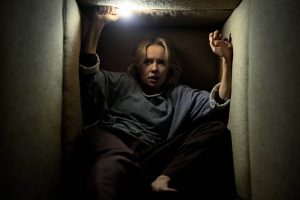
“What makes Leviticus so impressive — particularly as a debut feature — is its restraint. Chiarella could have built an effective film around the psychological cruelty of conversion therapy or the violence of social conformity,” notes Thom Ernst at Original Cin. “Leviticus announces Adrian Chiarella as a filmmaker of remarkable confidence and control. It’s a horror film that trusts its audience, trusts its characters, and trusts the power of what remains unseen. In doing so, it becomes one of the year’s most unsettling — and impressive — genre debuts.”
“It’s a bone-shaking film that burrows under the skin, much like the fatal attraction that complicates first love. This moody horror film thrillingly reclaims images of transgression, punishment, and pain that have long characterised queer representation,” says Pat Mullen at That Shelf. “It’s a restorative work of horror cinema that confronts the real monsters that exist in plain sight, in institutions, in relationships, and in values that make people fear themselves and their communities. As Naim and Ryan refuse to run from each other any longer, Leviticus flips the monster back on those who choose to fear love, rather than return it.”
Maddie’s Secret (dir. John Early)
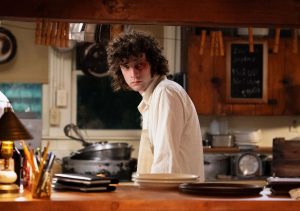
“Psychology was often important in the made-for-TV films so it’s no surprise that the roots of Maddie’s bulimia go deep, back to her childhood. She has real issues stemming from her cougar of a mother, who was always more interested in the next man than her own daughter,” notes Marc Glassman at Classical FM. “Kristen Johnston chews up the scenery in her one big scene as Maddie’s mother: she’s entertaining and persuasively terrifying. As Deena, Maddie’s best friend, Kate Berlant—who is John Early’s close colleague and comic partner—is terrific.”
“Despite advances, society still has contradictory ideas about appearance, food and self-worth,” notes Glenn Sumi at Go Ahead Sumi. “The film’s one misstep comes from Berlant’s lesbian side-kick, Deena, who’s obviously in love with Maddie and will do anything to be near her — including check herself into the eating disorder clinic. Early and Berlant have collaborated for decades, but this narrative thread, even though it allows for a nicely choreographed, time-wasting dance sequence, belongs in another film.”
“Director Early pushes the limits of the film a few times,” adds Gilbert Seah at Afro Toronto. “He pushes the limits of credibility so that Maddie’s husband, Jake, could believe that Maddie was pregnant all along without much question. And Jake is also shown not as the typical hunk husband, but a slightly overweight and hairy husband, often sweaty after a workout, and wanting to hug his wife. It is good here that things go against the stereotype, that someone as husky as Jake could also be the perfect loving husband, and not too perfect for the story.”
“Early’s casting stunt seeks to be a key ingredient of Maddie’s Secret, but it’s a peculiar flavour that overwhelms everything else,” admits Pat Mullen at That Shelf. “Much of Maddie’s Secret hinges on the audience having a laugh over a man in a dress. The flippant genderfuck conceit plays like sour milk in béchamel sauce. At a time when casting cisgender actors to play trans characters ignites deserved pushback, tethering the film to a one-note drag and/or chick-with-possibly-a-dick joke seems passé. Early could have easily excelled with this project by gifting Maddie’s gee-golly-gosh moxie to another actress. The casting also illustrates how Maddie’s Secret falls victim to another cooking proviso. Just because one has a cupboard full of spices doesn’t mean one needs to use all of them.”
Operation Hadal (dir. Dante Lam)
“Director Lam’s action set-pieces are very technical and involve both fighting above ground in enclosed spaces or underwater, often involving pyrotechnics, and hand-to-hand combat,” notes Gilbert Seah at Afro Toronto. “The landing of troops on the oil platforms in the beginning action sequence is indeed impressive. But despite the action, the film suffers from weak character development and a weak plot and narrative.”
Shoot the People (dir. Andy Mundy-Castle)
“Shoot the People is about people, their right to protest and how the protests, whether calm or violent, become a change that will improve society,” says Gilbert Seah at Afro Toronto. “This is the doc’s message, which comes through in flying colours. Shoot the People is also a tribute to a photographer who uses his wealth to spread kindness instead of separation and wickedness.”
Toy Story 5 (dir. Andrew Stanton, Kenna Harris)
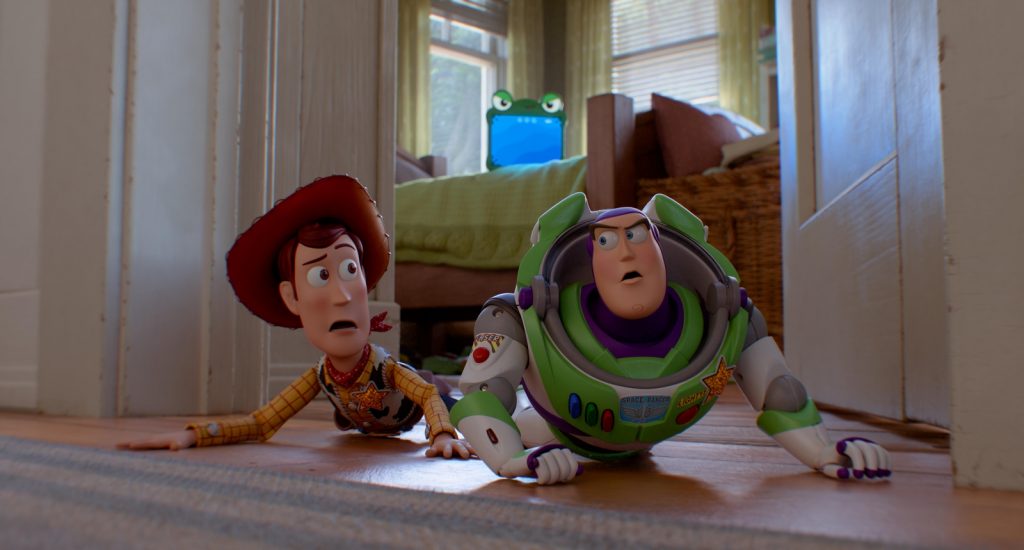
“Toy Story 5 explores the harrowing asymmetry at the heart of the parent-child bond with soul-aching beauty,” observes Victor Stiff at Exclaim!. “Parents’ love and instinct to protect their children grow more ferocious by the day, as the child steadily marches towards independence. Throughout the series, characters like Woody and Jessie have exhausted themselves raging against the tides of change. But 31 years in, this entry treats accepting being outgrown not as a failure, but as the sweetest surrender.”
“They’ve crafted a clever, fast moving story with lots of twists and turns. And while it moves fast, it also retains things that make Pixar movies so special and affecting. It’s also very funny. A delight of Toy Story 5 is the comic asides from the various toys that spring from their identities,” says Karen Gordon at Original Cin. “And of course, this is a movie that’s also for kids (!), with strong and important themes for them: like not ditching what you love to appease others, or letting prejudices get in the way of accepting good people. It’s also about friendship and real-life shared connections as opposed to the world on social media.”
“Obsolescence, loss and longing are in the Pixar series’ DNA, although co-writers/directors Andrew Stanton and Kenna Harris charge up an old idea — ‘The age of toys is over!’ — with enough heart and humour to power past a shortfall of originality,” notes Toronto Star critic Peter Howell’s Night Vision. “I love seeing yodeller Jessie and her trusty steed Bullseye finally getting serious screentime, although Woody (now balding and paunchy) and Buzz (still yearning for Jessie) have their moments, too. The film’s best new characters are ‘the Double A Team,’ a trio of discarded early-2000s tech toys that run on AA batteries: toilet trainer Smarty Pants (Conan O’Brien), low-res camera Snappy (Shelby Rabara) and GPS-striving hippo Atlas (Craig Robinson), who add to the film’s genial mix of sentiment and silliness.”
“You know what you don’t hear very often? ‘Fifth time’s the charm.’ Franchises that are lucky enough to make it to number five are more likely to be running in place or running on empty than they are running like the wind,” observes Chris Knight at the National Post. “Nothing wrong with that, but nothing new either. In fact, if you’ve seen the trailers, you may recall a scene of Woody and Buzz trading mild insults while one of their companions coos: ‘It’s good to see them fighting again.’ That’s Toy Story 5 in a nutshell.”
Voicemails for Isabelle (dir. Leah McKendrick)
“The film explores grief more than romance in its first half, which one needs patience to get over,” sighs Gilbert Seah at Afro Toronto. “The film is not funny in the least, and sitting through this film is like going to a club filled with screaming young girls stepping on your feet. But this is another romantic comedy where a relationship is based on a lie. The secret is that Wes never tells Jill that he has heard months of intensely private messages and that he knows details about Isabelle… And the audience has to sit through all this! The story concludes as an emotional reconciliation between Jill and Wes, the obstacle in this Harlequin-style romance, emphasising healing and new beginnings alongside Jill’s enduring love for Isabelle. Yes, clichéd territory, all the way!”
The Welcome Table (dir. Josh Fox; June 23)
“The Welcome Table considers the often untold tragedies that coms in the wake of catastrophes triggered by climate change. This thoughtfully jazzy film connects environmental concerns to urgent matters of human flow that bring the world closer to its inevitable tipping point,” writes Pat Mullen at POV Magazine. “As musician John Boutté joins the fray and shares his story about writing the theme song for Treme and sadly having to leave the titular quartier, the film brings all the participants back to the levee in a powerful illustration that everyone deserves a seat at the table. Buoyed by great music that connects the tapestry of stories united by the table, this documentary offers a rich chorus united in a quest for a note of optimism. The film leaves it to us whether that note is beyond reach.”
We’re Nothing at All (dir. Herman Yau)
“It is a pleasant surprise to see the performance of the gay couple, who are both Cantopop boy band members offscreen. They shed their sexy idol appearances to play unappealing brutes. Portraying homosexuals is still taboo by some in the Asian entertainment industry. In contrast to his fluid dance moves in concert, the physicality Anson Kong brings to his blue-collar character is stiff and jagged, as befits an overworked labourer,” observes Alice Shih at Original Cin. “As an experienced genre film writing/director, Yau adds emotional layers to a story he obviously cares about. By using the thriller mystery genre as bait, he shares with the audience his view on social prejudice towards the underprivileged and marginalized and makes an implicit call for change.”
A Festival of Festival Coverage
At Toronto Franco, Gilbert Seah offers capsule reviews for animated films at Annecy, including Blaise: “Blaise looks like the animated feature Todd Solondz could have made. The Sauvage family just wants to be loved. Then, they also have to deal with each other, making matters worse. The animation is cute, especially the detailed wardrobe of each character and their mannerisms.”
TV Talk/Series Stuff
On In the Seats with…, Dave Voigt proves himself the TFCA chatterbox by offering conversations with RuPauls’ Drag Race music diva Leland, Slow Horses production designer Choi Ho Man, Murderbot VFZ supervisor Sean Faden, Young Sherlock music supervisor Ian Neil, The Night Manager composer Federico Jusid, Margo’s Got Money Troubles cinematographer Tari Segal, Love Story editor Franzis Muller, Spider-Noir DPs Darren Tiernan and Peter Deming, and Pluribus cinematographer Marshall Adams.