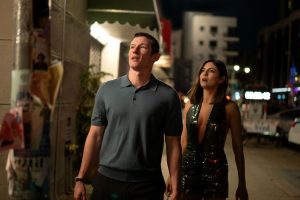
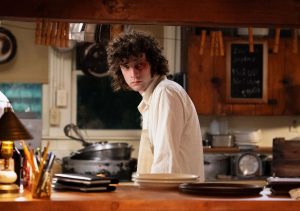
Movie reviews include Tony, The Rivals of Amziah King, and American Doctor.
TFCA Friday: Movie Reviews for Nov. 28
November 28, 2025
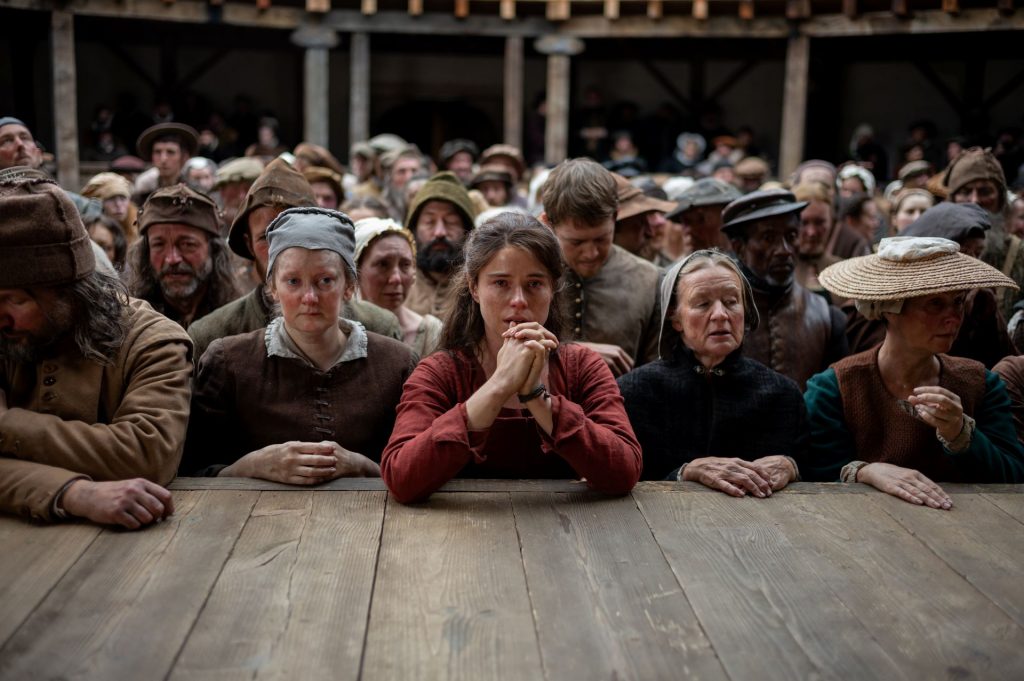
Welcome to the TFCA weekly, a round-up of reviews and coverage by members of the Toronto Film Critics Association.
In Release this Week
Eternity (dir. David Freyne)
“Eternity, directed and co-written by David Freyne, has much in common with another great afterlife story, Albert Brooks’ 1991 romantic comedy Defending Your Life. Alas, it pales (like a ghost!) in comparison, containing nowhere near that earlier movie’s intelligence, whimsy or charm. The premise: Larry and Joan, an elderly couple, die within days of one another, and find themselves in a kind of post-life way station called The Junction. It’s part luxury resort, part trade show, part mall, where the newly deceased can shop for an eternity in which to spend, well, eternity,” says Chris Knight at Original Cin. “[But] the main story is so drab, so poorly constructed and lacking in any real drama, comedy or chemistry. It’s a clever conceit but bungled in the delivery.”
At The Globe and Mail, Johanna Schneller speaks with star Elizabeth Olsen on acting and the afterlife: “I would love to feel that directors and producers know me, know what I want and can do – but I don’t think that’s so,” Olsen tells Schneller. “I want to make art, with great artists, that holds up a mirror to something that is happening in our world, and challenge people with it…I never read a rom-com that I wanted to do until this. It’s sincere. It’s sweet without saccharine, and that’s hard to find.”
Hamnet (dir. Chloé Zhao)
“Cast as William Shakespeare’s wife, Jessie Buckley does not appear as a woman to whom one might offer something second-best. She is fiery, demanding and uncompromising, the molten core of Chloé Zhao’s Shakespeare biopic Hamnet,” observes Kate Taylor at The Globe and Mail. “Her all-in performance is riveting, and well balanced by Paul Mescal’s quieter intensity as the Bard, making the film worth watching – but never rescuing it from the cheap biographical determinism of its third act.”
“You want a challenge? Try keeping your eyes dry as the plague known as the Black Death casts its shadow and love yields to mourning, building to a third-act catharsis like no other movie in recent memory. Buckley and Mescal anchor an awards-worthy ensemble, conjuring magic, anguish and whispered secrets in a world trembling between history and legend,” writes Peter Howell at the Toronto Star. “Hamnet isn’t tragedy in any simple sense; it’s about the terrible bargain great art often exacts from those who make it. A family loses a son; the world gains Hamlet.”
“Zhao and O’Farrell have done a tremendous job in evoking 16th century England, a land that was still filled with ancient customs and superstitions but also had a burgeoning urban culture, which included having an active theatre audience in London,” notes Marc Glassman at Classical FM. “The love that the Shakespeare family shares is made up of similar contrasts. The life of Agnes, the Bard’s wife, is filled with nature: she has a pet hawk and spends hours in the fields finding the flowers and weeds that can be made up to be potions and tinctures. Will, her husband, struggles to write, finding satisfaction in being able to express himself through words. As shown here, their love is intense and physical.”
“There’s a touch of madness and magic about Buckley’s Agnes, who would rather give birth to her children in the forest than deliver them safely at home with a midwife,” writes Glenn Sumi at Go Ahead Sumi. “I didn’t quite believe a scene in which her character seems confused about the purpose of theatre (wouldn’t Will have told her about what he’s spending his time doing?). But Buckley, her focus never wavering, sells it.”
“Hamnet is a sensitively told, beautifully realized pastoral tale, driven by Buckley’s magnetism, and a well-placed cast,” notes Jim Slotek at Original Cin. “And cinematographer Lukasz Zal’s 16th century film portraiture anchors the movie with a combination of sheer rural beauty and village earthiness. And Zhao adds a clever turn or two, as when she animates the adventures of an infected flea from the other side of the planet to Stratford. If you’re playing that game, Hamnet is a prime candidate for awards season. And I would be prepared to hand Jessie Buckley a trophy right now.”
“Zhao’s film illustrates that Hamlet actually shows Shakespeare at his most vulnerable,” writes Pat Mullen at That Shelf. Mullen also speaks with Chloé Zhao, Paul Mescal, and Jessie Buckley about moving audiences with that incredible ending made up on the fly: “I was standing at the lip of the stage and behind me was the tsunami: everybody’s hearts came ricocheting through me,” says Buckley. “Maybe what’s happening now that it’s been put out into the world. In some ways, we’ve forgotten to need each other. We become so scared to need and hold each other off that it’s become this vibration that we’ve needed.”
Ick (dir. Joseph Khan)
At The Globe and Mail, Barry Hertz speaks with Ick director about the film’s journey since TIFF 2024: “To be very honest, I don’t think that the premiere went very well in Canada,” Khan tells Hertz. “I felt like a lot of critics liked it – there’s no other way to put it, a lot of the smart people liked it. But I started realizing, even though the movie isn’t overly political – the politics are done as a joke, not seriously – I stumbled into a very political landscape that was accelerating. This is right before Trump got re-elected, and there’s very outwardly leftist ideas that started percolating, too. The film got tripped up into it because it looked political, but it wasn’t necessarily political.”
Jingle Bell Heist (dir. Michael Fimognarit)
“As this film as the typical Christmas nonsense that new films are usually released at this time,” writes Gilbert Seah at Afro Toronto. “Though not the almost perfect Christmas film, it comes entertainingly close, and it does succeed as a romantic comedy, a heist job, and with a few messages put in for good measure.”
Meadowlarks (dir. Tasha Hubbard)
“It’s a kind of chamber piece as each reveals what it meant and means to have been kidnapped and sent away and changed,” notes Anne Brodie at What She Said. “They were powerless, ‘less than’ and because all but one never saw their parents again, heartbroken. Gorgeous, resonant performances strengthen the realities of grieving, growth, acceptance and starting anew. Meadowlarks addresses an issue we should know more about, and there is a lot to learn here, within an intimate cinematic experience.”
“Instead of dealing of issues like how the siblings got to each other and reunite, how they got taken away, director Hubbard concentrates more on awkward small talk, gifts, and forced bonding events, the one brother and three sisters do their best to get to know one another after decades apart, their interactions, and how they come to terms with one another,” says Gilbert Seah at Afro Toronto. “Unfortunately, Hubbard stays on melodrama and emotional theatrics to tell her story, resulting in forced sentiment and overlong hugging and screaming sessions that go on with dysfunctional families that one has already seen too much of.”
At POV Magazine, Pat Mullen speaks with director Tasha Hubbard and star Michael Greyeyes about adapting the documentary Birth of a Family into this moving family drama: “These characters, even though they should have had the same upbringing with the same parents and shared experiences and memories, they don’t,” says Hubbard. “What they’ve gone through has been tough. And then what does that mean for them? What patterns do they have that are going to make it challenging to form this bond in such a short period of time?”
Savage Hunt (dir. Roel Reiné; Dec. 2)
“The film suffers from poorly executed action set pieces, though touted that a real grizzly was brought into the filming,” says Gilbert Seah at Afro Toronto. “The continuity is much worse, and coupled with a clichéd story of relationship troubled characters, Savage Hunt fails to entertain in more ways than one.”
The Stringer (dir. Bao Nguyen)
“The issue of photo/film credit might seem trivial to some,” writes Gilbert Seah at Afro Toronto. “But the film demonstrates otherwise. Beyond authorship, the documentary argues this revelation raises questions about how war photography — and those who risked their lives to capture it — have been credited, especially local and freelance journalists whose contributions may have been overlooked or erased. The feel of the film is gripping and urgent, making the doc an absorbing piece of investigative journalism.”
Wake Up Dead Man: A Knives Out Mystery (dir. Rian Johnson)
“As in the other two Knives Out films, every actor gets to have fun exploring their character, but this is truly a showcase for Close and Brolin as well as O’Connor,” says Marc Glassman at Classical FM. “Both get to chew up the scenery in a showy but effective way—and there’s no doubt that they are fun to watch. So are O’Connor and Craig, though they’re not as over-the-top in their performances. It’s nice to hear Craig’s Benoit Blanc, whose accent is beginning to sound credible, a plus for the series.”
“While Johnson has thankfully dropped the parade of celebrities-playing-themselves cameos that were peppered into Glass Onion – well, mostly; Jeremy Renner, last seen shilling hot sauce in that film, is back here, albeit playing an altogether different character – Wake Up Dead man only feels truly alive, performance-wise, when Craig gets to alternately pair up or face off against O’Connor,” writes Barry Hertz at The Globe and Mail. “Even if you can’t help but feel the two Brits would feel more at home in a murder-mystery set in the U.K. countryside – as might fellow countryman Scott – the leading men consistently enliven what is otherwise a sometimes deathly dull affair. God bless ‘em.”
Wrong Husband (dir. Zacharias Kunuk)
Calling the film a “return to the kind of traditional oral history narrative of Atanarjuat,” Liam Lacey at Original Cin speaks with Zacharias Kunuk about his latest project. The director shares how he drew upon advice from elders: “It’s tough because few people have seen a troll in my area. So, getting the troll right, how does it look? I mean, when we were children our parents would say, ‘Don’t wander too far, or the troll will catch you.’ So, the people who have seen it told us, ‘He had a very big nose.’”
“As ever, Kunuk delivers an engrossing photographic portrait of his homeland that is equally beautiful and intimidating,” says Barry Hertz at The Globe and Mail. “To capture a landscape so timeless and seemingly endless, the filmmaker embraces a vision of expansiveness. It is not hard to believe that the entire world starts and stops on the fields that Kaujak and Sapa tread upon. The work demands the canvas of a true big screen – and there’s no doubt that top-tier presentation led to the title winning this year’s big Canadian film prize at the Toronto International Film Festival.”
Zootopia 2 (dir. Jared Bush, Byron Howard)
“Zootopia 2 is one of the best animated features for a long time and a shoo-in for next year’s Best Animated Feature Oscar, with the humour spread in a layered format,” notes Gilbert Seah at Afro Toronto. “As in Shrek 2, there is always something else happening in the background, so one has to be totally attentive to appreciate what the animators are doing.”
File Under Miscellaneous
At the Toronto Star, Peter Howell investigates whether the intolerable business of prolonged standing ovations at festival is helping or hurting the movies with their histrionic clapping: “What gives? Has the standing O become more a kiss of death than a golden benediction?” asks Howell. “The sheer promiscuity of lengthy standing ovations is part of the problem. It’s long been expected that audiences will jump to their feet following premieres, but recent years have turned audience appreciation into a competitive sport. Trade journals such as Variety, The Hollywood Reporter and Deadline.com have begun timing ovations.”
At The Globe and Mail, Barry Hertz speaks with Jay Glennie about his book on Once Upon a Time in Hollywood: “I loved talking with all the Manson guys and girls, when they came together, and gave me their memories,” says Glennie. “Mikey Madison, she didn’t know she was going to be in Anora then. Austin Butler didn’t realize Elvis was going to happen. And then there was Victoria Truscott’s story, the young actress who played a hostess at the Musso & Frank restaurant. Her first call sheet has Brad, Leo and Al Pacino on it. I don’t care how grizzled a veteran you are, that must mess with your head.”
At the Toronto Star, Peter Howell previews five films that will make a splash in December including Avatar: Fire and Ash: “Watching Jake and Neytiri navigate volcanic badlands and a morally thornier Na’vi clan feels like a genuine evolution rather than a retread, shifting the conflict from clear-cut colonialism to internecine struggle,” writes Howell. “Cameron’s mix of cutting edge tech and immersive world-building makes Pandora one of the few blockbuster universes worth revisiting in a cinema, not on a couch.”
And at The Globe and Mail, Barry Hertz offers an excerpt from his new Fast and the Furious book Welcome to the Family: “Aware that the studio’s eyes weren’t trained too carefully on him, director Rob Cohen began diving deep into L.A. car culture for research and inspiration. Ayer took the director to under-the-radar “tuner” shows, where Asian and Hispanic teens showcased their tricked-out rides from dusk till dawn, hip-hop music blaring. The director also found a “spirit guide” to the city’s illegal street-racing culture in R. J. de Vera, who accompanied Cohen out on all-night adventures in the San Fernando Valley.”