Movie reviews include You Can See Everything, Fjord, and Musk.
TFCA Friday: Movie Reviews for Oct. 2
October 2, 2026
Welcome to the TFCA weekly, a round-up of reviews and coverage by members of the Toronto Film Critics Association.
And save the date! The TFCA awards will be announced on Sunday, Dec. 13 beginning at noon on X.
In Release this Week
Beware Boiúna (dir. Mike P. Nelson)
“The film treads familiar creature-horror territory, featuring a gigantic snake-like predator and jungle survival, with the characters isolated in a dangerous environment as the medical team attempts to escape the creature,” writes Gilbert Seah at Afro Toronto. “Because the Boiuna is a night creature, most of the film is shot at night, which unfortunately leaves many scenes too dark, so most action segments are hard to see.”
Crazy Rich, Incredibly Broke (dir. Ahmed al-Gendy)
“Both Crazy Rich, Incredibly Broke and Crazy Rich Asians poke fun at their cultures, but the latter is much funnier as it really goes deep into the Singapore stereotypes,” admits Gilbert Seah at Afro Toronto. “Crazy Rich, Incredibly Broke, however, is a one-joke movie, the novelty of the premise running out soon. It is funny to see how each family member flaunts their wealth to each of the members’ advantage, but the humour soon wears thin.”
Digger (dir. Alejandro G. Iñárritu)
“The story about a self-obsessed, self-mythologizing opportunist pillaging a dying planet for his own profits unravels into something stranger, more confusing, more barbed and angry and ultimately defeatist. Digger is a comedy in the way one could find their own funeral funny,” says Jackson Weaver at CBC. “Alienatingly ambitious, as is often seen in works by esteemed directors late in their careers, Iñárritu’s latest does perform like a riddle he expects you to solve. A uniformly colour-graded cartoon for pretentious, beige-loving children, the film’s deliberate mix of vomit humour and metaphor-laden philosophizing seems to scream all three descriptions at you the whole time. Imagine Megalopolis if it was, somehow, actually good.”
“Iñárritu has lots to say, but he needed the right collaborator. Much of the film rides on Cruise’s performance, which asks more from him than we’ve seen in his action movies,” notes Karen Gordon at Original Cin. “A consummate movie star, Cruise has a repertoire of moves and reactions that are the same from movie to movie: facial expressions, the way he uses his voice, etc. But the latex that changes his face, and flabs up his body, forces more from him — and for us. This could be his year to win an Oscar, and it would be deserved.”
“Tom Cruise has much on his mind, too, as the culpable and reckless Texas oil tycoon of the title, a dude with greasy hair, a dad bod and screw-you attitude. Cruise has played arrogant bastards before, but this is one of his better turns, right up there with those in Tropic Thunder and Magnolia. Kudos also to Riz Ahmed, as the scientist trying to explain apocalypse to an a-hole. As for the film’s look, the dystopian production design and Emmanuel Lubezki’s luminous cinematography are on another level,” says Peter Howell at the Toronto Star. “Cruise put his heart and soul into creating Digger Rockwell, whom the actor calls his ‘most challenging character ever,’ since it required hours of applying makeup, prosthetics and fake teeth as well as the crafting of a personality unlike his own.”
“The film best succeeds as a dark comedy with elements of political satire and disaster cinema pushed to the ultimate limit,” writes Gilbert Seah at Afro Toronto. “Cruise’s power-acting works, and so does the fantastic supporting cast that includes John Goodman as the President of the United States and Riz Ahmed as Dr. Ganesh. Digger is terribly ambitious, occasionally too ambitious for its own good, but with ambition comes fresh cinema, which makes Digger a film to be seen.”
Heel (dir. Jan Komasa)
“The film bears some similarity to Stanley Kubrick’s A Clockwork Orange, in which a violent youth is subjected to clinical experiments to cure him of his violence,” writes Gilbert Seah at Afro Toronto. “The method used is different in both films, but the effect of the experiment is still disturbing. Heel is a disturbing film because of its content, where the kidnapper is just as guilty of inhumanity as his subject.”
Mononoke III: Curse of the Water Serpent (dir. Kenji Nakamura)
“The film is gorgeous in colour, though it demands a bit of knowledge of the animated series for a full appreciation of this third chapter of the film series,” says Gilbert Seah at Afro Toronto. “The story is a bit difficult to follow as the animation moves quite quickly. Still a feat for the eye and a real treat for those who enjoy Japanese folklore.”
NAZA (dir. Yuval Abraham, Rachel Szor)
“The film won the Special Jury Prize at the recent Venice film festival, and co-directors Abraham and Szor were two of the filmmakers behind the Oscar-winning doc No Other Land, which chronicles Palestinian resistance to the Israeli military’s demolition and displacement of communities in the southern West Bank,” writes Peter Howell at the Toronto Star. “They say truth is the first casualty of war, but the search for it must continue. Through raw testimony from Israeli military personnel, NAZA is heartbreaking but essential viewing, questioning the systems that cause and quantify civilian death in modern warfare.”
“There are glimmers of remorse, but they’re fleeting. It’s as if empathy tries to claw its way to the officers’ surface, yet they can’t process the losses at their hands. One interviewee comes closest when he admits that he couldn’t watch dogs eat the remains of Palestinians. But he adds that his colleagues took in the show from the eye in the sky,” writes Pat Mullen at POV Magazine. “Similarly, there are pauses when NAZA numbers boast high kills, especially when they failed to hit the designated target, but more often than not, there’s a matter-of-factness to the commentary that’s downright troubling. The film roots much of the conversations within the officers’ anger over the violence of October 7, but while Abraham and Szor ostensibly sympathize with the victims of Hamas’ bloodshed that day, and the pain that their friends, families, and neighbours experience, they also situate the evidence of war crimes within a larger history of forgetting.”
The Sickling (dir. Gabriel Badejo; Oct. 3 only)
“The well-intentioned doc on sickle disease seems in the first 30 minutes to be nothing really outstanding in terms of filmmaking or information that cannot already be found on the internet,” admits Gilbert Seah at Afro Toronto. “But it does put a human picture to the information with experts, doctors, and victims of the disease who are interviewed. With more personal input from Badejo, with reenactments as well as actual filming of his stay in the hospitals, his doc picks up and packs quite a punch. He also puts in the perspective of how this is a Black person’s disease compared to cystic fibrosis, the white man’s equivalent.”
Tyler Perry’s Doing Life (dir. Tyler Perry)
“Perry’s film is basically a romance with the theme of second chances and faith in the human spirit. Not really treading new waters and often falling into cliché traps, this is typical Tyler Perry territory,” says Gilbert Seah at Afro Toronto. “There is more drama with his typical messages on life and less humour than his usual films. A bit average compared to his other films as a result of the theme and predictability. Entertaining to a fault, especially for fans. The film might have most critics reeling in the aisles.”
Verity (dir. Michael Showalter)
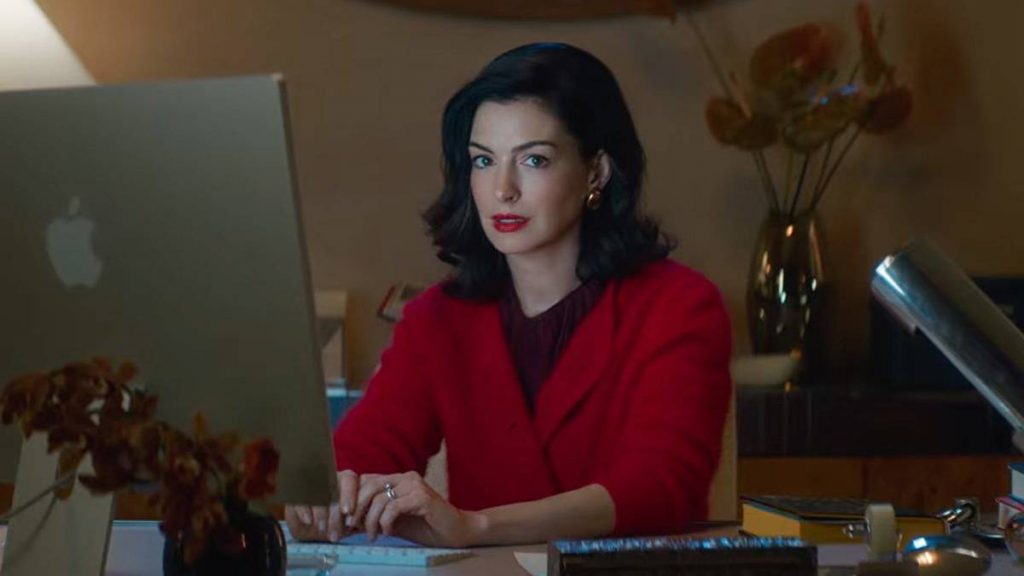
“Verity gives new meaning to the term ‘unreliable narrator.’ By calling into question authenticity, truth and lies, audiences are faced with a central question: who can be trusted? The question isn’t just what happened to Verity Crawford; it’s whether anything we’re being told can be trusted,” writes Rachel West at That Shelf. “It is great to see Hartnett here, who seems to be on an upward trajectory since Oppenheimer and the new Newfoundland-set Netflix series Below which bowed at TIFF. He’s perfectly cast as the doting dad, loving husband and all-around sensitive guy who is managing the Crawford household. Johnson, too, is great, vacillating between wariness and growing confidence. But this is really Hathaway’s show. Though she spends the present-day timeline in a comatose state, the film is flush with rich flashbacks as Lowen pores over her autobiography. Here, we see the dynamic, larger-than-life Verity the public loves. She brims with an effortless confidence Lowen doesn’t possess naturally, but instead has to earn. Hathaway understands exactly what kind of movie this is, and she plays Verity accordingly.”
“The storytelling is a confusing pile of misdirection, frothy nonsense and large, bright red herrings. You get 90 minutes of character development and vague intrigue, only to have all of that tossed aside for a finale involving nonsensical developments, about-faces and the usual diabolus ex machina. It makes no sense, but for people who like this sort of thing, this is just the sort of thing they like,” observes Liz Braun at Original Cin. “For a so-called thriller, Verity is unusually low on thrills of either the romantic or the scary type. However, bestselling ‘new adult’ author Hoover (It Ends With Us) knows her audience and what they like, so followers of her work are probably very excited about seeing Verity on the big screen.”
“We’ve seen variations of this story before. Familiar moments include an exterior shot of the gorgeous house with distinct architecture, raiding the wife’s closet to recreate her most memorable outfit and clumsily getting icing on the interloper’s face while sharing an intimate dessert — although it’s on her lips, which is a normal part of eating that shouldn’t require removal by another person,” says Sarah Gopaul at Imagery at the Movies. “Poison Ivy (1992) seems like one of the most apt yet superior comparisons. The husband’s attraction to a woman who looks like and writes like his wife is predictable (though also strange since Jeremy says he finds Verity’s work off-putting). But it’s especially disconcerting in the context of his wife being infirm and the affair representing him finally taking a moment to be “selfish” (*eye roll*).”
“Verity can be described as a psychological romantic thriller with a strong female slant,” notes Gilbert Seah at Afro Toronto. “There are two females vying for the love of one man, though one is in a coma and the other is not. The female rivalry is strong, but rather than having a hair-pulling catfight, there is a makeup scene between the two ladies. The film is played towards a female target audience with a gorgeous male, Josh Hartnett providing the eye candy.”
The Widower: ’Til Death Do Us Part (dir. Chris Smith)
“The journalist followed the Thomas Randolph case, given full access to all the interviews and police records, and for this reason, this doc has surfaced,” explains Gilbert Seah at Afro Toronto. “And it is a pretty good doc for a true-crime murder case. For one reason, the doc is as interesting as its subject, and Thomas Randolph is a very intriguing character and a cocky fucker, as he claims to be, in his own words during one interview. The second is the way the true crime doc unfolds like a mystery detective whodunnit drama.”
You Had to Be There… (dir. Nick Davis)
“The doc directed by Nick Davis is kind of all over the place in that regard, much like the play, but it has a lot of places to go in 95 minutes,” says Jim Slotek at Original Cin. “But it is testament to the fact that you don’t need a video record for some things to survive. The fact that Judd Apatow signed on as executive producer shows the power of word-of-mouth over the decades. Anyone who embraces comedy history should know about that half-century-old Toronto event. You Had to Be There provides a chance to experience the echoes of that event. You can’t be there without a time machine, but you can feel it reverberate.”
“You Had to Be There features some real nuggets to satisfy fans of the legendary show. Short, it turns out, recorded audio of a performance by fixing microphones to the set. The quality of the recording inevitably proves lacking, but the film thrills by sharing the young voices hitting their collective stride,” writes Pat Mullen at POV Magazine. “The good vibes and company, however, give everyone in the cast credit for collective greatness. Without any of these performers adding to the secret sauce of Godspell ’72, one can only imagine how comedy might have shaped up in the years that followed from Saturday Night Live to SCTV to Schitt’s Creek. The documentary offers a hugely entertaining record of Canadian cultural history worthy of time and celebration. And, in perhaps the most Canadian trait ever, it’s an American production.”
A Festival of Festival Coverage
At FIPRESCI, Victor Stiff reports on a highlight from TIFF’s Discover section: Ian Bawa’s Strong Son and its take on masculinity: “Strong Son comments on Hollywood’s hardcoded notions of manliness, asking us not to get swept up in the tides of conventional thinking,” writes Stiff. “The film argues that healthy masculinity doesn’t require physical strength; it requires showing strength—the strength to be vulnerable, know your limits, and ask for help when it’s needed. Looking out for his father isn’t what makes Harvey a strong son; it’s recognizing when it’s time to finally look after himself.”
At That Shelf, Pat Mullen reports on the party scene at TIFF: “For the third year in a row, meanwhile, Saturday night was roaring at the Four Seasons with the annual Road to the Golden Globes party. This is the must-attend party of TIFF. The event arguably brings one of the largest, if not the biggest, lists of celebrities as everyone with an awards season push goes to this party to take pride in their in films and performances.”
File Under Miscellaneous
At POV Magazine, Pat Mullen chats with director Larry Weinstein about the restoration of September Songs and its place in his oeuvre of music docs: “Besides being a forerunner of Weinstein’s work, September Songs boasts a distinct concept that has inspired many imitators in the years since its debut. The film draws inspiration from the music and eccentricities of Hal Wilner’s 1985 album tribute to Weill. The album similarly features Weill covers by different artists. ‘He created amazing poetic tribute albums to various people,” observes Weinstein. Wilner’s previous albums saluted composer Nina Rota, Disney soundtracks, and jazz icon Thelonious Monk. ‘The more eccentric, in a way, the better,’ says Weinstein. ‘He encouraged people, and he always did things outside their comfort zones. He wouldn’t get Tom Waits to play with his regular band.’”