Reviews include Onslaught, Mayday, and Hope.
TIFF 2025: Dispatch from Wavelengths
September 15, 2025
Secondary to the highly-publicized fiftieth edition of the Toronto International Film Festival (TIFF) is the 25-year anniversary of its experimental section Wavelengths. A breeding ground for the world’s most inventive and commercially alienating moving image works, Wavelengths began with robust catalogues of over ten features, five programs of short films, and multiple installations. This year, those numbers have shrunk to eight, three, and zero (smaller than the Primetime section, TIFF’s rollout for streaming shows). Prior to the festival, an article in The Globe and Mail by the erstwhile Cinema Scope magazine’s Mark Peranson recently espoused the dwindling size and enduring virtues of Wavelengths, and many ardent admirers of the section –– myself included –– are inclined to agree with the piece’s sense of enthusiasm and urgency. The films that screen at Wavelengths, after all, tend to elicit such responses from their audience.
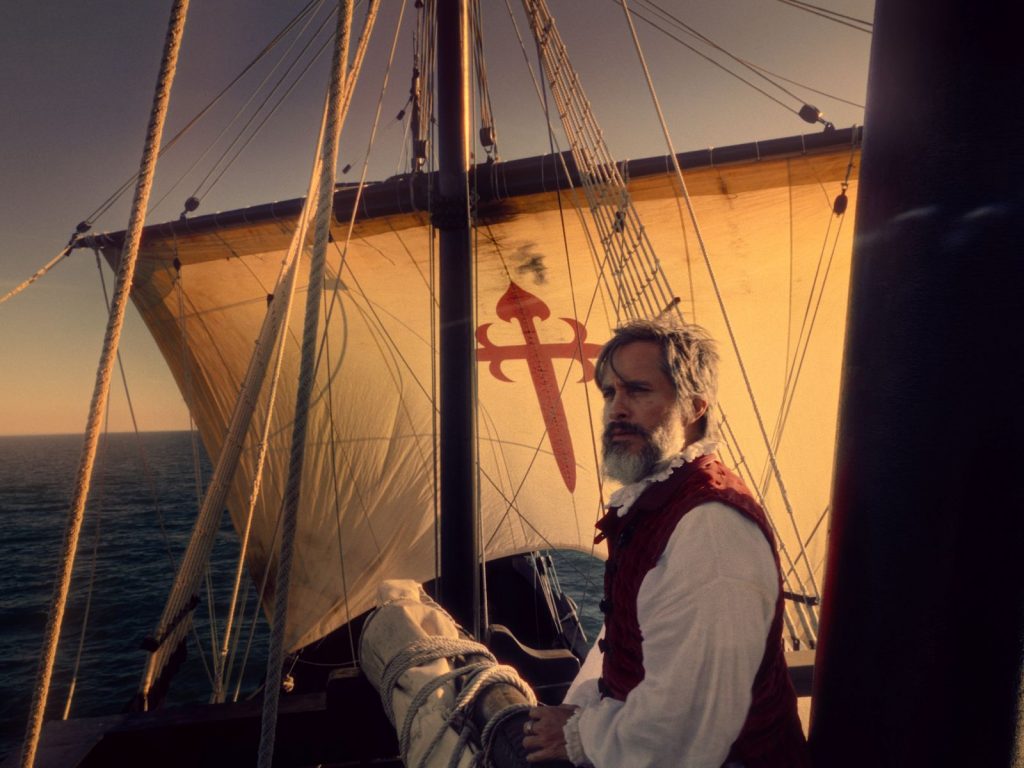
The features in this year’s program (exempting Kalil Joseph’s buzzy BLKNWS: Terms and Conditions, which I was unable to work into my schedule) is rife with wandering figures that drift through vividly constructed imitations of life. These lushly stylized and conceptually contained aesthetic bubbles frequently impose spatial and spiritual restrictions on the characters’ restless movements. The most obvious example comes with the stately anticolonial epic Magellan, helmed by Filipino titan of durational cinema Lav Diaz. Clocking in at 160 minutes, this painterly portrait of the Portuguese conqueror is one the filmmaker’s shortest features, and in the context of its cold and sinister sweep, the lengthy runtime feels fleeting.
The film nominally stars Gael García Bernal, and though it’s anchored by his titular figure, it is hardly defined by him. Magellan is often reduced to a decorative ornament in Diaz’s expertly coordinated friezes. Bernal’s performance is deliberately opaque, lending itself to a gradual recession of his actorly presence into Diaz’s larger design. The director favours static compositions with precise blocking and intricate movement, and he frequently litters the frames with the corpses of the colonized.
A slave called Enrique (Amado Arjay Babon), purchased early in the film by Magellan, gradually becomes the story’s central figure. He is the subject of several rending reaction shots, meted throughout the narrative’s litany of violent conflicts and injustices. Although Diaz rarely loses sight of Magellan’s humanity, the film is much more committed to plumbing the despicable depths to which he and his ruthlessly opportunistic countrymen will stoop. The compositions frequently evoke Portuguese filmmaker Manoel de Oliveira, and the film’s ending is Shakespearean, but Magellan’s clarity of vision and provocative interventions to official histories are unmistakably its director’s own.
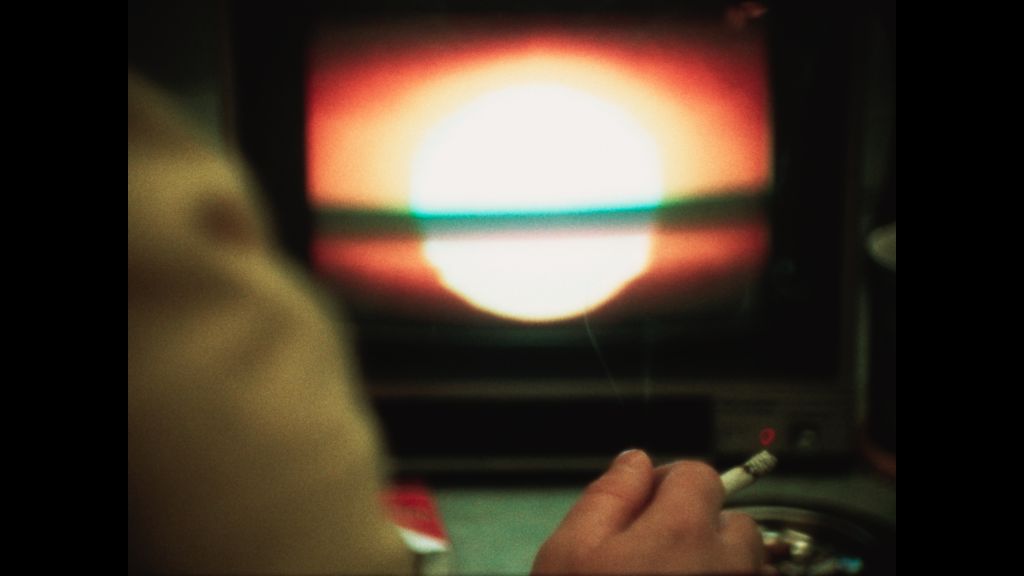
Two itinerant narratives unfurl through Levers and The Seasons. In these beautifully textured and emotionally distant films, the camera is the wanderer. In the former, Manitoban cinematographer/filmmaker Rhayne Vermette constructs a small-town symphony in the Red River Valley –– shot with broken Bolex cameras over the course of a year –– that plays out in the shadow of a vanished sun. A procession of townspeople (most of them shrouded in colourful, obfuscating shadows) carry on with their lives as best they can over the course of a day in the dark. They’re catalogued by intertitles styled like tarot cards, “The Sculptor,” The Civil Servant,” “The Bang,” “The Rock,” “Judgement,” “Strength,” etc. Vermette’s surrealist flair is expressed through a confluence of visual modes and cultural markers. Meanwhile, anachronistic gestures play into a tradition of fellow Winnipeg auteurs, while various symbols and signifiers of Indigenous and Catholic traditions proliferate the scenery. Even when the film begins to stagnate, its stylistic perspective remains cohesive and convincing.
Maureen Fazendeiro’s solo directorial debut (after Los Diarios de Ostoga, a collaboration with Miguel Gomes) The Seasons has a similar regional specificity. The Seasons parallels the excavated writings of German archaeologists in the 1940s with the filmmaker’s present-day explorations of Alentejo, Portugal, punctuated by songs from local elders and oral histories from a multitude of residents. The celluloid scenery is the polar opposite to Vermette’s high-contrast interiors, with yawning pastures, verdant fields, and weathered rocks serving as playpens for fauna and cultural history. Another 16mm feature rooted in a symbolic playground is Ben Rivers’ Mare’s Nest, in which a young girl gallivants through a barren wasteland devoid of adults. The less said about this masturbatory film the better, but its spiritual riff on Peter Pan does fit the 2025 program to a tee.
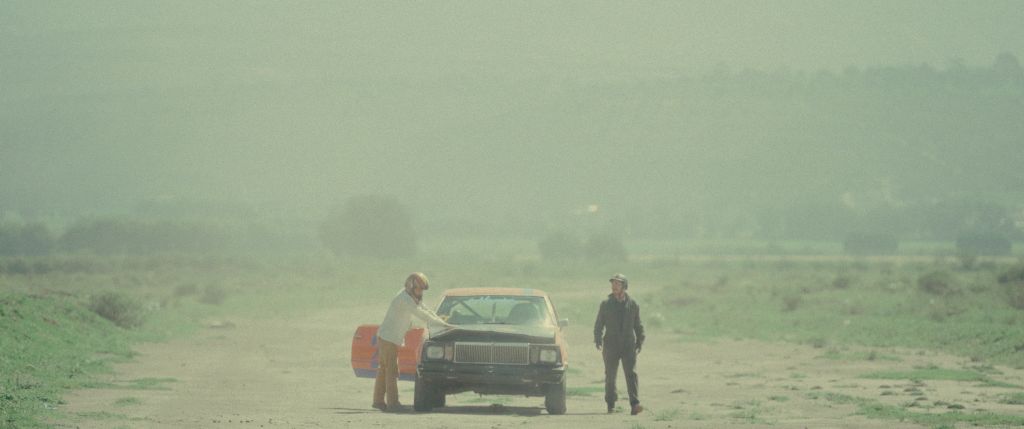
A much more confining world is imagined by Copper, a satirical psychodrama by Mexican-Canadian auteur (and York University alum) Nicolás Pereda. Following a weak-lunged miner who happens upon a corpse en route to work, and chooses to ignore it, this brisk, mordant, and compellingly cryptic film is one composed of deadpan flourishes and pristine, claustrophobic widescreens. The protagonist haggles with crooked doctors and shady bosses, flounders under the care of his overly doting mother, and seemingly lusts after his aunt, locked into a subconscious dick-measuring contest with her mechanic boyfriend. Copper is rigorously constructed in style, script, and performance to the point that its effects are often strangled by its rigidity, but during certain sequences –– such as a bedside roleplay for a first date, baton-passed between three different characters –– the rewards of Pereda’s uncompromising approach are readily apparent.
Two of the best films from this year’s slate, With Hasan in Gaza and Dry Leaf, were works in which my eyelids began to droop. Festival fatigue is a killer, but some films are sensorially striking enough to make a vivid impression through such an under-caffeinated cinematic stupor. (Abbas Kiarostami’s famous words about such films keeping you awake weeks later rings true here.)
Kamal Aljafari’s found footage travelogue With Hasan in Gaza –– shot in Palestine circa 2001, and forgotten by the filmmaker for twenty years –– documents his efforts to track down a man he met while imprisoned by Israeli forces in the late-’90s. These videotapes show scenes of life under occupation that rarely make it out of the region –– Aljafari’s guide Hasan frequently reminds him, for both their safety, not to film IDF soldiers –– and depict a populace accustomed to, but no less outraged by, their persistent denial of basic freedoms. Throughout the film, children vie energetically for a spot in the frame, imploring the filmmaker to photograph them, eager to be seen. The film is beautifully photographed and assembled with little formal intrusion –– save for non-diegetic songs that sound like they’re coming from a car radio, which play in full and serve as emotional crescendos during seemingly mundane moments –– but it also resonates through its existence alone. With Hasan in Gaza is immediate and tactile, a literal artifact from a region that genocidal forces are trying to erase from the map.
Dry Leaf, finally, is also a miraculous object. It’s a three-hour road trip through the Georgian countryside shot on a Sony Erricson phone, with imagery so thoroughly pixelated it pushes pointillism in the direction of mosaic. The plot is pared down and deliberately repetitive, following a father travelling the country with an invisible guide (whose voice we hear while his scene partner talks to empty air) in search of his daughter, a sports photographer who once travelled the same route shooting soccer fields in small towns. This narrative is increasingly sidelined in favour of abstracted detours, musical interludes set to a dulcet-toned score, and many, many shots of grazing cattle.
Alexandre Koberidze’s film is lulling, somnambulant, and ceaselessly gorgeous. Even when my mind wandered, it was the perfect film to be sitting across from. It is the ideal Wavelengths feature: it never feels the need to make bids for the viewer’s attention, but instead offers untold riches for those who choose to meet it on its own terms. This year’s slate captures the highs and lows (but mostly the highs) of experimental expression, and makes a compelling case for allowing filmmakers the space for both success and failure.
—
Alexander Mooney is a Toronto-based critic and filmmaker, and the 2025 Telefilm Canada Emerging Critic Award winner. His writing has appeared in Toronto Star, Documentary Magazine, Slant, Reverse Shot, The Globe and Mail, Little White Lies, and MUBI Notebook, and he writes the column “Replications” at In the Mood Magazine.