Movie reviews include La Bola Negra, Once Upon a Time in Harlem, and Wildwood.
How Fight Kid Captures an Authentic Family Rumble
October 3, 2026
By Thom Ernst
Michael Del Monte traditionally makes documentaries. Powerful, award-winning films that are deeply engaged with the human condition, often at its most fallible, but always in search of something humane within.
His Transformer (2017) follows an ex-Marine and champion weightlifter navigating the transition to affirm their identity as a woman. His Name Is Ray (2021) explores the grip of addiction through the story of a former sailor and heroin addict who dreams of returning to the water. Del Monte’s subjects stand on the outside of society’s parameters, but his approach is never to reduce them to their circumstances. He observes. He listens. He gives people room to reveal themselves.
There’s a calmness to Del Monte that reflects that approach. Three kids, one newborn, and a film premiering at the 2026 Toronto International Film Festival; still, the vibe is of a man feeling nothing but completely relaxed.
His latest film, Fight Kid walked away with TIFF’s Best Canadian Short Film award following its premiere in September. Fight Kid may look, at first, like a boxing movie, and cinema has certainly gotten plenty of mileage out of the sport: the underdog, the comeback, the fighter battling his way out of poverty, one more round standing between defeat and redemption.
But Fight Kid delivers something more intimate.
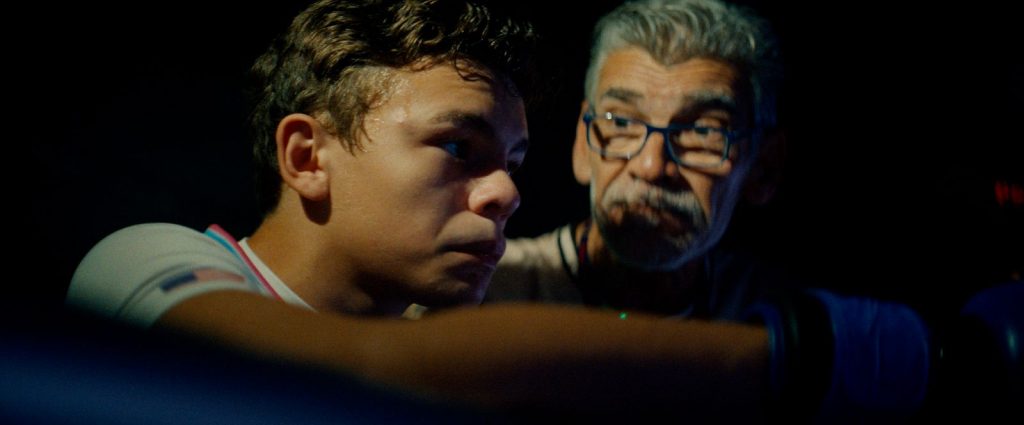
Shot with the observational feel of a documentary, the drama follows a father, Eddie, and son, Isaiah, whose relationship is both affectionate and complicated. The boxing ring is there (a cage, really, like one of those fight-to-the-death arenas seen in more apocalyptic films) but it’s the space between the two of them where Del Monte is focused —the expectations a parent places on a child, the things a son absorbs, and the love that can exist alongside both.
It’s a remarkably warm film, and that tenderness seems to come directly from Del Monte’s approach to his characters. He doesn’t judge them or sentimentalize them. He simply gets close enough to let us see them.
We spoke with Michael Del Monte about Fight Kid, the documentary instincts that shaped it, and what happens when the camera moves from observing real lives to recreating one.
Thom Ernst: I understood what the film was doing: we’re watching a father put his dreams onto his son, and I got that. But what really struck me was how beautiful their relationship was. I found myself feeling much more affection for the father than animosity toward him. Did I miss something in the film, or is that relationship perhaps doing something beyond the more obvious idea of a father imposing his dreams on his son?
Michael Del Monte: No. Ask some other people and they’re going to disagree. That’s why I like the movie, and why I made it: I liked the father-son relationship.
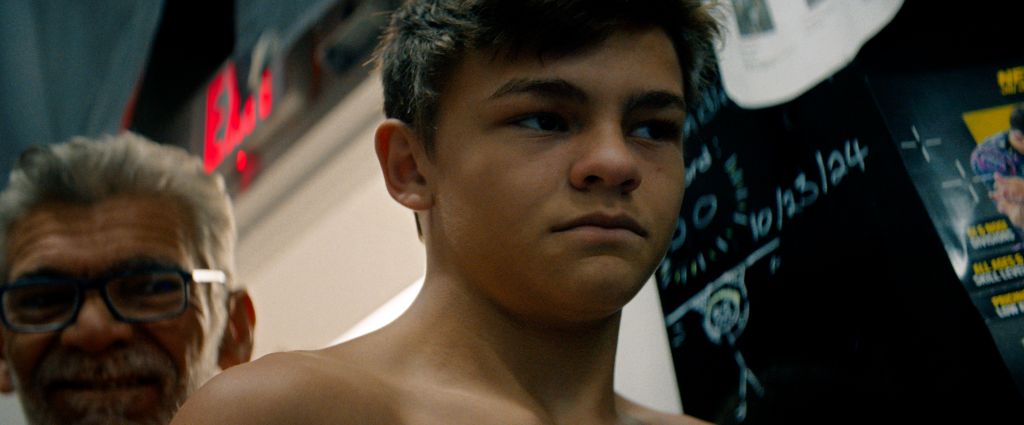
We’re working on the feature with the same characters, and the tension in the writing right now is that they need to feel more adversarial. Some people watch the film and say, “He’s exploiting his son. He’s not getting his son’s consent.” When the kid is doing his medical check before the fight, for example, the dad answers all the questions.
But I’ve had the complete opposite reaction, too: he’s affectionate with his son, he’s by his side, and they’re pursuing a goal together. You can read it both ways.
That’s what I like about characters in film. You can often read them two ways. When I first met them, I was uneasy about the way the father spoke almost messianically about his son, as if the kid were the second coming. Then he’s saying, “You better smash this fucking kid’s head off,” or “Destroy that motherfucker.” You think, “You’re really going all in here.”
As a dad myself, I appreciate some of his bravado about his son and their relationship. But it’s definitely not a straightforward line.
You make both options very clear in the film. I think that’s part of what makes the relationship so interesting, and it extends to the genuine humanity you find in all the characters. That brings me to someone I presume was the mother in the background. She has no real lines, no real interaction, but her presence is there. Can you talk about putting those kinds of background characters into a scene and giving them a purpose?
That wasn’t intentional, her not having lines. We tried some things. This was a very different scripted film, and it’s a real family. A real fight family.
Initially, I scripted her saying a few things, but when you’re there, you discover that her presence is enough. As you saw, it makes you feel like this family is always in the same room. They live in a two-bedroom apartment, and everything—the kitchen and everything—is side by side.
I felt similarly when I was filming. I wasn’t trying to develop her character so much as make a statement about what kind of family this is. They’re in it together; they’re in each other’s lives.
That’s the warm part of the story. Putting garbage bags on your kid, cutting the sweat off them and putting them in a cage is the harder part. The warmer part is the father and son fighting in the living room while Mom cooks. It’s a pretty healthy family dynamic in that regard.
I think that’s what makes the film so unique. There are no clear villains. Not even the kind of conflicted villain we get in—oh god, I’m going to forget the title of the movie… the one with the mother… oh, I’ll skip it. But there’s usually somebody whose energy is too much, whose need for success on someone else’s behalf is too much, whose expectations become too much. I didn’t find that here. Everybody has a role, everybody seems to be trying to appease someone else, but it never feels overbearing. It actually feels quite loving and tender.
Is the film you’re thinking of The Fighter with Christian Bale? [And Melissa Leo as the mother.]
That’s exactly what I’m thinking of. Thank you. And now that we’re on that topic, I often wonder how young directors inform themselves. Did you familiarize yourself with films from the ’80s, the ’70s, the ’40s even?
I’m Italian, so my dad and I grew up on Rocky, especially the first one, and Raging Bull. But there have been some great films more recently.
There was one in 2011 that a lot of people didn’t see called Warrior, with Tom Hardy and Joel Edgerton. It’s basically about two brothers, and they each have their own backstory.
I watched that film and thought, like Rocky, there’s no real villain. You can’t really pin it on Apollo. I think that’s something I’m working through with the feature right now: do you need a villain? When we were making the short, there was enough tension in the characters themselves. I didn’t need an external villain.
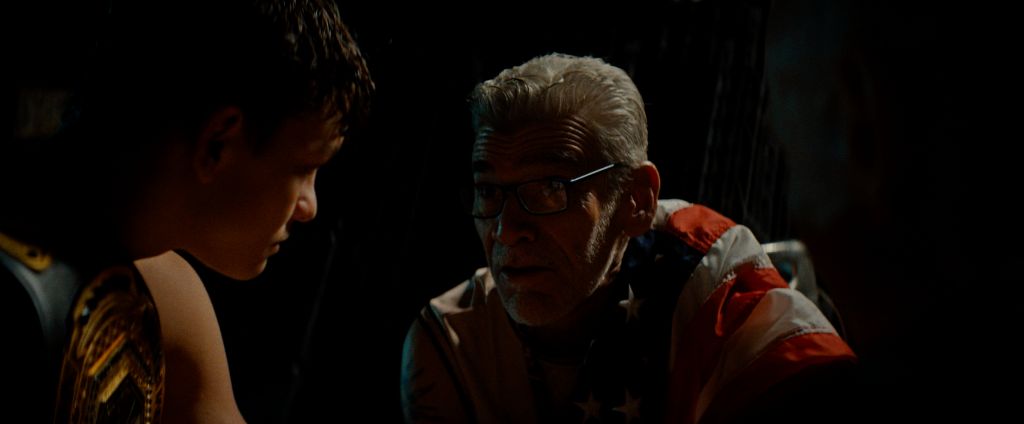
The coach represents a cautionary force, something trying to hold them back, similar to Mickey in Rocky. He’s the objective voice of truth, beyond the emotion of the fight—someone bringing reason to the table. And when I had him, I felt like that was enough. I didn’t even have to talk much about the other kid he was fighting. He’s not a bad guy. He probably has his own story, too.
I’ve watched enough fight films to realize it’s not always about the good guy versus the bad guy. It’s about fighting in general, and the reason you fight. You don’t sign up to get punched in the head unless you have a pretty complicated backstory. There’s stuff going on in your life that you’re going to empathize with if you’re a fighter.
Even the bad fighters, the bad caricatures in the UFC, they all have stories—whether it’s their relationship with their dad, their childhood, or how they were brought up. There’s always adversity behind these guys who are fighting.
Your film reminded me of Fat City, that raw, ’70s feel. Stacy Keach is in it. You keep talking about the tension in the film, and it’s certainly there, but what really stayed with me was the warmth. And we all bring our own baggage to a film, so I kept coming back to the relationship between the father and son: the son’s patience with his dad, and the dad’s kindness toward his son. That really resonated with me. How much of that comes from your own relationship with your father?
I’ve talked about it before, and it’s similar. I love my dad. I have a picture of him on my desk.
That said, he pushed me into track and field, into running. I was a very talented middle-distance runner—800 and 1,500 metres. I’d win all the city stuff. My dad was a runner, so he put me into it, and I hated it.
I used to get so freaked out before races. A week beforehand, I’d be paralyzed, thinking, “I can’t. I don’t want to get on the start line.” But he saw that I had this talent and he pushed me. By the time I was about 18, I broke and said, “I’m not doing this anymore.”
Then I came back to it and had a very successful collegiate career. I made money, travelled the world. And that’s actually how I got into film. I was trying to make the Olympics in 2012, got hurt, and one of my teammates had a camera. I started making these little vignettes and short videos about my teammates, and I fell in love with the art. So, in a weird way, I have my dad to thank for my film career.
I think that’s why I resonated with the father. When you have a kid—and I do now—you see your own dad differently. You just hope to god they have some talent, anything. You want them to be good at something, whether it’s being a film critic or anything else that gets them through life.
But then there are the complications. Maybe your spouse is saying you’re pushing too hard. Maybe society is saying, “You’re going to let your kid fight in a cage?” Whatever it is.
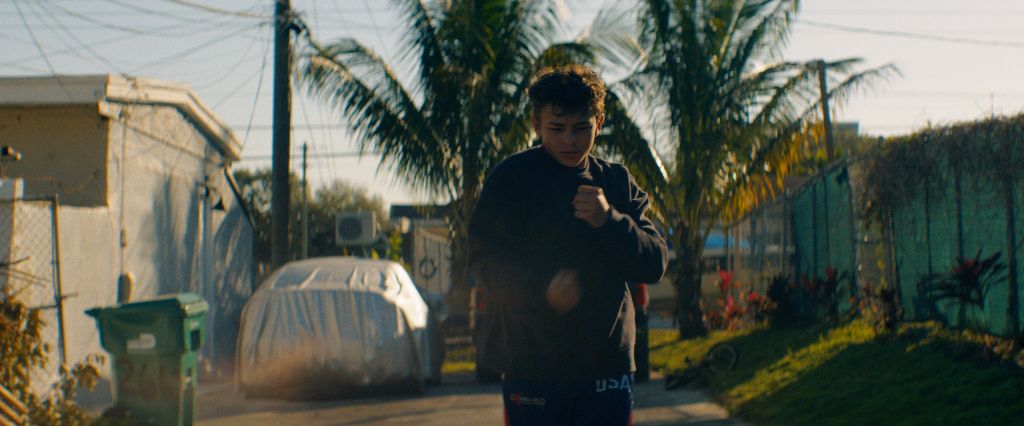
I’ve always respected my dad for having the courage to put me out there in the middle of winter and keep me running. And I think that’s what I resonate with most in Eddie: He’s got a vision. You should have visions for your kids. The kid’s not necessarily going to have his own vision yet.
That’s the question I’m exploring in the feature, because Isaiah is 15, turning 16, which is about the age I was. Is it his vision? Is it cohesive with what his dad wants? Or is he going to want to go out with his friends? What’s going to happen?
We’ll find out. But that’s the personal experience I had with it.
Are you writing the script on your own, the feature?
Yeah, I have mentors who are helping me because it is new and very hard. I think writing is the hardest thing. I love editing, I love shooting.
I’ve never done treatments because I’m a doc filmmaker. This short was the first thing where I had to do more of a script. It’s very hard, writing.
You’re a dad. How personal is the film to you?
I have three kids now. One’s only a few weeks old.
Each kid has their own ceiling, and your job is to get them to the top of that ceiling, whatever it is. You’ll go through a brick wall to get them there. You’ll do whatever it takes.
I think that’s why I love what cinema allows you to explore: the extremes. How far will a father go?
Then you combine that with their financial situation. They’re not in a good place financially in real life, and we’re working that into the [feature]. You see some of it in the short, but that’s part of the drive. And this is common with athletes and families: the kid becomes the golden goose. The Serena Williams or Tiger Woods. The kid is supposed to get the family out of its financial burden, and that pressure gets put on them at a young age.
Some kids don’t like that. But you’d be surprised—some kids want it.
That’s something I see in Isaiah. He’s kept quiet in this short. He doesn’t say much, so you don’t really know what’s happening beneath the surface. And I like that. You can watch it both ways. You can see him as a kid who’s being pressured, but you can also see him as a warrior. He doesn’t need to say much. He gets in the ring and just explodes and fights.
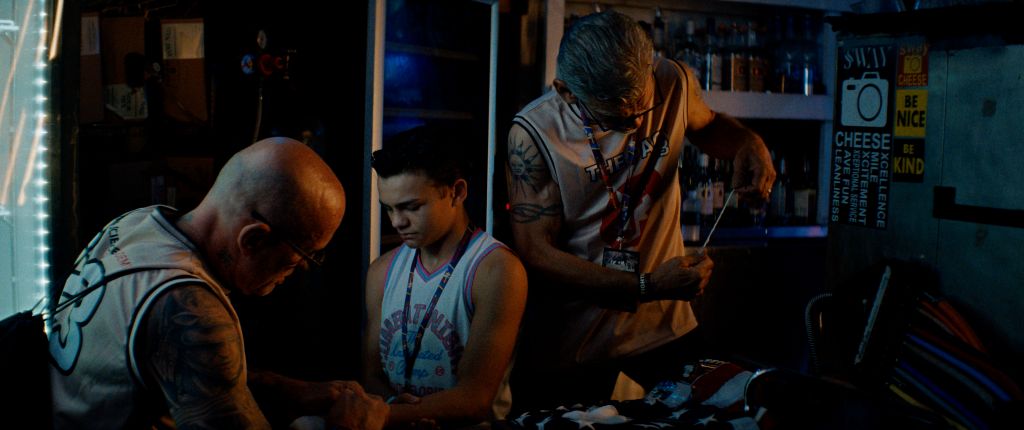
He does, but after the fight, who does he make a beeline to but the mother?
Yeah, that’s a documentary moment. Originally, I had scripted the ending. We didn’t have control of the fight, so everything in the film was controlled except the outcome. I always knew we’d end with them in an alley, or outside the arena, with the dad saying, “We got another one. We’re gonna go again. You’re just gonna keep doing this, and we’re gonna keep winning till we get there.” That worked no matter what happened—win or lose.
But we had five cameras for the fight. The whole film was shot single-camera except the fight, because we had no control and couldn’t do second takes. One camera was on the mom, and that was a moment I couldn’t ignore.
You could see the kid crying, all this emotion swelling up, and then he goes right into his mom.
Fight Kid wins Best Canadian Short at TIFF. Did you get a sense from the festival buzz that you were in a good place?
No, I really didn’t. I watched some of the other films in our shorts program, and they were fantastic, but I was so busy with meetings I didn’t have time to watch many of them.
So I didn’t know what to compare it to. I knew people were having a visceral reaction, particularly toward the end, when they weren’t sure what they were watching and the intensity was building. But you have no idea if it’s going to win.
These things are huge creative risks. You have an idea, and then the way you shoot it, the production style, the budget—all of those are choices.
This was a huge risk: using real people in a Chloé Zhao The Rider kind of hybrid. The biggest reward was the acknowledgement that it worked. The award is phenomenal, but when you get that recognition, it validates the seed you planted months earlier: I think these guys can act. I think they can be dramatic without it feeling like acting. It can feel like a real performance.
You’re never sure until you get there.
Then you watch with an audience and think, “I think they’re liking it. I think they’re responding to it.” But when you get the award, I guess it feels like a bit of validation.
Who was the most impressive person for you personally to have seen and congratulated you on the film?
Well, I’d have to give credit to my mentor Derek Cianfrance. He’s done The Place Beyond the Pines and Blue Valentine. He had Roofman last year at TIFF, and he’s done I Know This Much Is True on HBO. He’s been a mentor of mine for a few years, and he came up for the film. We invited him up and he watched it. He’s been helping me through the feature. [Del Monte shot documentary footage seen in the end credits of Roofman.]
I think his voice always really resonates for me. I wouldn’t say he’s necessarily a tough critic, but he’s very honest. And he just finds things that you hope people find in it. So that was special.
Fight Kid is your first drama. How different is doing scripted drama from documentary?
I love documentaries so much. I did so many of them. But the challenge is always the structural challenge of not being able to redo takes. And you can’t end it when you want to end it necessarily. You’re limited.
The beauty is the authenticity and the lines are real. The people are real. All of the conflict is real. But I think people appreciating this kind of mix of doc and fiction from within the industry has been really encouraging.
Let’s talk a bit about the opening shot [where Eddie and Isaiah spar]. I confess my mind went to a very dark place, and I’m not certain the opening was designed to push those dark buttons.
It’s a wild shot. I remember just telling my DP to keep moving. Let’s move in as close as we can, because we wanted it to almost not feel erotic, but have the possibility of some type of weird thing going on.
So the darkness was intentional?
Oh yeah. They wrestle with their shirts off, but as you’re looking at the shot, you’re just seeing this man and boy, shirt off, and you’re like, “I don’t know what this is.” If you go in very close, it feels even more intimate, but then you spread out and you’re like, “This is dad and son after dinner or wherever this is, and this is horseplay.”