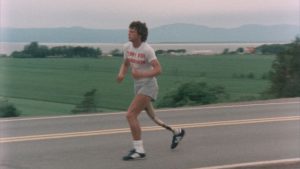
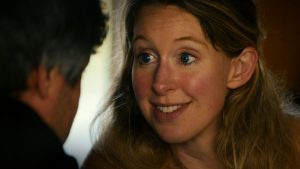
Movie reviews include You Can See Everything, Fjord, and Musk.
TFCA Friday: Movie Reviews for Sept. 25
September 25, 2026
Welcome to the TFCA weekly, a round-up of reviews and coverage by members of the Toronto Film Critics Association.
In Release this Week
Buzzkill (dir. Jem Garrard)
“Clocking in at a brief 95 minutes and featuring fantastic comedic work from Agudong and Daytona Wu, Buzzkill is another solid addition to Tubi’s growing list of comfort horror titles,” says Joe Lipsett at Bloody Disgusting.
Forgotten Island (dir. Joel Crawford and Januel Mercado)
“The girls’ lively energy makes Forgotten Island a madcap gong show from beginning to end. Writers and directors Joel Crawford and Januel Mercado amass an extraordinary amount of speeding tickets in this fast-faced whirlwind that’s as busy visually as it is swift narratively. Forgotten Island, admittedly, proves a dizzying experience. It moves so quickly and so erratically that it never quite finds its groove,” writes Pat Mullen at That Shelf. “And yet much like its zany, spunky, and indefatigably over-caffeinated heroine Jo, Forgotten Island doesn’t seem to want a groove. One can’t fairly judge this animated fable by Hollywood standards of narrative and style. Crawford and Mercado deeply invest Forgotten Island in Filipino lore and mythology, but also Asian film styles and aesthetics kinetically punched up by Eastern comics and pop culture. It’s disorienting but invigorating with so many elements inspiring sensory overload.”
Heart of the Beast (dir. David Ayer)
“The back story establishes Odin as Belmont’s loyal companion from pup through maturity and through all kinds of trouble, the latter attested to by the dog’s titanium replacement teeth and prosthetic leg,” says the Toronto Star’s Peter Howell at Night Vision. “The rest of the picture is a straight-up struggle for survival after a medical emergency and bad weather bring Belmont’s plane down in an unforgiving expanse of trees and water, far from civilization. Belmont calculates that he and his dog are 58 miles (93 km) from the nearest paved road and possible rescue. The hazardous trek they embark on brings to mind the last time Ayer and Pitt worked together, on the Second World War tank thriller, Fury, 12 years ago. Pitt brings the requisite Hollywood grit as man and dog face expected wilderness foes, including a giant bear, ravenous wolves and a treacherous crossing over raging rapids.”
The History of Concrete (dir. John Wilson)
“We’ll be the first to admit that anyone who comes to The History of Concrete cold and don’t even have a passing connection to his TV show will come to this and quite frankly be pretty confused,” advises Dave Voigt at In the Seats. “But that’s OK; honestly it’s kind of the point of the whole thing. In his first feature outing, John Wilson takes us into ephemeral of how his mind works as he navigates his life from a seminar on how to write a Hallmark movie, to figuring out funding for an independent film while along the way ACTUALLY giving us some history of concrete while in a very weird way giving us a very personal story.”
“These lighthearted considerations build a droll consideration of city life,” says Pat Mullen at POV Magazine. “The History of Concrete speaks directly to anyone who likes their humour as dry the sidewalks of New York during peak daylight. Its wryly and warmly funny observations are for anyone whose simple pleasures include life’s big questions. Wilson’s sense of humour brings a relatable everyman charm that illustrates how sometimes the most novel and enlightening stories are everywhere around us.”
Primetime (dir. Lance Oppenheim)
“While Spotlight’s journalists work with a badge of honour, Primetime doesn’t shy away from the shadows,” writes Steve Norton at ScreenFish. “There’s an ethical ambiguity about this film that cries for justice but doesn’t mind blurring the lines of right and wrong. As a result, this inquest into the murkiest corners of the human soul doesn’t let the light in very often. In fact, Hansen’s quest almost feels like he’s attempting to kill the darkness by adding… more darkness.”
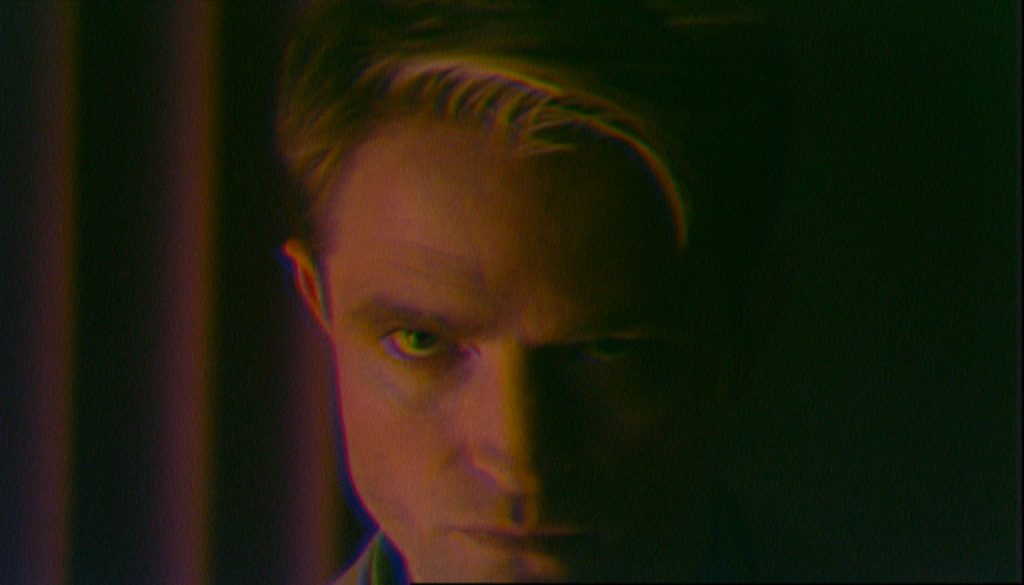
“Oppenheim’s film manifests as a visual feast, bathed in a sickeningly sensory, oversaturated sheen that is both eerie and disorienting as it cuts between mid-2000s recordings and its bleached-out, almost blinding compositions,” adds Prabhjot Bain at RANGE. “Ferociously recalling the vulgar auteurism of Tony Scott, it melds cold electric blues and penetrating reds with graceful Hollywood editing, replete with gorgeous freeze-frame dissolves. The effect is simultaneously seductive and queasy, as though the film is intoxicated by the very spectacle it sets out to dissect.”
“Pattinson dives into the sleaze of it all with an aplomb that makes this standout as not only one of the best performances of the year, but arguably of his entire career as well,” praises Dave Voigt at In the Seats. “Wearing the cloak of a crusader, Pattinson actually has the moral struggle that we can imagine a real life vampire would deal with as he navigates a seedy societal underbelly that he thrives off of. He turns Hanson into a conflicted creature navigating the razors edge of being a social acceptable member of society and a bottom feeder that elevates himself off of the worst of humanity that he subjected himself to on a nightly basis. At no time does this character ever get ‘sparkly’ like his vampire character does in the Twilight franchise and instead he bleeds into the neon day glow of his existence that he walked himself into.”
“A truly complex film, it is an astounding melange of reality and drama, dealing with events that occurred but treating them in a heightened way,” notes Marc Glassman at Classical FM. “In a performance that will likely draw him an Oscar nomination, Robert Pattinson is mesmerizing, playing Chris Hansen, the real-life host of a notoriously successful TV show To Catch a Predator. Hansen rose to fame as the relentless investigator who exposed pedophiles in dramatic scenes that were broadcast on television.”
“The film has much going for it, including lighting design that borders on the horror genre — literal shots of spooky faces in unlit rooms, and a climactic dark and stormy night — and period-appropriate stock that makes everything look grainy and washed out, like a VHS cassette left in the back seat of your car,” observes Chris Knight at Original Cin. Pattinson, meanwhile, produces a Cuisinart-worthy range of emotions, Joker-esque one moment, deadpan the next, Shatnerian in his halting cadence or weirdly self-important, as when he calls the number on a busted vending machine, introducing himself to the bored customer service rep as “Chris Hansen, from Nightline.” Also fun to watch him wield his 2006-era slider phone like a switchblade.
“Kids learn a popular comeback early in the schoolyard: ‘Takes one to know one!’” says Pat Mullen at That Shelf. “No bully epitomizes the meaning of that idiom, without actually grasping its significance, than disgraced journalist Chris Hansen. The former To Catch a Predator investigator gets the Network treatment in Primetime, Lance Oppenheim’s taut study of Hansen’s hugely popular and highly problematic trash TV hit. Played by Robert Pattinson in a tour-de-force performance, Hansen’s icky ways belie his seemingly altruistic principles.”
The Stunt Driver (dir. Michael Dowse)
“I suppose it would be inappropriate to have made a full out comedy about Ken Carter, since his ill-chosen profession makes bullfighters look tame in terms of flirting with death. And yes, there is death in The Stunt Driver. There are even tears and crushingly dramatic moments,” says Jim Slotek at Original Cin. “These are not what you’re looking for in a Dowse film, and it leaves an experience that starts out on a hilarious high and ends on a lachrymose low. No good mood goes unpunished, I guess.”
“Baruchel who keeps the film firmly on the road. Though he’s largely known as a comedic actor, Driver allows him to bring a gravitas (and, arguably, sadness) to the role of Carter that kicks the film into overdrive. Yes, the film allows him to bring a silliness to the character in moments but never in a way that doesn’t feel genuine. Baruchel wants us to see Carter as a man of inescapable vision who struggles with what seems to be inevitable failure,” notes Steve Norton at ScreenFish. “And this allows Baruchel to bring a raw sensitivity to his performance. At the same time, we can both love and hate this character.”
At POV Magazine, Jason Gorber chats with Michael Dowse about adapting the NFB documentary The Devil at Your Heels as a drama: “What was exciting to me as a filmmaker was this idea of reverse engineering a dramatic film out of documentary footage, which I don’t think has been done that much,” says Dowse. “Stories We Tell would be something that kind of dabbles in that, for sure. That was the interesting part, to take a 2.39:1 anamorphic, beautifully shot image and make that the truth of our story, and then be able to duck and weave around Fortier’s footage to fill in the blanks and to give it the scale and the period.”
A Festival of Festival Coverage
On the TFCA blog, a baker’s dozen of TFCA members pick the best films of the Toronto International Film Festival. This year sees our widest spread yet as the festival returns to its gargantuan numbers.
At the Toronto Star, Peter Howell lays out the top 10 films from TIFF, including Wild Horse Nine: “Laugh while you gasp. A South American revolution, the JFK assassination and assorted CIA skulduggery hardly sound like the makings of a riotous buddy comedy. But Martin McDonagh has built a glorious career wringing chortles from the darkest circumstances and most combative of male pairings, from In Bruges to The Banshees of Inisherin.”
At Classical FM, Marc Glassman recaps the best of the fest, including Ladies and Gentlemen, Brian Mulroney: “a brilliantly effective graphic commentary to his depiction of Mulroney’s rise to power as a Progressive Conservative, whose free trade policies and friendship with President Ronald Reagan forged the way to our present economic and political dilemmas with the U.S.”
At RANGE, Prabhjot Bains picks the best films from TIFF, including Possible Love: “a quiet yet overwhelming masterwork that revels as much in moral ambiguity as it does moral gravity, finding in human connection a great unifier, however compromised and imbalanced it may be—a rare bastion that hasn’t yet been carved up and sold.”
At POV Magazine, Pat Mullen reports on the documentary slate where highlights included Musk, Gail, Mulroney, and Bleeding Hearts: “Every note of this film lands just right,” he says of Bleeding Hearts. “It bucks music doc convention and reinvigorates a genre that’s long felt stale.”